




Iraq reaffirms Arab identity, seeks balanced regional ties
Baghdad summit signals new chapter in Iraq’s Arab relations
By Sarah Ramadan
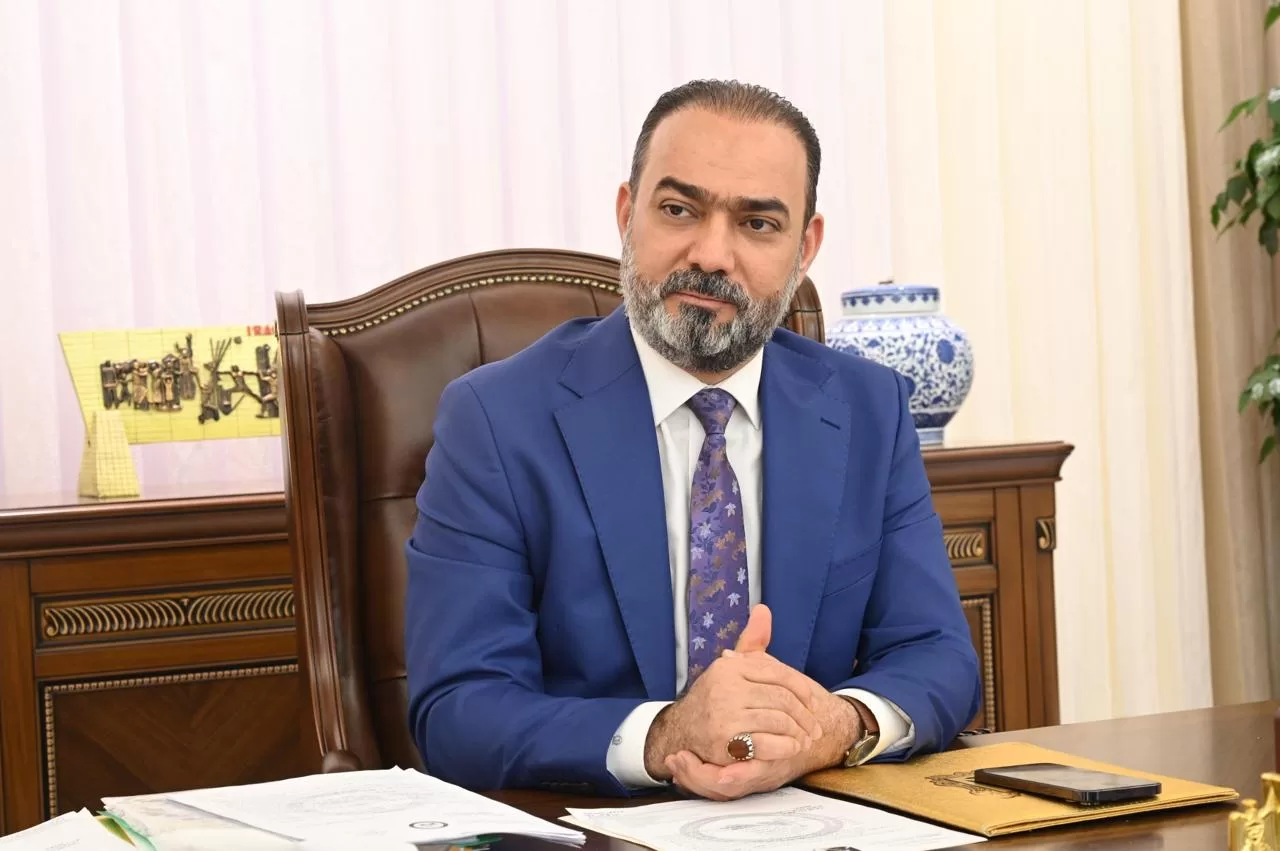
On March 12th, Iraqi Prime Minister Mohammed Shia’ Al-Sudani appointed Dr. Noufal Abu Ragheef as the head of the executive body of the Communications and Media Commission. This appointment carries significant implications for Iraq’s present and future—as the country steadily and confidently affirms its role through genuine, practical foundations for development, progress, and state-building.
Central to these foundations is the delegation of responsibility to individuals of experience, insight, and proven capability—those able to shoulder critical duties at pivotal moments in national history. Dr. Noufal Abu Ragheef is undoubtedly one of these figures. His distinguished career spans public service, law, journalism, literature, and thought leadership. He is not only a seasoned official and legal expert, but also a writer, encyclopedist, poet, and intellectual whose contributions continue to shape Iraq’s cultural and political spheres.
In this interview, we explore Iraq’s evolving media landscape through his unique lens—one informed by deep insight, a comprehensive vision, and a keen understanding of the country’s identity, positions, and aspirations.
How do you perceive the challenges Iraq faces regarding its media image, particularly within the Arab region?
The primary issue Iraq faces in terms of media is a persistent duality. Many of our Arab counterparts don’t make a genuine effort to preserve or accurately reflect Iraq’s true image. This has been evident for years. When Arab media delegations visit Iraq, they are often surprised by what they see. I’ve led several of these delegations, and I consistently notice reactions of disbelief and astonishment.
We have been media-oppressed, but recently, there’s been gradual improvement. Iraq’s image is becoming clearer and more accurate. No one can deny Iraq’s Arab identity, its deep-rooted heritage, or its commitment to being an integral part of the Arab world.
Is Iraqi media keeping pace with digital and technological advancements?
Yes, Iraqi media is adapting to technological advancements. There are numerous conferences and exchange programs, especially in the digital space. We now have a National Media Center and a Data Center, both established around two and a half years ago under the General Secretariat of the Council of Ministers. These institutions play a growing role in shaping digital media policy.
Our mission is to transform the Communications and Media Commission into a model of technological integration—harnessing digital tools in line with global and regional trends.
How do you view the relationship between political authority and media in Iraq? Is it possible to balance the media’s role with political power?
This relationship is complex—especially in Arab contexts—and Iraq is no exception. Currently, Iraq enjoys a broad margin of media freedom. In some cases, civil, partisan, or independent outlets are more influential than state media, despite the state’s resources.
There’s no definitive answer here, as Iraq’s democratic experience is still developing and constantly evolving.
How does the state respond to media criticism, particularly when it targets high-ranking officials such as the Prime Minister?
In Iraq today, any citizen has the right to object, criticize, or even attack verbally. However, this occurs within a legal framework. Recently, individuals defamed the Prime Minister in the media. Rather than using his position to suppress them, he pursued legal action as a citizen through his legal office. This reflects the state’s respect for the rule of law.
How do you assess the traditionally close relationship between the cultural and media sectors in Iraq today? Has it endured despite the separation of ministries?
The relationship between culture and media in Iraq remains organic and deeply rooted. Most Iraqi media professionals are also intellectuals—you’ll find poets, artists, and writers among them. This diversity creates a rich and dynamic media environment, which I consider a unique strength of Iraq.
Personally, I’ve always been drawn to culture, having worked in it for over 22 years. I’ve led publishing initiatives and represented Iraq at international book fairs. As the saying goes, “One finger cannot hold both water and fire at once.” Today, I carry a media responsibility, but I hope to also steer the cultural helm—so that culture can be presented through the lens it deserves.
How have political quotas affected Iraq’s cultural institutions? Has this loyalty-based distribution harmed the cultural sphere?
Unfortunately, yes. At various times, the cultural sector has suffered due to the quota system—or what some call “political entitlement.” I do not support this system in its rigid form, but it is a reality.
The problem isn’t entitlement itself, but the misuse of it. Damage occurs when unqualified individuals with no connection to cultural philosophy are appointed to leadership roles.
Culture is more than events or exhibitions—it is the state’s identity and national memory. Even if the media sector is less impacted, the principle remains: clear standards and proven competence must be the rule. Without them, the state’s identity is at risk—especially in a country with such a rich, ancient heritage.
How do you view the role of the Iraqi intellectual? Have they lived up to expectations, or are they part of the problem?
The Iraqi intellectual—like their counterparts in the Arab world—often suffers from a kind of duality, even cultural schizophrenia. I speak from personal experience within cultural, political, and administrative spheres. This contradiction often begins with the intellectual before the politician.
Some intellectuals see themselves as morally superior—above critique and detached from responsibility. But they’re not exempt from accountability. Some criticize the state publicly while seeking favors from it behind the scenes. This inconsistency weakens the credibility of cultural discourse.
I’m not suggesting intellectuals align with state rhetoric, but they must be honest, courageous, and live up to the standards they espouse. At the same time, they need support—moral, logistical, even political—to create meaningful work. That requires dialogue, not isolation.
How do you assess the state of the Iraqi military post-2003? Has it recovered from the collapse?
The biggest blow to Iraq post-2003 wasn’t only political—it was the dismantling of the army. The loss of its structure and ideology was devastating. While the army is on the path to recovery, it still needs time to purge the doctrinal confusion that took hold. In my view, a damaged doctrine is more dangerous than corruption.
Rebuilding public trust in the army requires deep reform and long-term effort. It’s essential to reclaiming the state’s identity. I firmly believe Iraq’s army can become one of the strongest in the region—if it is restored to its rightful place.
What message did Iraq hope to convey during the recent Arab Summit in Baghdad? Does this mark a shift in how Arab neighbors view Iraq?
The message was clear: “I am Iraq.” Despite our long borders with non-Arab neighbors—Iran and Turkey—Iraq remains firmly rooted in its Arab identity. We do not wish to be aligned with one side against another or become part of any regional axis.
Yes, history is full of painful chapters, but that shouldn’t prevent us from moving forward through dialogue and mutual respect.
How have Iraq-Gulf relations evolved recently? Is Iraq regaining its place on the Arab political and economic map?
Absolutely. Relations with Gulf states—especially Saudi Arabia and the UAE—have significantly improved. The tensions of previous decades are fading, and concrete economic ties are emerging. Trade with the UAE has grown considerably, and relations with Saudi Arabia are becoming more pragmatic.
These relationships must be based on equality, not dependency.
How does Iraq balance its relations with Iran and Turkey while maintaining Arab and international ties?
Iraq’s foreign policy is clear: we will not align with one axis against another. Our relationship with Iran is important—it’s a neighbor—but we are equally committed to strong ties with Arab states, the U.S., China, and other key global players.
We remain open to dialogue with Turkey despite tensions, and we engage with Kuwait even amid unresolved border disputes. Our priority is national interest—development and stability, not appeasement.
Do cultural ties still play a pivotal role in Iraq’s identity? What is your message to the younger generation?
In the past, the state used to produce culture. Today, it may support it—but production has slowed. For many intellectuals, culture is no longer a sustainable livelihood. Many turn to media, promotional work, or satellite channels to survive.
As a result, culture has taken a back seat to media. My message to the youth is simple: return to reading. We are suffering from a real decline in reading habits, and that is something we must urgently address.

