


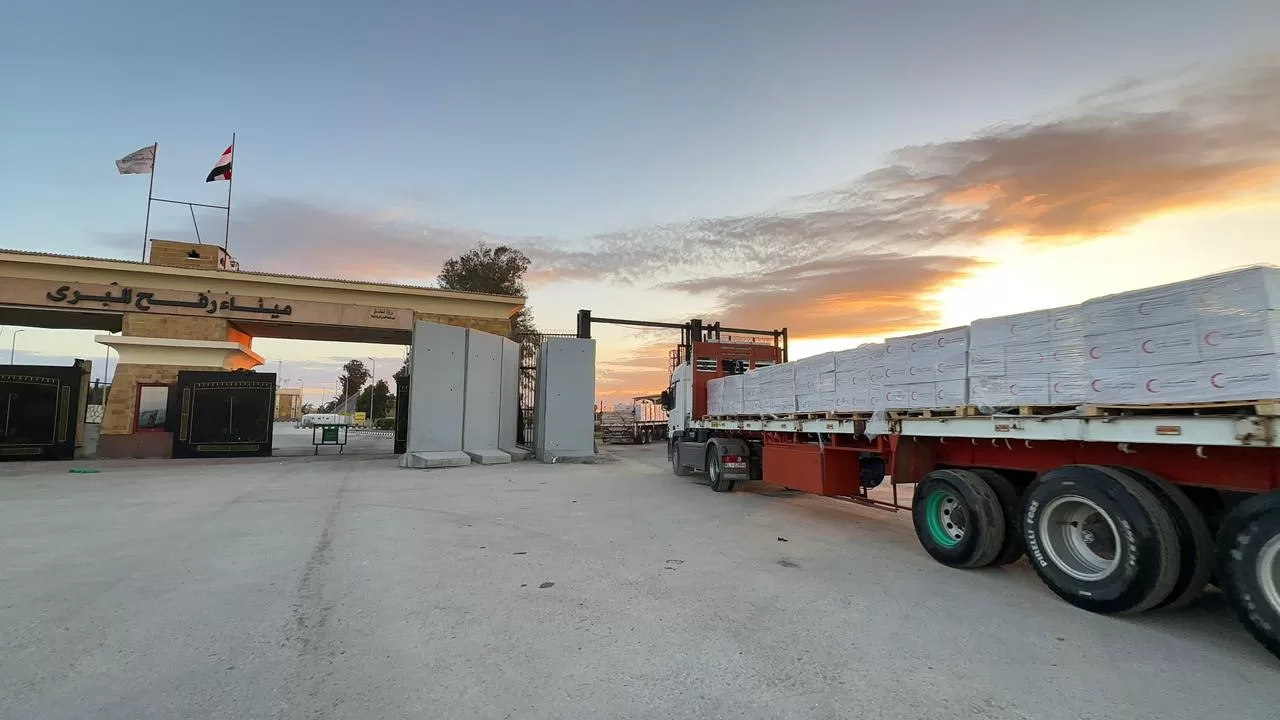
The 132nd 130th humanitarian aid convoy of the “Zad Al-Ezza from Egypt to Gaza” began entering the Gaza Strip on Thursday through the secondary gate of Rafah Checkponit heading toward the Karam Abu Salem crossing in preparation for delivery into the enclave.
A reliable source at Rafah Checkpoint said the trucks – which are part of the 132nd convoy – are carrying thousands of tons of relief and humanitarian aid.
The supplies include food baskets and foodstuffs, mainly vegetables, medical supplies and medicines, personal care items, various petroleum products (gasoline, natural gas and diesel), as well as shelter materials such as tents, blankets and winter clothing.
The Egyptian Red Crescent has served as the national mechanism for coordinating and dispatching aid to Gaza since the start of the crisis in October 2023. Rafah Chechpoint was not fully closed during that period and the organization has remained on high alert at all logistics centers, continuing its efforts to deliver aid with the support of 65,000 volunteers.
Israeli occupation forces closed crossings linking Gaza on March 2, 2025, after the end of the first phase of the Gaza ceasefire agreement and the failure to reach a deal to consolidate the truce. The ceasefire was breached with heavy air strikes on March 18, 2025, followed by renewed ground incursions into areas from which Israeli forces had previously withdrawn. Israeli authorities also barred the entry of humanitarian aid trucks, fuel and shelter supplies for displaced people who lost their homes in the war on Gaza, and refused to allow the entry of heavy equipment needed for rubble removal and reconstruction.
Aid deliveries to Gaza resumed in May 2025 under a mechanism implemented by Israeli authorities and a US security company, despite objections by the United Nations Relief and Works Agency for Palestine Refugees (UNRWA), which said the mechanism violated established international procedures.
The Israeli army later announced a “temporary truce” lasting 10 hours on Sunday, July 27, 2025, suspending military operations in parts of Gaza to allow the delivery of humanitarian assistance.
Mediators – Egypt, Qatar and the US – continued efforts to secure a comprehensive ceasefire agreement in Gaza and an exchange of prisoners and detainees. An agreement was reached in the early hours of Oct. 9, 2025, between Hamas and Israel on the first phase of a ceasefire deal under a plan proposed by US President Donald Trump at Sharm El-Sheikh, brokered by Egypt, the US and Qatar, with Turkish efforts.
The second phase of the agreement entered into force on Monday, Feb. 2, 2026, following the completion of the exchange of prisoners and detainees and the handover of the remains of the last Israeli detainee under the first phase.
Under the deal, Palestinians were allowed to enter Gaza, and wounded and injured people were permitted to leave for treatment in Egyptian hospitals after the Palestinian side of the Rafah Crossing was reopened.

