


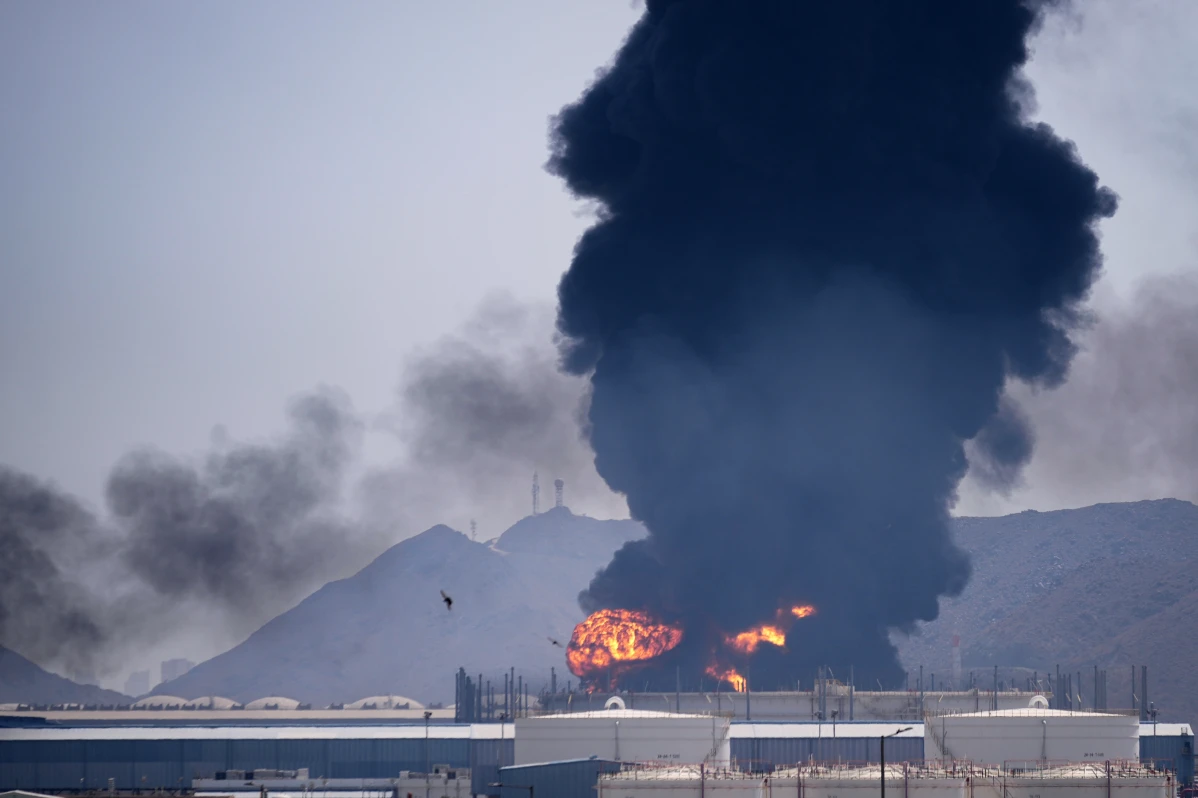
One month into their war with Iran, the United States and Israel find themselves confronting an opponent that fights more like an insurgency than a nation — using increasingly limited resources to inflict maximum pain.
Despite being battered daily by airstrikes from two of the world’s most sophisticated militaries, Iran has shown it can still torment its Gulf Arab neighbours and Israel with missiles and drones and maintain a stranglehold on the world’s economy, primarily through threats.
Tehran’s ability to control the flow of traffic — and therefore the flow of oil — through the Strait of Hormuz is its biggest strategic advantage.
And, in fact, it’s a tactic that Iran’s very own proxies have adopted for years under decades of its tutelage as the leader of the self-described “Axis of Resistance.”
Meanwhile, Iran’s economy, long ago cut off from the global markets because of sanctions, is broadly insulated from the pain it is now inflicting on others.
The chokehold on the strait is causing oil prices to skyrocket, stock markets to plunge, and the cost of many basic goods to rise, putting pressure on US President Donald Trump that could lead him to escalate the conflict further.
While Iran has found some success with cutting off the strait, it has its own problems lurking at home that the US and Israel may be able to exploit the longer the war goes on. But its theocracy’s path to victory through insurgent-like tactics remains fairly simple — just survive.
“The Islamic Republic understands that it cannot defeat the United States militarily,” wrote Shukriya Bradost, a Mideast security analyst. “Instead, its objective is both simpler and more strategic: Survive the war long enough to claim victory.”

