










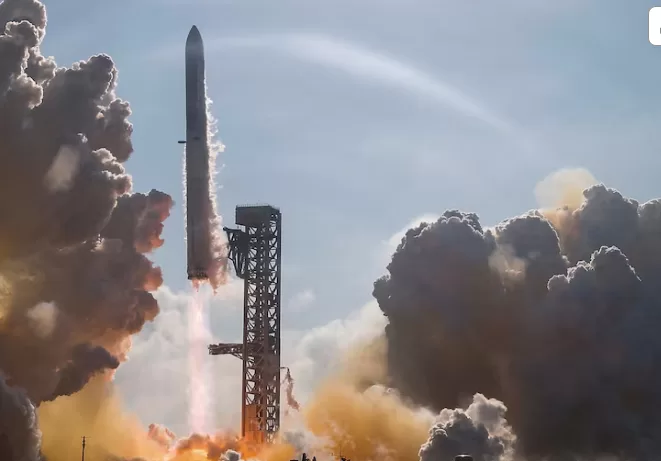
NEW YORK – As SpaceX (SPCX.O), prepares for its record-breaking $75 billion market debut with great fanfare, Wall Street traders, brokers and exchanges are working nonstop to make sure their trading systems can handle the blockbuster IPO and avoid the chaos that marred other highly anticipated launches, according to Reuters.
Weighing heavily is Facebook’s infamous debut in 2012, which was upended by technical glitches that turned into hours of uncertainty over whether trades had been properly executed, ultimately costing market-makers hundreds of millions of dollars. Financial firms have undergone weeks of preparation to ensure SpaceX’s Friday trading debut is a success, particularly ahead of other blockbusters expected later this year from Anthropic and OpenAI.
“It’s an historic event,” Peter Tuz, president of Chase Investment Counsel in Charlottesville, Virginia, said. “I hope it trades successfully afterwards, for the market’s sake. If something like this comes out and trades down, not only will it cast a pall over the market in general, but over the other IPOs that are lining up for the rest of the summer.”
While Wall Street executives host splashy client events and deck out their foyers to promote the rocket maker, those in key roles at exchanges, market makers, investment firms and brokerages are more concerned with ensuring a smooth trading kick-off. In a sign of brokerages’ long memories, one executive at a Wall Street firm working on the IPO who requested anonymity even mentioned lingering scar tissue from the Facebook debut.
Executives at Nasdaq as well as leading market makers like Citadel Securities and Jane Street have been running numerous simulations and stress-testing systems, according to three people directly familiar with the matter. Nasdaq invited clients to weekend mock IPOs over the past month, two of the sources said.
Bookrunner Morgan Stanley has a key role as the IPO’s stabilization agent, the brokerage responsible for the opening of the stock and ensuring it trades in an orderly manner. Morgan Stanley did not respond to requests for comment.
Executives at S&P Global, which is providing the technology that helps facilitate allocations to institutional investors and is working with SpaceX’s underwriters on those orders, have been constantly testing their systems due to the deal’s size.
Darren Thomas, head of enterprise solutions at S&P Global Market Intelligence, said the firm also used AI to make sure its code was operating efficiently.
“We really had to scale the infrastructure so that it could handle much larger volumes,” said Thomas. “We’ve never seen anything of this size before.”
Exchanges have upgraded their infrastructure to handle heavier volumes since a technology failure disrupted Facebook’s $16 billion IPO. Nasdaq, where it was listed, paid nearly $42 million in claims to participants who estimated a collective $500 million in losses. The exchange was also fined $10 million by the Securities and Exchange Commission.
That same year, BATS Global Markets attempted to launch its stock on its own trading platform, until massive technological glitches forced BATS to withdraw the deal entirely.
Nasdaq has overhauled its trading systems, upgraded its flagship IPO technology Bookviewer in the lead-up to the SpaceX IPO, and has a backup trading platform if its primary technology fails.

