








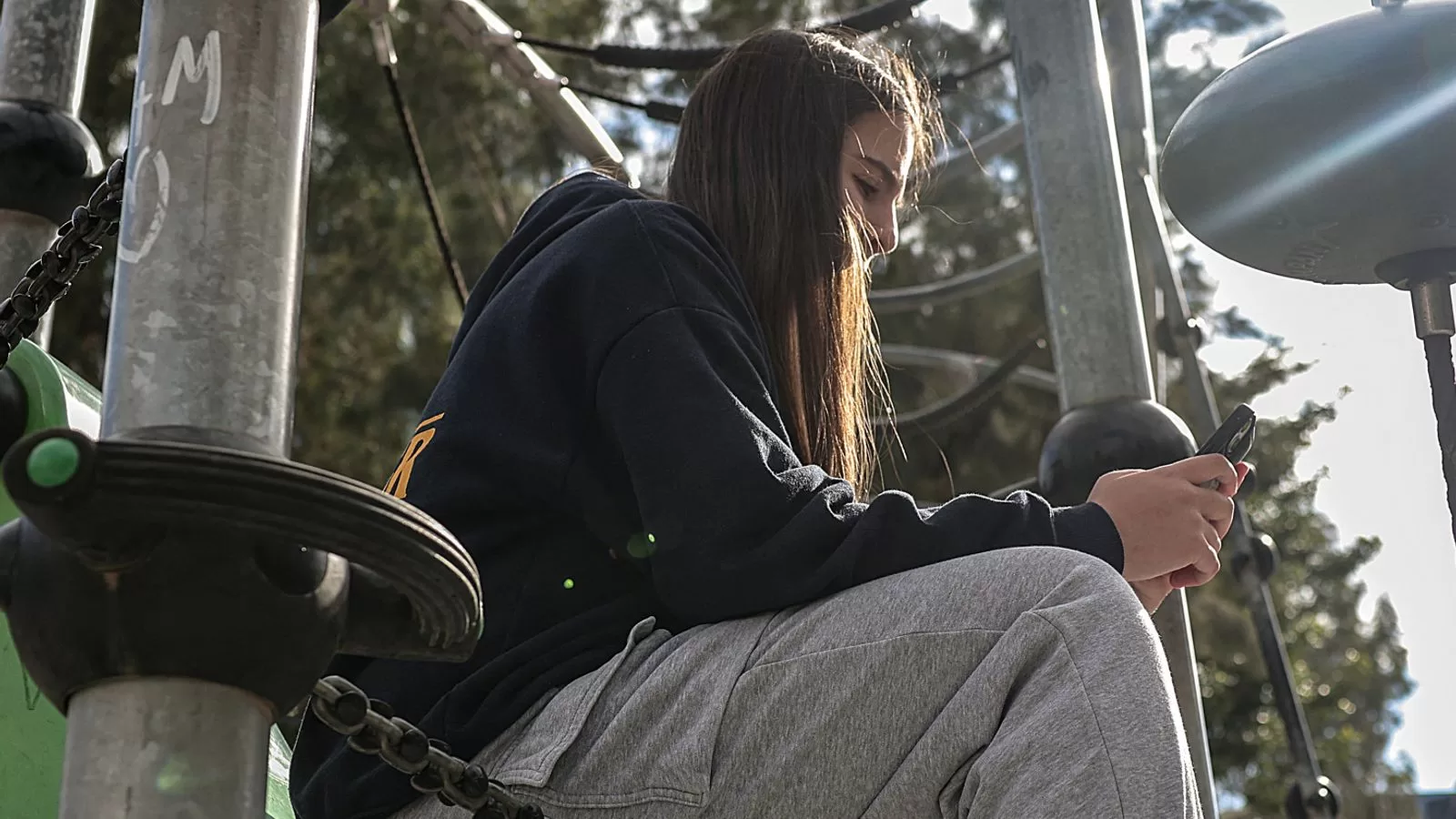
Prime Minister Kyriakos Mitsotakis confirmed the ban on Wednesday morning, announcing it would begin on 1 January 2027.
He said rising anxiety, sleep problems and addictive platforms were to blame for the ban.
In a video message to Greek children, the PM said spending long hours in front of screens does not allow their minds to rest, and they faced growing pressure from constant comparison on social media and online comments.
“Greece will be among the first countries to take such an initiative,” Mr Mitsotakis said.
“I am certain, however, that it will not be the last. Our goal is to push the European Union in this direction as well.”
According to local media reports, Greece’s ban is likely to be enforced through a state-mandated app that is installed on all devices.
The app can block access to social media sites like TikTok, Instagram and Facebook and is already used to stop underage teenagers in the country from buying cigarettes and alcohol.
There is widespread support for a social media ban among adults in Greece, with 80% supporting the restrictions, according to polling firm ALCO.
According to the Greek Safer Internet Centre in Athens, 75% of children using social media in Greece are of primary‑school age.
“Ban them, shut them down. We’ve reached our limits… We parents need help,” one mother told the Reuters news agency before the ban was announced.
Georgia Efstathiou, 43, said she had tried everything to stop her 14-year-old son from spending so much time on social media – and called on the government to intervene.
Another parent, Dimitris Daniil, 44, said he thought a ban should only be in place as a last resort.
“I’d prefer a different approach, limiting mobile phone use within the family,” he said.
“But where that’s not possible, perhaps a ban would work as the extreme remedy.”
His 14-year-old daughter Katerina said most teenagers her age have never known a world without social media.
“It is the way we learned since we were born,” she said.
“I can control it – but then again I usually get carried away.”
Phones are already banned in Greek schools, unlike the UK, and the government has set up parental control platforms to limit teenagers’ screen time.
As well as announcing the ban, Mr Mitsotakis wrote to European Commission President Ursula von der Leyen to call for coordinated EU action.
He argued national measures would not be enough to protect young people and proposed establishing an EU-wide “digital age of majority” of 15.
He asked for a coordinated framework to be put in place across the bloc by the end of 2026.

