




Egypt has expressed its desire to host the 2028 Africa Cup of Nations (AFCON).
This comes at a time the continental football landscape shifts towards a new era.
The new edition of the tournament will carry immense historical weight, being the last under the traditional biennial format before it transitions to a four-year cycle.
Egypt has not submitted an official bid to the Confederation of African Football (CAF) yet, but the government is laying the groundworkalready.
Ministry of Youth and Sports Spokesperson Mohamed el-Shazly said Egypt stands ready if any progress is made on the hosting rights of the championship.
“Egypt’s infrastructure is fully prepared to meet international standards,” he remarked to the Egyptian Gazette in a statement.
The 2028 edition of this top continental event represents a bridge in African football’shistory. It will be an exceptional one, following the 2025 tournament in Morocco and the 2027 edition to be co-hosted by Kenya, Tanzania, and Uganda.
CAF’s recent decision to hold the tournament every four years, mimicking the UEFA European Championship, aims to ease the “club vs. country” friction that often sees European clubs reluctant to release African stars mid-season.
Egypt’s confidence stems from a decade of mega-project investments that have transformed its sporting landscape.
Unlike previous bids, where venues required years of renovation, Egypt’s current arsenal is largely tournament-ready.
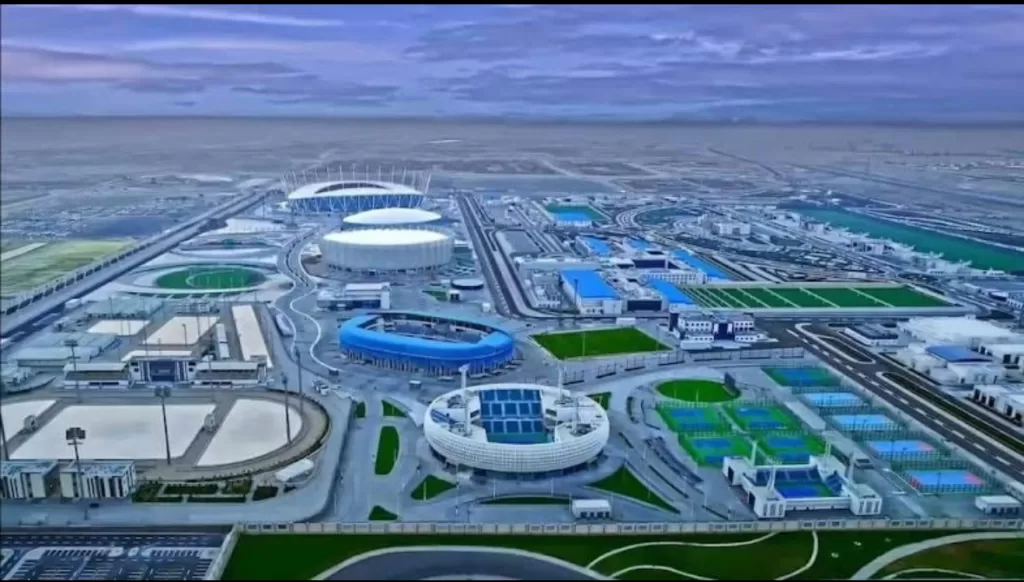
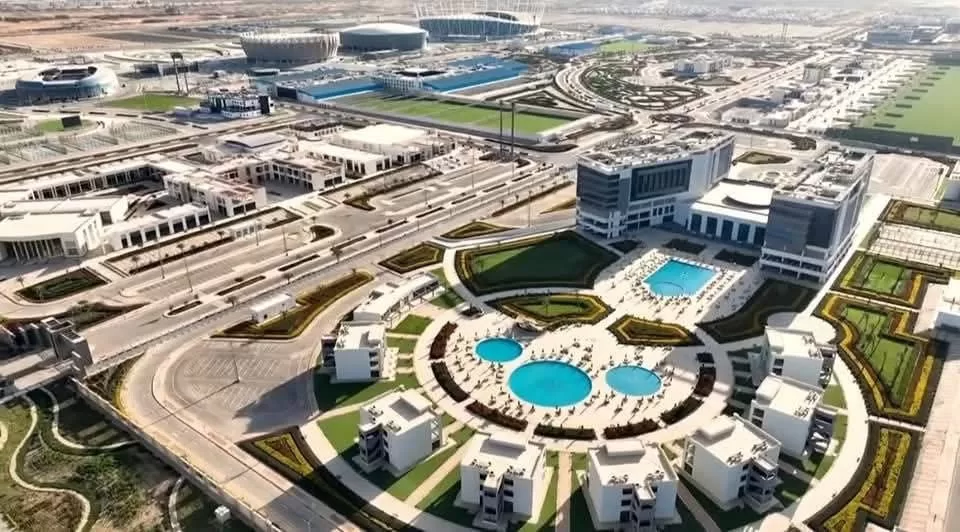
The centrepiece of the North African country’s readiness is the massive investment in sports infrastructure, most notably the Egypt International Olympic City in the New Administrative Capital.
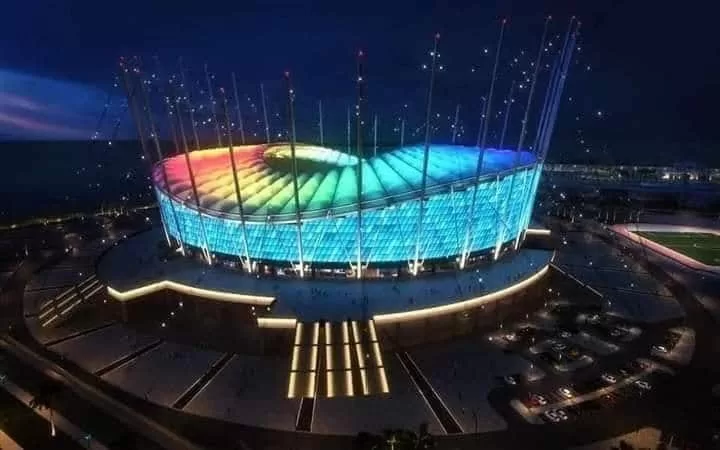
This sprawling complex features the MisrStadium which boasts a fan capacity of over 93,000, making it the second-largest in the whole of Africa, after the FNB Stadium in Johannesburg, South Africa, which has a total spectator capacity of 94,736.

Designed with a blend of ancient Egyptian aesthetics and futuristic technology, the Olympic City is not just a stadium but a comprehensive sports hub equipped with multiple indoor arenas, Olympic-sized swimming pools, and specialized medical facilities, all of which exceeding standard requirements for continental tournaments.
Beyond the new capital, Egypt has made a radical transformation of its existing facilities, investing approximately EGP54 billion into sports infrastructure over the last few years.
This development includes the complete modernization of legendary venues like Cairo International Stadium and Alexandria’s Borg El Arab, the third largest in Africa, alongside the construction of new training centres and sports cities nationwide.
With the recent completion of high-speed rail networks and the New Capital’s monorail, the country offers a level of logistical connectivity that positions it as a candidate capable of hosting events on a global scale, including the FIFA World Cup.
Egypt’s bid is bolstered by a proven track record of hosting major international events under challenging conditions, such as the 2019 AFCON and the 2021 Men’s Handball World Championship.
Egypt’s current readiness for 2028 is firmly rooted in the resounding success of hosting the 2019 Africa Cup of Nations, a tournament that many experts consider a master-class in emergency sports management.
After original host Cameroon was stripped of the rights, just five months before kick-off, Egypt stepped in and delivered a world-class event on a remarkably short timeline.
This achievement proved that the nation possessed not only the infrastructure but also the logistical muscle to manage the first-ever 24-team expansion of the tournament, which remains the largest format in AFCON history.
The 2019 edition served as a debut for several revolutionary technologies that have since become standard in Egyptian sports.
The introduction of the Tazkarti (Fan ID) system completely modernized fan entry and security, virtually eliminating the chaos often associated with large-scale ticket sales and ensuring a safe, family-friendly environment in the stands.
This technological leap was matched by a massive aesthetic overhaul of six major stadiums, where pitches were replaced with world-class turf and facilities were upgraded to meet the highest global broadcasting standards, earning praise from CAF and international media alike.
The government’s vision, aligned with Egypt Vision 2030, seeks to use the 2028 AFCON as a catalyst for sports tourism and economic growth.
As the EFA prepares to move forward with the official application following the conclusion of current continental commitments, Egypt stands ready to welcome the African football family to a tournament that promises to be as technologically advanced as it is culturally significant.