


By Mohamed Attia
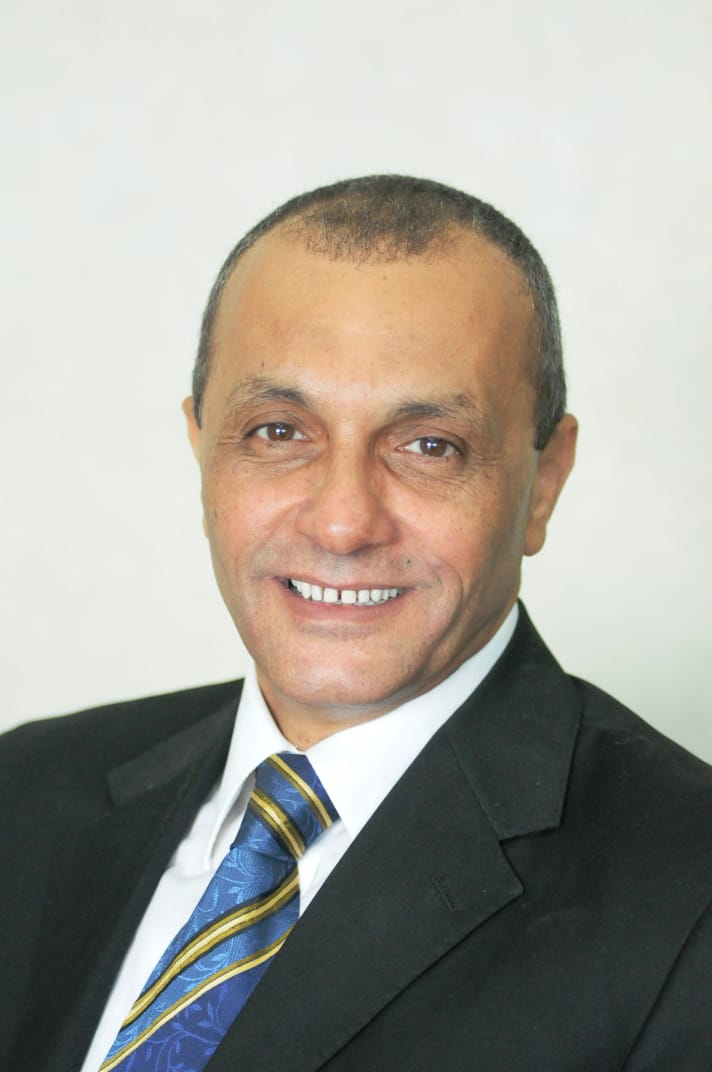
Many files are waiting for the newly-appointed minister of civil aviation Mohamed Abbas Helmy during the coming period, after taking over the reins of the ministry.
Minister Helmy stressed the importance of continuing development and modernisation plans in the civil aviation system.
“We will not start again, but we will build on what the previous ministers did to complete the development system with the aim of maximising revenues and providing a distinguished service befitting the leading position Egypt enjoys in the field of air transport regionally and internationally,” he said.
The most important files to be considered by the minister are to complete the development process of the air transport system in accordance with the Egypt Vision 2030.
For example, with regard to Egyptian airports nationwide, the minister will work to complete developmental projects at Egyptian airports on their specified dates without any delay, as well as continuing to modernise the security system in them.
During the last period, Egyptian airports achieved a great achievement on the level of the African continent in passenger traffic and air freight, as Cairo International Airport topped the list issued by the Airports Council International for the first ten African airports in terms of passenger traffic in 2021.
Cairo airport also came in the second place in cargo traffic while Hurghada airport ranked fifth and Sharm El-Sheikh airport ranked eighth among the first ten African airports in terms of the number of passengers, according to the statistics of the Airports Council International.
As for Sphinx airport, the passenger building was expanded and the total area of the building increased to 24,000 flat meters instead of 3,600 meters, increasing the airport’s capacity to 900 passengers per hour instead of 300 passengers per hour, bringing its total capacity to about 1.2 million passengers annually.
Sharm El-Sheikh International Airport also witnessed an increase in its capacity from 7.5 million passengers to 9.5 million annually to keep pace with the increasing air and tourist traffic to the city of Sharm El-Sheikh.
St. Catherine airport is also witnessing an increase in the area of the passenger building, raising its efficiency and increasing its capacity through the design of a new building to accommodate 600 passengers per hour, which can be increased to 1200 passengers per hour with a total surface of 8,000 square meters.
The efficiency of Borg El Arab International Airport has also been raised, as the first new “environmentally friendly” building is being constructed in co-operation with the Japanese International Development Agency “JICA” in line with the Egyptian state’s strategy to confront climate change and turn green.
The new building accommodates 4 million passengers annually, which is the same case for Hurghada airport, which witnessed the construction of a new passenger building with a capacity of 7.5 million passengers annually to increase the airport’s capacity to receive the expected increase in traffic.
The Capital International Airport is also witnessing development work, as it has been equipped with the latest surveillance cameras, X-Ray detection, and the installation of an automatic fire alarm system, access control system and camera surveillance systems.
The ministry has raised the efficiency of the air field at Luxor and Assiut airports and maintained the main corridor and auxiliary corridor at Kharga Airport.
Also, the security and development of navigation systems at Berenice Airport were increased and the efficiency of the control tower at Marsa Matrouh Airport increased.
Among the most important recent achievements is the fact that 11 of the Egyptian airports obtained the Health Accreditation for Safe Travel “AHA” certificate from the Airports Council International (ACI), namely Cairo, Taba, Marsa Matrouh, Sharm El-Sheikh, Hurghada, Luxor, Aswan, Burj Al Arab, Sohag, Assiut and Marsa Alam airports.
The minister is also seeking to complete the plan to modernize the air fleet of EgyptAir, expand the air network, and develop services provided to travelers, which will contribute to attracting more air and tourist traffic to Egypt.
It is also planned that the EgyptAir network will reach 96 cities in 2026 instead of 65 cities currently, an increase of 47 per cent, when the planes to be agreed upon in the coming period are available.
The national air carrier also plans to increase its fleet for most of the wide and medium models through negotiations with manufacturers and leased companies to meet their needs so that the company can open new destinations in Africa, America and the Far East and increase the frequencies for those destinations.
EgyptAir has also completed the establishment of a low-cost Air Sphnix company that targets new segments of Egyptians and foreigners and covers new points in the network.
The minister also sets the file of upgrading the human element, which represents the real wealth of the sector, as it is the most important element of the comprehensive development and development system, especially that the aviation sector is full of skilled human cadres that will contribute to achieving a promising and brighter future.


Discussion about this post