





By Mohamed Attia
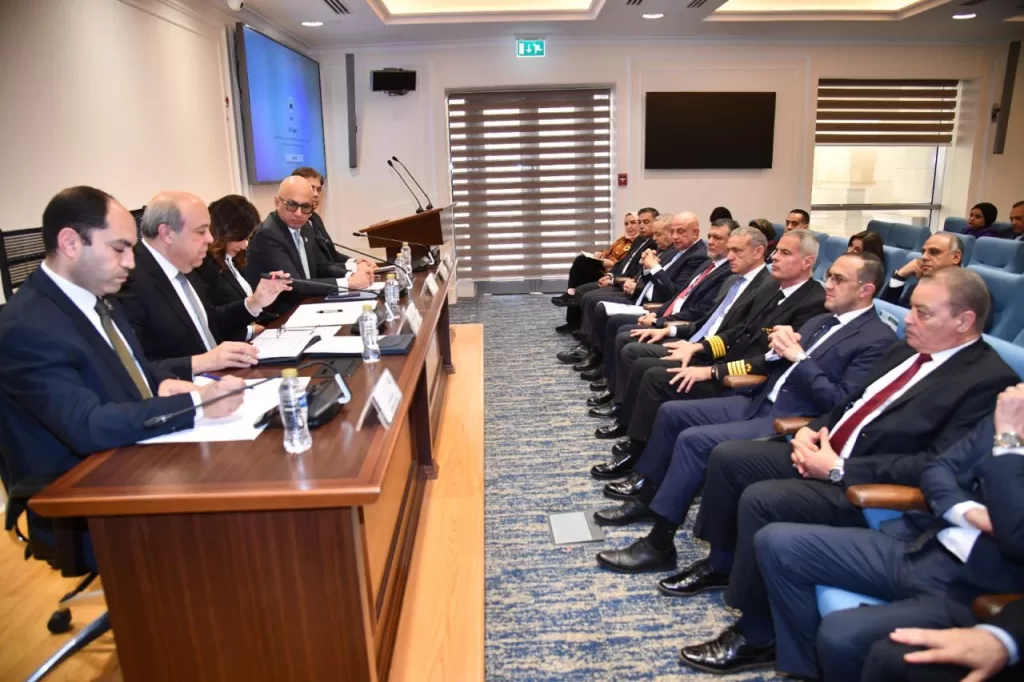
Minister of Civil Aviation Sameh Hefny recently presented a comprehensive development strategy to the Tourism and Aviation Committee of the House of Representatives.
During the meeting, chaired by Sahar Talaat Mustafa, the Minister outlined a vision to modernise Egypt’s aviation infrastructure and enhance its role as a regional hub. This dialogue between the executive and legislative branches focused on supporting the national economy and tourism through improved services and strategic growth.
Building Terminal 4
The Ministry’s most prominent national project is the construction of Terminal 4 at Cairo International Airport.
This new terminal is designed to act as a “new lung” for the airport, significantly increasing its capacity to handle the rapid growth in global travel. By implementing the latest technological systems, the project aims to improve the passenger experience and strengthen the airport’s competitiveness on both a regional and international level.
Modernising the fleet
EgyptAir is currently undergoing a major expansion to prioritise quality and operational efficiency.
The national carrier plans to increase its total fleet to 97 aircraft by the 2030/2031 season, which includes the addition of 34 new Airbus and Boeing planes. Furthermore, the airline is upgrading the cabins of 19 Boeing 737-800s and two A330-200s to ensure modern comfort for all passengers.
These efforts helped EgyptAir jump 20 places in the 2025 Skytrax global rankings, winning several awards for its service and staff in Africa.
Financial recovery
The national carrier has achieved record profit margins and is successfully working through a four-year plan to eliminate previous losses.
So far, accumulated losses have been reduced by more than 50 per cent with the goal of reaching full financial stability within the next few years. Additionally, Air Cairo—the economic arm of EgyptAir—is set to grow its fleet from 40 to 82 aircraft to better support tourism and charter flights across the country.
Faster travel procedures
To make travel more seamless, the Ministry is moving toward a fully digital system at Cairo International Airport.
In coordination with the Ministry of Interior, the requirement for paper passport cards is being gradually phased out, starting with the seasonal terminal and expanding to others.
The Ministry also plans to activate electronic passport gates (E-Gates) to speed up arrival and departure procedures for all passengers in the coming phase.
Better airspace management
The Ministry is restructuring Egyptian airspace by redistributing flight paths to make them more direct. This change is designed to reduce flight distances and travel times, which in turn lowers fuel consumption and carbon emissions.
By modernising air traffic control with the latest global technology, Egypt aims to attract more international flights to transit through its airspace while maintaining the highest safety standards.
Private sector co-operation
Minister Hefny clarified that while airports are sovereign assets and are not for sale, the state is open to co-operating with the private sector for management and operations.
Hurghada International Airport is the first project in this program, with 68 international companies already showing interest in the management tender. This approach aims to improve service efficiency and commercial activity before expanding the model to other Egyptian airports.

