


By Mohamed Attia
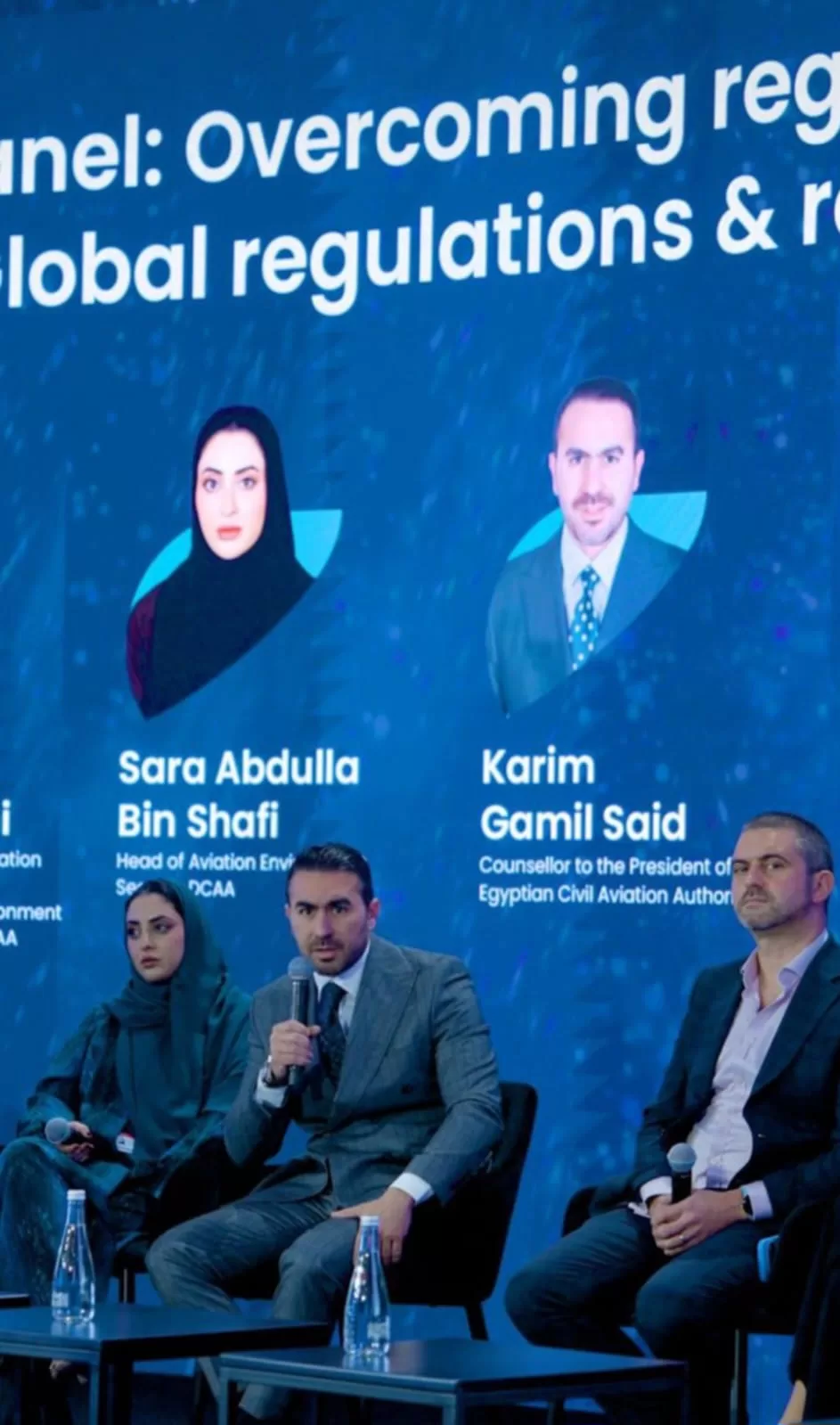
The Dubai Airshow 2025 hosted one of the most prominent specialised sessions on aviation policies and sustainability, entitled “Overcoming Regulatory Fatigue – Global Laws and Regional Reality.”
This was part of the Aerospace 2050 Sustainability Conference, with the participation of a distinguished group of aviation authority representatives from the region and around the world.
Captain Karim Gamal, Advisor to the Chairman of the Egyptian Civil Aviation Authority, pointed out that from a legislative perspective, Egypt has
fully integrated all international commitments into its national aviation system, ensuring full alignment with the standards of the International Civil Aviation Organisation (ICAO).
This includes incorporating all requirements and best practices within the regulatory framework and oversight mechanisms.
This became crystal clear in the update and submission of Egypt’s Second National Aviation Action Plan for 2025 to ICAO, underscoring Egypt’s full commitment to achieving the long-term global aviation goals. These goals are pursued through key pillars, including improving operational efficiency, strengthening airport infrastructure, developing the operational capabilities of air navigation and environmental management systems, and implementing a unified system for measurement and reporting.
Gamal added that this approach aligns with the Egyptian Ministry of Civil Aviation’s strategy to enhance and develop all activities in accordance with the highest international standards and sustainable development requirements.
This contributes to improving the international ranking of Egyptian airports and increasing their readiness to meet modern global standards.
He also emphasised that airport sustainability and infrastructure enhancement remain top priorities for the Ministry.
Recently, Egyptian airports have achieved international recognition reflecting real progress on the ground, most notably Cairo International Airport receiving the ACI Leadership in Sustainability Award as the largest airport in Africa, alongside Hurghada International Airport achieving zero-waste status.
Regarding operational sustainability, Gamal highlighted that Egypt has positioned itself as a pioneering and promising country in Africa and the region in the production of Sustainable Aviation Fuel (SAF).
This is being implemented through the national sustainable fuel project led by ESAF, with an annual production capacity of 120,000 tonnes – a strategic initiative that strengthens Egypt’s ability to support neighboring countries in meeting global aviation sustainability requirements.

