


By Mohamed Attia
Cairo International Airport is set for a major transformation under a comprehensive strategy by Egypt’s Ministry of Civil Aviation, aiming to establish it as a central long-haul travel hub for Africa and the Middle East, while significantly enhancing the passenger experience.
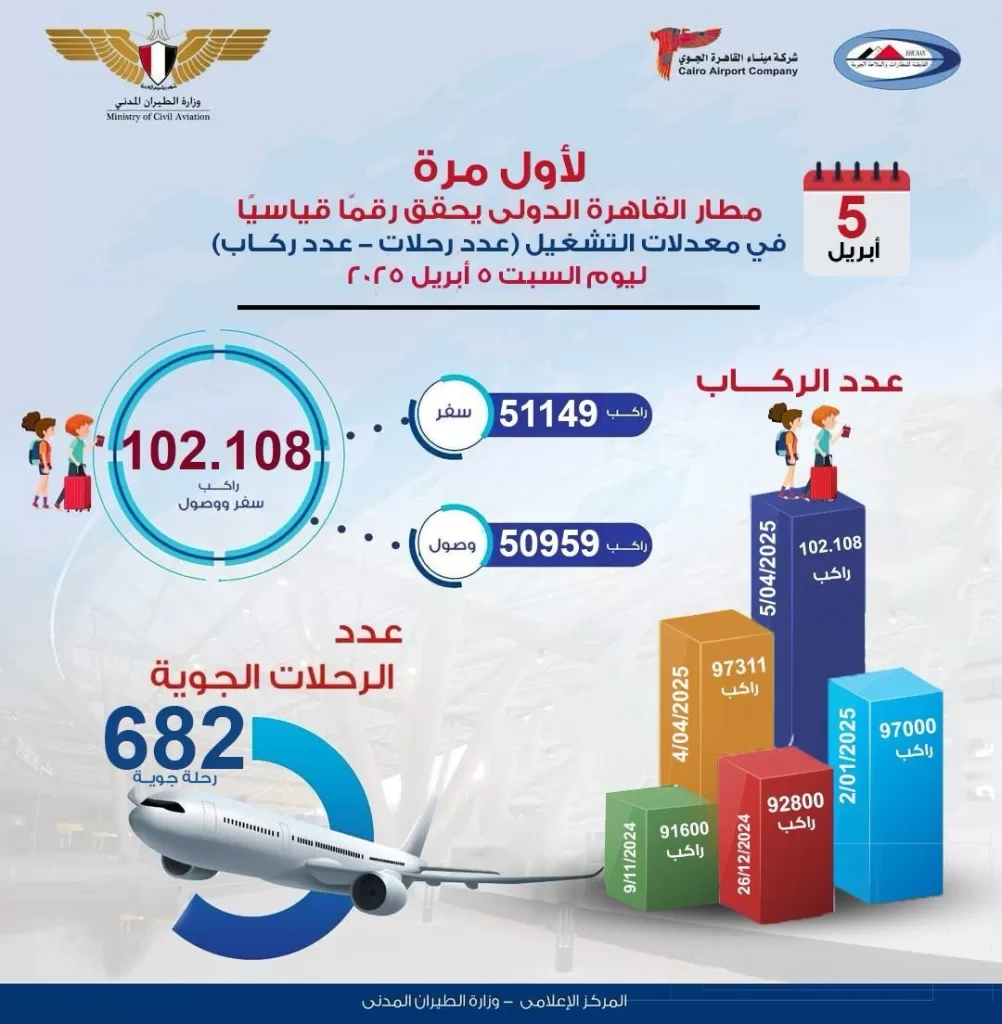
The plan envisions turning Cairo Airport into a major transit point for global travellers, improving logistics services and airport infrastructure to match the growing demand for air travel. The strategy follows a record-breaking performance in recent weeks, when the airport handled over 102,000 passengers in a single day – its highest since opening in 1963 – onboard 682 flights.
This milestone, officials say, is a testament to the effectiveness of the ministry’s development strategy and reflects the airport’s readiness to absorb surging travel volumes, positioning it as Egypt’s primary gateway to the world.
Minister of Civil Aviation Sameh El-Hefny confirmed the record numbers align with the ministry’s long-term vision to modernise Egypt’s airports, increase capacity, and transform Cairo International into a key aviation hub in the region. He said efforts are underway to double the airport’s passenger capacity to 60 million annually in line with Egypt’s Vision 2030 development strategy.
El-Hefny also highlighted the ministry’s push to involve the private sector in airport development projects, ensuring sustainability and the ability to meet projected travel demand.
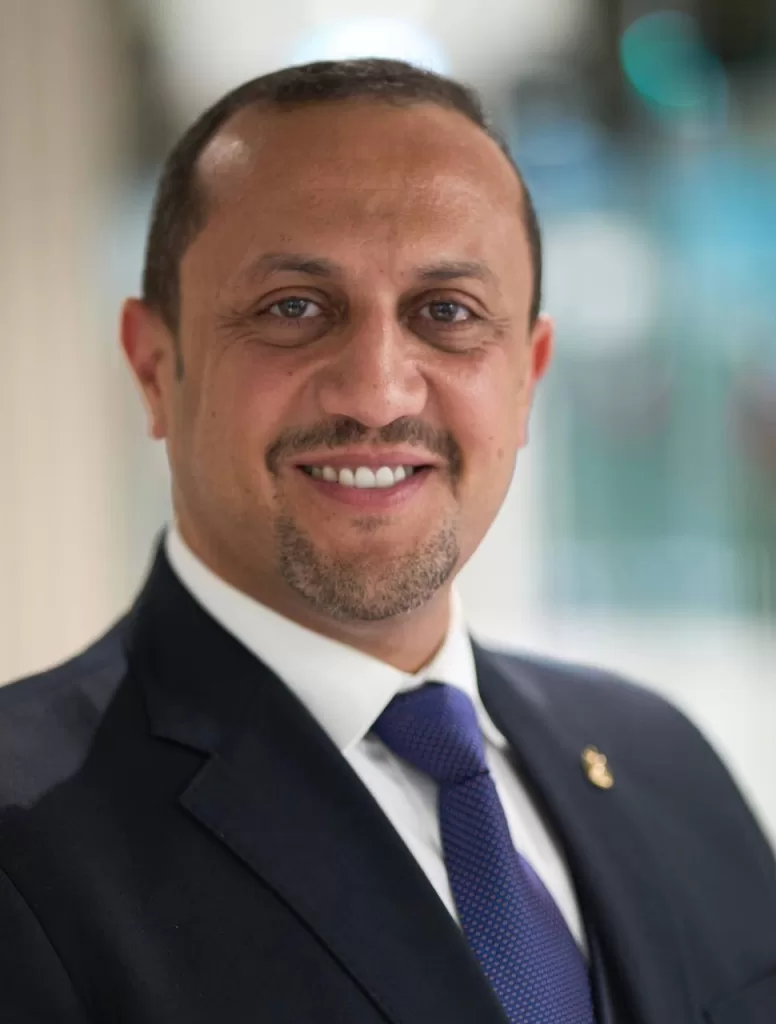
Eng. Ayman Fawzy Arab, Chairman of the Holding Company for Airports and Air Navigation, said the record traffic demonstrates Cairo Airport’s growing capacity to absorb rising air traffic. He noted that airport management is focused on integrating advanced technologies and improving logistics to provide a seamless and elevated travel experience.
The company, he added, has already initiated plans to upgrade airports across Egypt to support the country’s broader tourism and economic goals.

Magdy Ishaq, Chairman of Cairo Airport Company, said that maximum operational readiness has been declared across all airport facilities to match the intensity of flight activity. He stressed that close coordination with relevant authorities ensures smooth passenger movement and fast processing at departure and arrival terminals. Emergency and operational plans have been activated across all terminals, including logistics, with well-staffed teams from various departments to maintain service quality.
The centrepiece of the strategy is the construction of Terminal 4, which will be designed to handle at least 30 million passengers annually, with the potential to scale up to 40 million.
Equipped with cutting-edge infrastructure, the new terminal will feature a new runway fitted with advanced navigation systems, solar-powered car parks, and an upgraded road network. The design is being developed in partnership with US-based firm Pangiam, with a focus on integrating emerging technologies.
The terminal is expected to be completed within 4–5 years and forms part of Egypt’s wider efforts to grow its tourism industry, which is projected to attract 15.3 million visitors in 2024 – a 4% rise despite regional challenges.
During the recent Eid Al-Fitr holiday, Cairo Airport experienced a surge in passenger traffic. Between March 30 and April 2, over 312,000 passengers passed through the airport on 2,433 flights. Arrival passengers totalled 168,822 on 1,215 flights, while 143,470 departed on 1,218 flights.
Despite the operational pressure, airport authorities reported smooth operations and full service delivery for all travellers.
With an ambitious roadmap in place, Cairo International Airport is positioning itself as a future-ready aviation hub, connecting continents and driving Egypt’s role in the global travel landscape.