

By Mohamed Attia
EgyptAir is continuing its strategic plan to strengthen its fleet over the coming years, which includes adding 34 new aircraft by 2030.
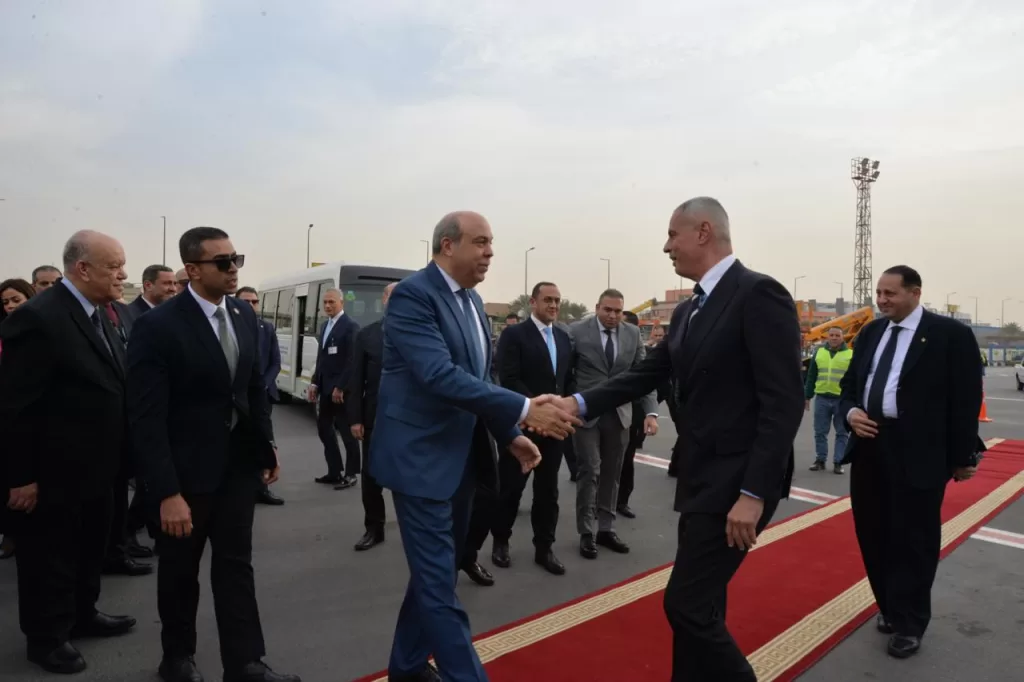
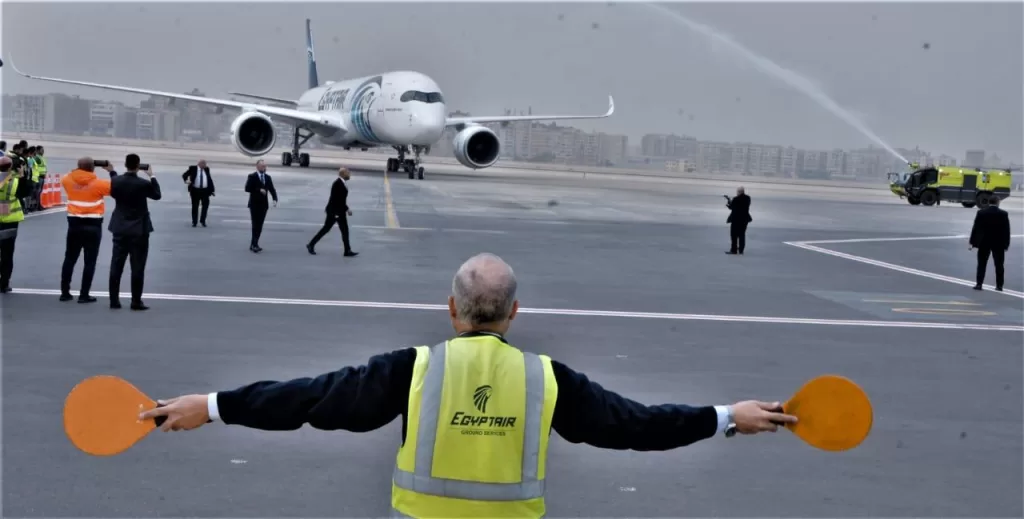
A few days ago, the first Airbus A350-900 arrived at Cairo International Airport. It was received by Minister of Civil Aviation Sameh el-Hefny, along with senior officials from the ministry, EgyptAir Holding Company, and its subsidiaries.
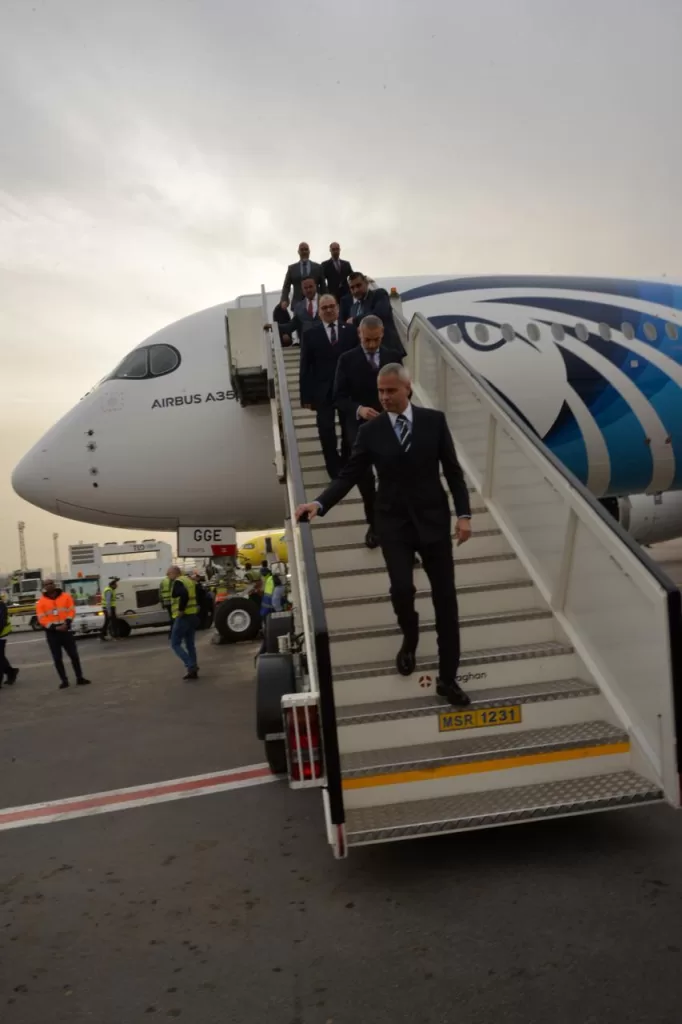
The aircraft arrived on a flight operated using a blend of Sustainable Aviation Fuel (SAF), marking a new phase in the fleet modernisation plan and enhancing operational capabilities, supporting EgyptAir’s position as a leading national carrier in the region.
On board the flight were Captain Ahmed Adel, Chairman and CEO of EgyptAir Holding Company, and Captain Mohamed Alyan, Chairman of EgyptAir Airlines.
EgyptAir is the first airline in North Africa to operate this advanced aircraft model. The plane is part of a deal with Airbus to acquire 16 A350-900 aircraft. These aircraft are expected to play a key role in expanding EgyptAir’s route network, as they are capable of operating long-haul flights efficiently, enabling nonstop service to distant destinations, including cities in the United States such as Los Angeles, as well as several destinations in East Asia. This will enhance the airline’s competitiveness and strengthen its presence in international markets.
The deal also reflects EgyptAir’s shift toward new-generation, environmentally friendly aircraft that help reduce carbon emissions and noise levels, in line with global aviation sustainability trends and Egypt’s national vision for more efficient and sustainable air transport systems, supporting emission reduction efforts and the green economy.
El-Hefny stated that the addition of the new aircraft represents a major step in modernising the fleet and strengthening the national carrier’s ability to provide distinguished services to passengers.
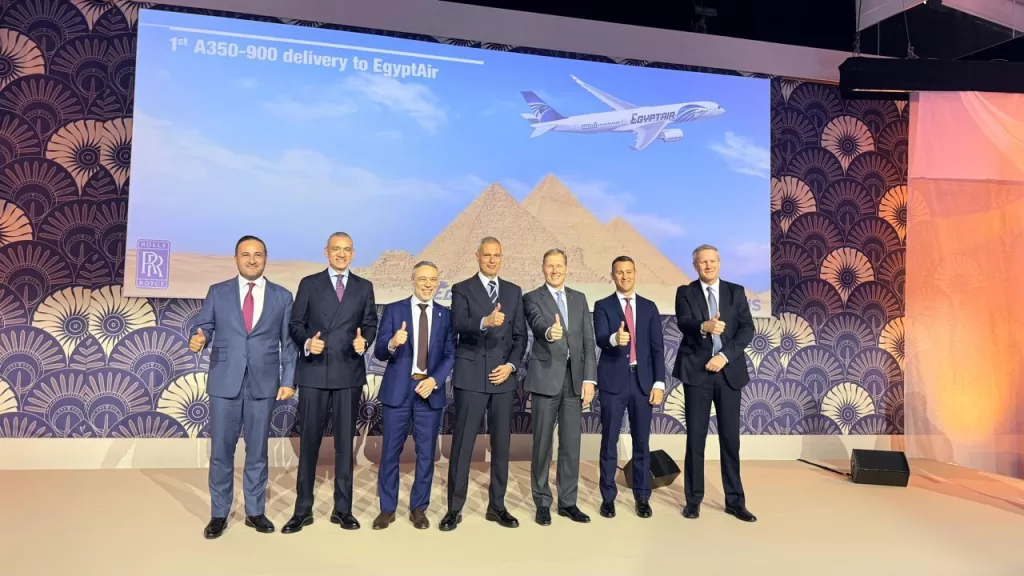
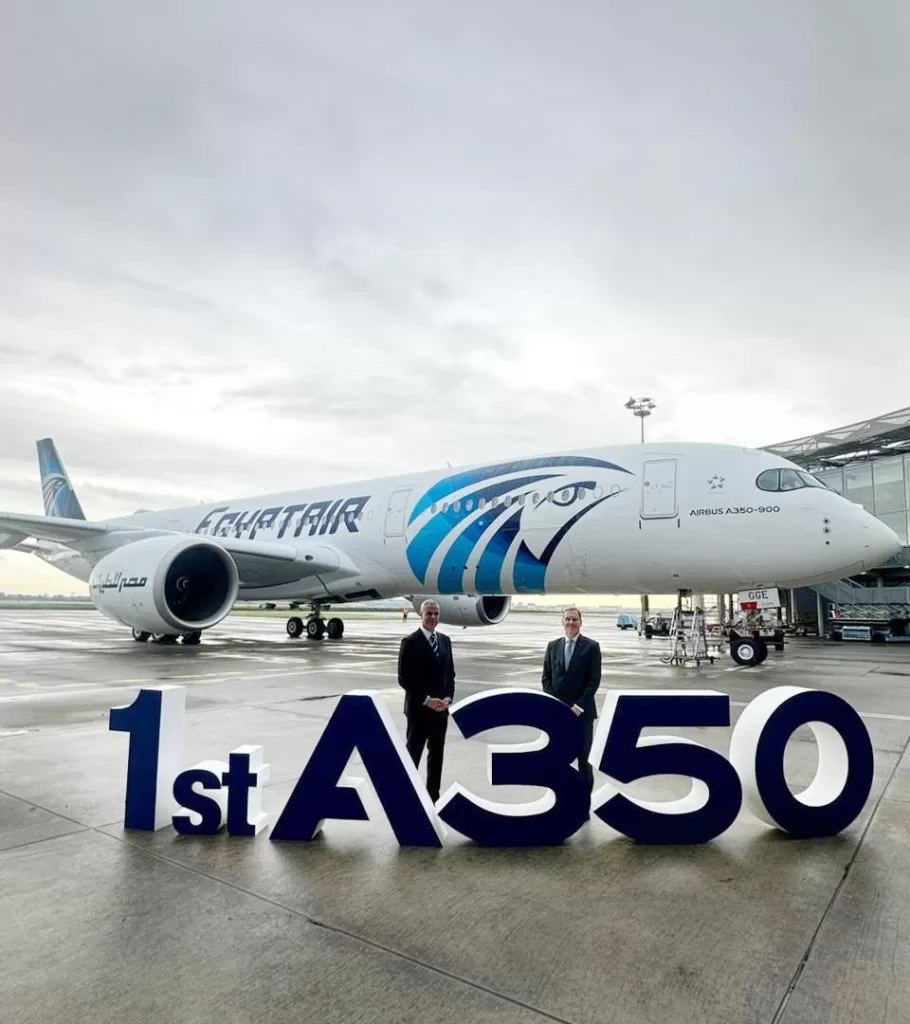
On the sidelines of the aircraft delivery in France, a special ceremony was held at Airbus headquarters in Toulouse, attended by Captain Ahmed Adel, Mr. Wouter Van Wersch, Executive Vice President of Airbus International, as well as Airbus officials and partners including Panasonic and Rolls-Royce, celebrating the addition of the first A350-900 to EgyptAir’s fleet.
EgyptAir has also become the first airline in Africa to select Panasonic Avionics’ advanced “Astrova” system for its new A350-900 aircraft. The system offers an enhanced in-flight entertainment experience through 4K OLED screens, Bluetooth audio connectivity, and fast charging up to 100 watts via USB-C ports. The fleet will also be equipped with high-speed internet connectivity on all flights, reflecting the airline’s commitment to adopting the latest technologies to improve passenger comfort and onboard experience.
The new aircraft features a modern two-class cabin configuration, with 30 Business Class seats and 310 Economy Class seats. It also includes the advanced Airspace cabin, providing higher levels of comfort and reduced noise for passengers and crew, enhancing the long-haul travel experience.
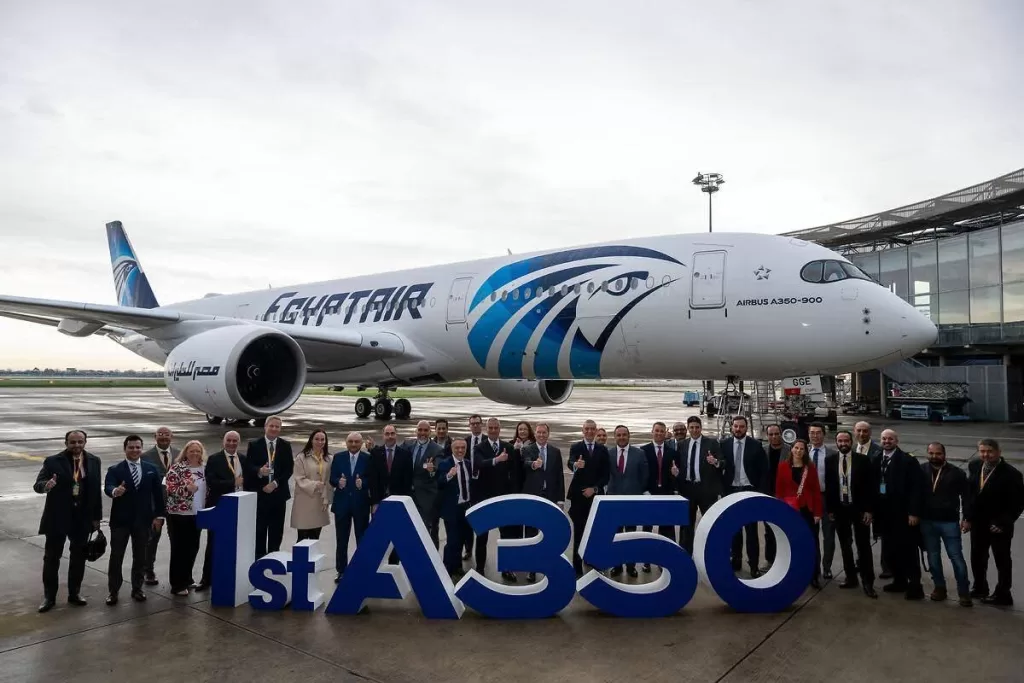
The A350 is one of the world’s most modern and efficient aircraft, incorporating advanced aerodynamics and next-generation Rolls-Royce engines. It delivers up to 25% savings in fuel consumption and carbon emissions compared to previous-generation aircraft, along with advanced entertainment systems and enhanced passenger comfort.
Captain Adel stated that the addition of the A350-900 is an important step in the fleet modernisation plan, given its high fuel efficiency, extended range, and advanced capabilities that optimise long-haul network operations. He noted that it will help increase seat capacity on high-demand routes and open new markets.
He added that adopting this advanced aircraft model enhances the company’s network planning and operational flexibility, while fully aligning with environmental sustainability goals through the ability to operate using Sustainable Aviation Fuel blends. This supports EgyptAir’s strategy to move toward more efficient and sustainable operations in the medium and long term.