












By Mohamed Attia
Air Cairo announced the start of implementing a strategic plan aimed at strengthening Hurghada International Airport’s position as a key hub connecting Africa, Europe, the Middle East, and Central Asia. The plan is intended to support transit traffic and improve the competitiveness of Egyptian airports both regionally and internationally.
This comes in line with the directives of , Minister of Civil Aviation Sameh El Hefny to support and develop the air transport sector and strengthen the role of Egyptian airports as regional and international aviation hubs.

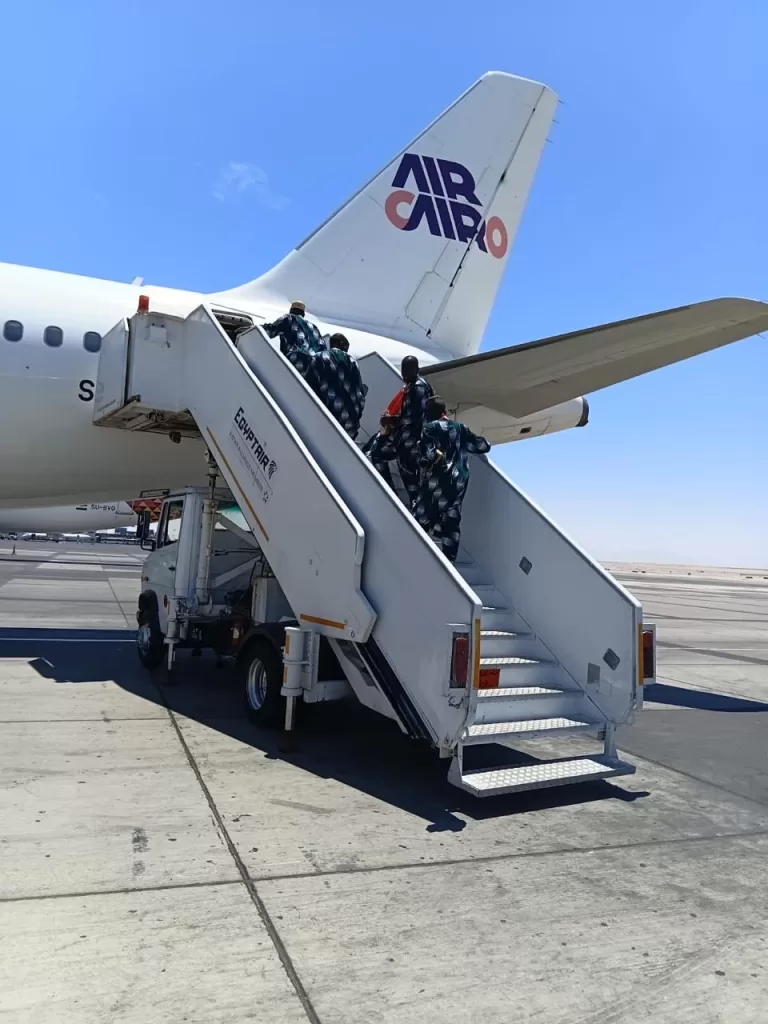
In this context, Hurghada International Airport received 305 pilgrims from Niamey, the capital of Niger, whose journey continued to Medina through the airport in a well-organised and efficient operation.
The process was carried out in full coordination among all operational authorities using two aircraft from Air Cairo’s fleet, reflecting the airport’s operational readiness and efficiency in handling international transit flights.
Hussein Sherif, Chairman of Air Cairo, stated that the company aims to receive around 4,000 pilgrims from various African countries through Hurghada Airport during the current season. Return flights from Jeddah are scheduled to begin on June 3, 2026.
He added that the next phase will witness a gradual expansion of the airline’s network through operating around 250 weekly flights arriving from Europe to Hurghada and onward to destinations in Africa and the Middle East.
The initial operation includes six destinations: Jeddah, Medina, Riyadh, Nairobi, Zanzibar, and Baghdad. Further expansion is planned to reach 15 cities by early 2027, reinforcing Hurghada Airport’s role as a major transit hub in intercontinental air travel.
The strategy also includes strengthening air cargo operations by utilising aircraft cargo capacity through the establishment of advanced logistics warehouses and specialised cooling units according to international standards, ensuring the safe and efficient transportation of goods from origin to final destination.
These steps aim to support the growth of passenger traffic through Egyptian airports, promote transit tourism, open new operational markets, and strengthen Egypt’s position as a key regional hub in air transport and international logistics.
The plan also reflects the state’s direction toward maximising the use of airport infrastructure and enhancing Egypt’s role in global aviation.