


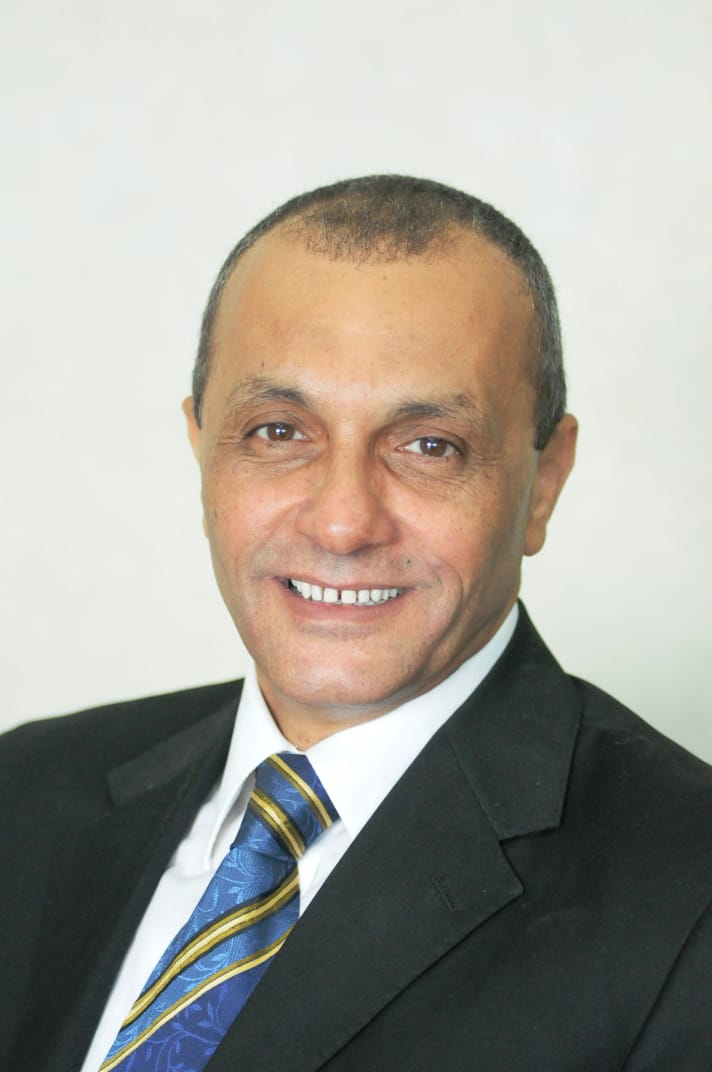
By mohamed Attia
The Hajj season succeeded this year after the Ministry of Civil Aviation in all its sectors managed to organise a season free of problems after a two-year hiatus due to the outbreak of the coronavirus pandemic, at a time when most European and American airports suffer from a state of congestion and irregularity.
 The Hajj season was launched on June 17 amid strict precautionary measures to preserve the safety of the pilgrims, while adhering to social distancing, within the framework of the directives of Minister of Civil Aviation Mohamed Manar.

For his part, Amr Aboul-Enein, chairman of EgyptAir, stated that the national company was keen to overcome all obstacles, facilitate all procedures for pilgrims and provide the best services in the travel and return phases for pilgrims as well as form work teams from various sectors of EgyptAir at Cairo International Airport and the dispatch of a mission to both Jeddah and Madinah airports.
It includes various specialisations from EgyptAir subsidiaries to serve pilgrims, achieve smooth and regular flights, and avoid overcrowding.
Amr Nabil, head of the airline, added that during the return phase of pilgrims, the company organised 114 flights from Jeddah and Madinah airports, 80 flights from Jeddah and 34 flights from Medina to transport 13,700 Egyptian pilgrims and 2,200 transit pilgrims from different countries of the world, in addition to 1,331 Palestinian pilgrims and 2,100 pilgrims from the state of Mali.
During the Hajj season, EgyptAir complied with the instructions issued by the competent authorities in Saudi Arabia regarding the health requirements that must be met by travelers to Saudi Arabia to perform the Hajj rituals for the current year which is that the pilgrim must be of the age group less than 65 years old.
This comes in addition to the rule that the pilgrim has been immunised with basic doses of Covid-19 vaccines approved by the Ministry of Health, as well as submitting a negative test result (PCR) for the coronavirus for a sample taken within 72 hours before the date of departure to Saudi Arabia.

At the same time, EgyptAir Company for Ground Services, headed by Ahmed Shaheen, succeeded in carrying out its tasks throughout the season, as there were no malfunctions with regard to the arrival of the bags of the pilgrims, unlike what is happening in major international airports, which witnessed a state of chaos and delay of passenger bags upon the return of air traffic following a decline in coronavirus repercussions.
On the other hand, Cairo International Airport, headed by Magdy Ishaq, head of the Cairo Airport Company, and under the instructions of Engineer Mohamed Saeed Mahrous, head of the Egyptian Holding Company for Airports and Air Navigation, succeeded in the two phases of travel and return of pilgrims after a coordination meeting was held that included a number of leaders of the Cairo Airport Company and the various bodies operating in Cairo airport.
Also, work teams were formed to help pilgrims and people with special needs while adhering to all necessary precautions to preserve the safety of visitors.
The internal radio was also equipped and an operating room operated 24 hours a day during the Hajj season to follow up on arrival flight schedules and problems that arise and work to solve them immediately.
The Quarantine Department at Cairo Airport, under the supervision of Dr Hazem Hussein, Director of Quarantine, also raised the state of emergency during the two phases of travel and return of pilgrims, as medical examinations were signed for pilgrims who showed any cases of fatigue, and all vaccinations for pilgrims were provided.


Discussion about this post