


A religious perspective to the continent’s predicaments
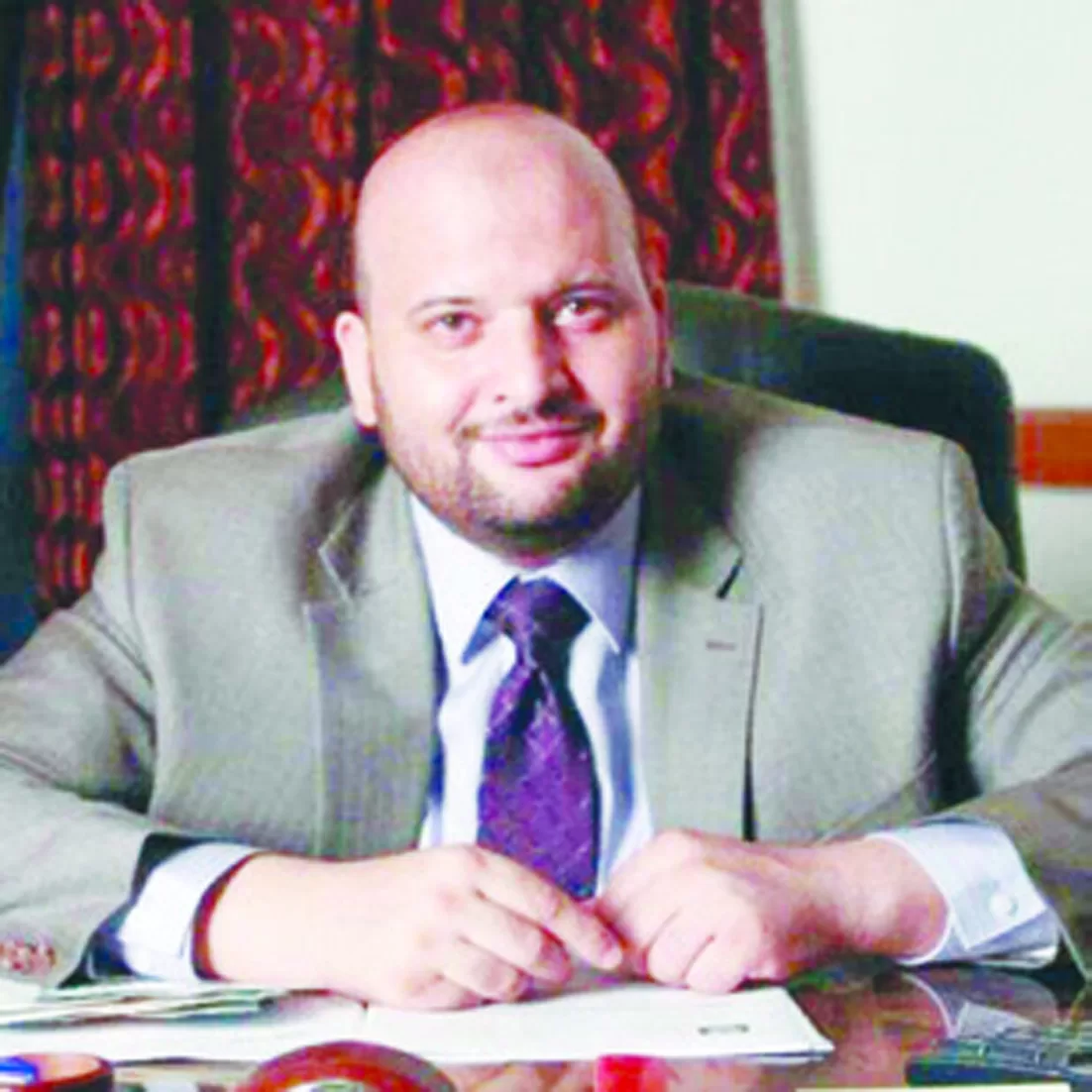
Ibrahim Negm
Senior advisor to the Grand Mufti of Egypt
As Africa confronts an unprecedented convergence of security crises, humanitarian catastrophes, and ideological challenges, the continent stands at a critical inflection point. The Sahel has become the world’s epicentre of terrorism, with jihadist organisations accounting for over half of global terrorist deaths in 2024. Sudan faces the largest displacement crisis ever recorded with more than 12 million people uprooted. Meanwhile, organised crime networks have become indistinguishable from terror financing mechanisms. In this context, Egypt—a nation that has successfully navigated similar treacherous waters—carries both a responsibility and an opportunity to serve as Africa’s stabilising beacon.
The security trajectory of the past decade offers crucial insights. Egypt faced a moment of existential threat barely a decade ago. Since 2014, through integrated strategies combining military precision, intelligence acuity, and religious counter-messaging, Egypt has reduced terrorist attacks from 199 incidents in 2016 to fewer than 50 annually. This is not merely a statistic; it represents millions of ordinary Egyptians reclaiming their right to safety, development, and dignity. What transformed this outcome was not force alone, but a comprehensive approach that recognized a fundamental truth: terrorism thrives in the intersection of security vacuums, economic despair, and spiritual disorientation.
Today’s African security landscape reveals that military solutions, however necessary, remain insufficient. The Sahel’s four deadliest terror organisations—JNIM, ISWAP, Boko Haram, and Al-Shabaab—are not merely security challenges; they are symptoms of deeper civilisational disruptions. Climate-induced resource scarcity, weak state capacity, youth unemployment, and the profound identity crisis facing young Muslims in contexts of marginalisation have created the perfect recruitment ecosystem. The data is sobering: over 141 million Africans require humanitarian assistance in 2025, with terror-affected regions witnessing the worst outcomes.
Yet amidst these dark realities lies a profound opportunity for Egyptian leadership rooted in authentic scholarship. Unlike external powers approaching African terrorism through security frameworks alone, Egypt possesses something infinitely more powerful: a centuries-old tradition of Islamic jurisprudence emphasising moderation, coexistence, and social cohesion. Al-Azhar’s moderate theological framework has demonstrated remarkable effectiveness in counter-radicalisation programming. Egyptian religious scholars understand intimately how theological distortions enable violence and how authentic Islamic teaching—emphasising mercy, justice, and the sanctity of human life—immunises communities against extremist narratives.
Egypt should establish an ambitious continental initiative: a comprehensive religious leadership programme exporting Egyptian counter-radicalization expertise to African partners. This would involve training Imams, Islamic scholars, and community leaders across the Sahel, East Africa, and Central Africa in theologically rigorous counter-extremism messaging. Egypt’s experience demonstrates that when religious authorities authentically delegitimize jihadist interpretations through Islamic jurisprudence itself, communities transform their relationship with armed groups. In Somalia, preliminary evidence suggests Al-Shabaab’s strategic shift toward “winning hearts and minds” reflects not weakening commitment to violence, but recognition that pure terror proves unsustainable. This opens space for religious counter-narratives.
Beyond theology, Egypt should operationalise its security expertise through institutional mechanisms. Intelligence sharing, counterterrorism training programmes, and joint operations coordination through the African Union and regional frameworks would multiply Egypt’s stabilizing effect exponentially. The collapse of institutions like ECOWAS and the G5 Sahel has created dangerous security vacuums. Egypt, as a nation that understands both Islamic governance frameworks and modern state capacity, can help rebuild institutional mechanisms that interdict terrorism while respecting national sovereignty.
The economic dimension demands equal attention. Egypt’s success incorporates financial inclusion and rural development as terrorism prevention strategies. Islamic microfinance mechanisms—aligned with Islamic law principles—can reach marginalised communities where jihadists currently operate by default. Young people in resource-scarce environments need pathways to dignity, not merely rejection of terror; they need economically viable futures within legitimate frameworks.
Finally, Egypt must leverage its unique diplomatic positioning. Respected across Africa’s Muslim and non-Muslim regions, trusted within Arab and African institutions, and possessing deep historical connections to continental Islamic thought, Egypt occupies an unparalleled position to mediate emerging conflicts before they metastasise into humanitarian catastrophes. This is leadership through example, expertise, and authentic cultural connection—not imperial imposition.
The alternative to Egyptian continental engagement is clear: further fragmentation, worsening humanitarian collapse, and global instability emanating from an Africa consumed by jihadist expansion and state failure. Africa’s future depends not on external powers’ military interventions but on internal actors demonstrating that Islamic governance, security professionalism, and human dignity can coexist.
Egypt has already written this story at home. Now, the continent awaits its export.

