




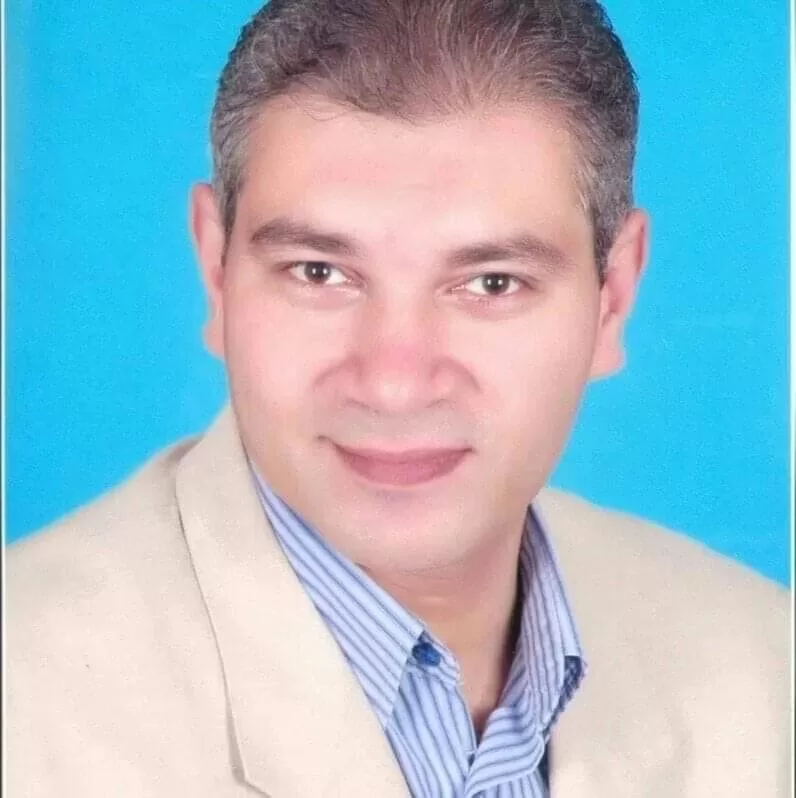
Dr Ashraf Abul Saud
Since the end of World War II, a guiding principle has shaped international politics: there are no permanent friends or permanent enemies, only permanent interests.
This maxim explains much of what unfolds in the Middle East today and offers a framework for anticipating tomorrow’s developments.
National interest exists on a spectrum. At its minimum, it requires the bare essentials for a state’s survival: safeguarding sovereignty, countering existential threats, and placing security above economic or social priorities.
At its maximum, it fuels intervention, aggression, and territorial or influence-based expansion, limited only by a nation’s perceived power and its capacity to mobilise citizens, resources, and military strength in pursuit of ambitious security goals.
In the current Middle Eastern theatre, the US and Israel pursue expansive interpretations of their national interest, employing direct intervention, military pressure, and regional dominance to contain Iran’s nuclear programme, ballistic missile development, and growing influence.
Iran, in contrast, follows a strategy of deliberate balancing, shifting between restraint and calibrated escalation, using asymmetric tools, proxies, and deniable operations to preserve leverage, while avoiding all-out conventional war.
This includes threats to maritime traffic in the Arab Gulf, attacks on energy infrastructure or neighbouring states through affiliated groups, and consistent denial of direct responsibility.
Two dominant tactics underpin these interactions. The first is provocation: deliberate challenges, either direct or indirect, designed to ignite anger, provoke rash decisions, or force a state into choosing between escalation, restraint, or concessions.
The US has repeatedly applied this approach against Iran, pushing for stricter nuclear limits and missile curbs, while Iran responds with threats to global energy flows or proxy actions that maintain plausible deniability.
The second tactic is coercion, or blackmail: the use of power asymmetries to extract material benefits, political concessions, or behavioural change.
This pattern appears across the region: migration pressures directed at Europe, security guarantees leveraged for financial gain, or repeated Israeli pressure on Palestinian negotiators concerning Jerusalem, borders, water rights, and refugees.
These overt manoeuvres are reinforced by a pervasive layer of covert interactions, secret dealings between states, non-state actors, and proxies that quietly shape outcomes, obscure accountability, and extend influence far beyond public view.
By the same token, the Middle East does not head towards conventional large-scale war, nor is full-scale war the most likely outcome.
Instead, the region has become a sustained arena of abnormal, interest-driven competition.
Major actors pursue secure strategic gains, including control over resources, energy corridors, and geopolitical dominance, through carefully calibrated cycles of provocation, coercion, and hidden manoeuvring.
These tactics, often cloaked in dramatic rhetoric about a “new Middle East”, maintain a tense, managed volatility: confrontation is constant, but escalation is deliberately restrained to avoid the prohibitive costs of open war.
This dynamic reveals the region’s events not as chaotic disorder, but as rational, calculated power plays rooted in the pursuit of national interest.
Future trajectories will depend on whether provocation eventually triggers miscalculation and wider conflict, or whether the current balancing act settles into a new, uneasy equilibrium.
For the foreseeable future, the Middle East remains a theatre where survival and supremacy are contested, not through decisive battles, but through persistent pressure, covert leverage, and strategic patience.
Dr Ashraf Abul Saud is a writer and an international relations scholar.

