









European leaders warn proposal risks rewarding Russia
The emerging pressure on Kyiv following the reported leak of a new, US-backed peace proposal transcends a mere diplomatic skirmish. It signals a potentially watershed moment that could dramatically reshape the global balance of power and redefine the post-Cold War international order.
For Ukraine, the stakes are nothing less than existential. President Volodymyr Zelenskyy’s stark warning this week that the nation faces a choice between “losing our dignity or the risk of losing our key partner” underscores the gravity of the situation. Washington’s plan is reportedly being framed not as a suggestion, but as an ultimatum.
The anatomy of an ultimatum
Reports suggest the US is considering leveraging critical security components, including intelligence-sharing, to compel Kyiv to sign.
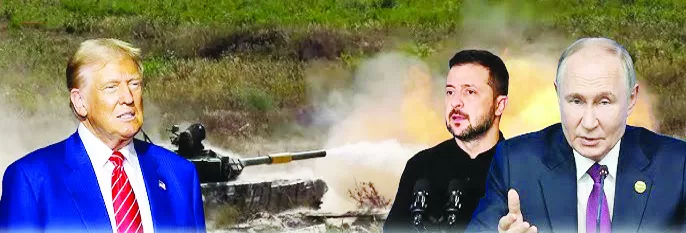
This move marks an extraordinary strategic evolution: an apparent willingness by Washington to weaponise its security guarantees to force political concessions on an allied nation actively under attack.
The timing could not be worse for Kyiv, which is deep in the fourth winter of a brutal conflict. Widespread exhaustion and crippling Russian strikes on energy infrastructure have created maximum susceptibility to external pressure.
Moscow’s unfired victory
The reported terms said to include Ukrainian withdrawal from remaining contested territories, amnesty for Russian war crimes, and reliance on vaguely defined American “security guarantees” appear to align far closer with Moscow’s objectives than Kyiv’s fundamental demands.
Acceptance of such a deal would be a devastating symbolic victory for President Vladimir Putin. It would mark the first time since World War II that borders seized by force in Europe were recognised under international duress, rather than reversed.
Russia would not only secure territorial gains but would also reinforce its nuclear deterrence strategy and seemingly prove that Western unity is fragile and negotiable.
The consequences for Washington are equally profound. Allies across Europe and Asia, particularly those facing territorial disputes from the Baltics to Taiwan will inevitably view this as a crucial test case: Can US security guarantees be depended upon when confronted by nuclear-backed coercion?
Should the answer appear equivocal, the ripple effects could accelerate a global strategic shift.
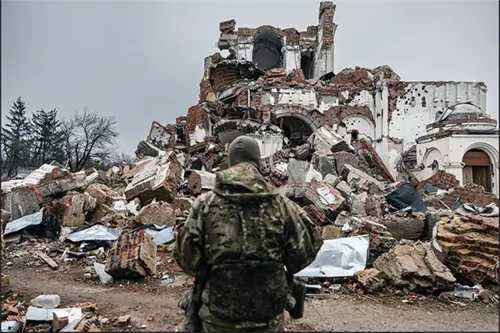
This moment risks being recorded as either a sharp return to realpolitik or the outright collapse of America’s self-appointed role as the defender of the post-war rules-based order.
A reluctant participant
European leaders, once again reportedly blindsided by a White House proposal drafted without their participation, cannot afford to remain passive.
It is Europe, not the US that will bear the long-term consequences of a frozen or unfinished conflict on its borders.
While some European intelligence services acknowledge the potential need for future “painful concessions” from Kyiv, there is a clear distinction between a negotiated compromise and a deal imposed under duress. The former may offer stability, the latter, critics warn, may merely delay the next phase of conflict.
Peace deal or prelude to war?
Ultimately, the viability of any settlement hinges on its ability to prevent future Russian attack. The leaked plan reportedly offers no enforceable mechanism to deter renewed action, instead outsourcing peace to promises from a Kremlin, and a US political system where foreign policy reversals are now routine.
Such a framework is not a peace deal. It is a temporary ceasefire, contingent on personalities rather than enduring principles. History has repeatedly shown, from Munich to Minsk, that compromises of this nature do not end wars, but merely postpone them.
The impetus behind the proposal, whether driven by geopolitical strategy or a rush to secure a diplomatic legacy, risks transforming the war in Ukraine into a defining test of global power alignment.
Should Kyiv be coerced into an agreement under threat, the message to the world will be stark: military aggression can succeed, alliances are negotiable, and the international system is pliable.
The coming weeks will determine not only Ukraine’s borders but potentially the credibility of democratic security guarantees for an entire generation.
The world is watching, and history is poised to judge.
Mohamed Fahmy is the editor-in-chief of The Egyptian Gazette and Egyptian Mail newspapers

