



By Sherif Attar
In a world of ever-changing ambiguity and uncertainty, executives have to face two challenges: excellent performance and people development. Where many managers think those endeavours are “competing”, this author believes they are “completing”. GET DOWN TO BUSINESS argues.
(Adapted from Trainer Bubble)
When it comes to communication, especially in the workplace, assertiveness is crucial. For a business to succeed, both internally and externally, it’s important that all employees and team members know how to be assertive. Fortunately, it is something we can train ourselves to be.
“To be passive is to let others decide for you. To be aggressive is to decide for others. To be assertive is to decide for yourself. And to trust that there is enough, that you are enough.”– Edith Eva Eger
Assertiveness treads a thin line between aggressive and passive behaviour, but when you hit the optimum middle ground, you become an assertive communicator. Thus, to fully understand what is meant by assertive behaviour, we must consider what constitutes passive and aggressive styles of communication.
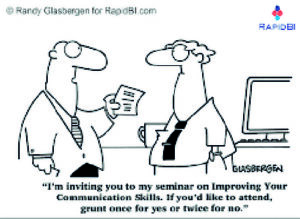
Passive communication may mean failing to take action. Most passive communicators are friendly and easy to get along with, which is not a flaw, but when your keenness to be constantly well-received stops you from standing up for your ideas, it will only hold you back. Fear of offending others can be a barrier to success. Likewise, a discomfort for expressing anger. This results in the suppression of negative emotions such as dissatisfaction or anger. Assertive communicators can express their unhappiness in a productive way. Failing to speak up is destined to create resentment under the surface which produces tension, stress, and further dissatisfaction.
An aggressive communicator may be unable to respect boundaries. Aggressive communicators are often suspicious, resulting in an inability to form close, trusting, and productive relationships. You may think that being aggressive gets you what you want, but it comes at a cost. Anger and dominion in a work setting will alienate others and will create stress for all parties, undercutting trust and mutual respect. This can result in others resenting, avoiding or opposing you.
It’s very easy for us to fall into one of these categories, you’re not wrong for wanting to be polite and respectful, nor are you wrong for believing in your ideas. However, both of these behaviours hinder progress and have a negative effect on you, those around you, and the wider organisation you work for.
How can you be more assertive? Consider these tips:
1- Acknowledge and be honest to yourself about your own feelings.
2- Adopt a new positive inner dialogue. Self-confidence is key for assertiveness.
3- Be Direct. Be clear, specific, and direct in what you say. Practice what you’re going to say.
4- Repeat your key message. If appropriate, it is helpful to reiterate your key points using different ways and examples, especially if you encounter objections. However, keep your voice down and your emotions in check.
5- Ask for clarification. This does not show weakness!
6- Assertive body language. Stand or sit straight, stay steady, and directly face the people to whom you are speaking. Eye contact is important!
7- Keep Calm. If you practice the earlier tips such as being direct and practicing your presentations, you’ll find it easier to remain calm.
8- Respect the rights of others. Remember that being assertive in your own ideas does not mean making decisions for other people.
9- Take time out if you feel weakened or threatened by the situation.
Those tips are a great starting point for assertiveness. Put them into practice to make them second nature!
For questions or suggestions, please send your comments.
Sherif Attar, an independent management consultant/trainer and organisation development authority, delivers seminars in the US, Europe, Middle East and the Far East.


Discussion about this post