


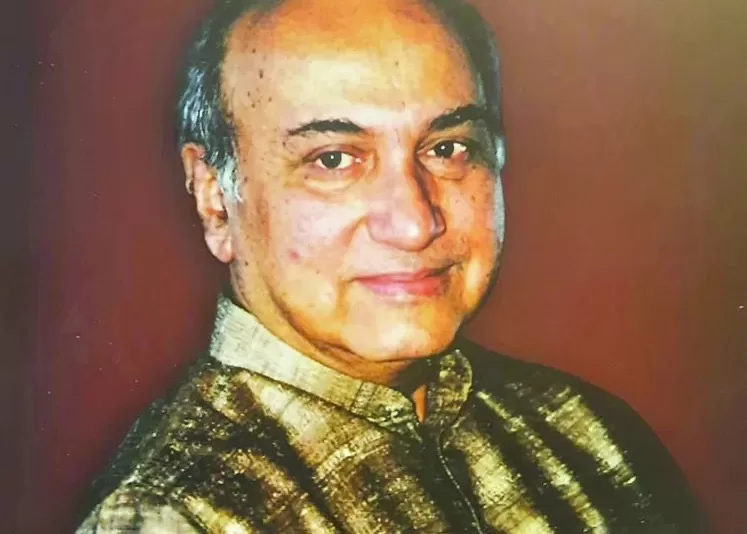
By Ambassador (Retd) Pascal Alan Nazareth
The Moghuls, initially a Mongol-Turkic dynasty, invaded India in the early 16th century, gradually built up an extensive empire in it, intermarried with Rajput and Persian princesses, and gestated a highly sophisticated Indo-Persian culture. At its zenith, the empire covered most of the Indian subcontinent from present-day Afghanistan to Bangladesh in the east and up to the Cauvery River in the south. Its total area was approx.. 1.5 million sq. miles and its population of approx.125 million.
The founder of this empire was Babur, great, great, grandson of Timur-e-Lang (known in the West as Timur the Lame or Tamerlane ). He was also related, through his mother, to Mongol conqueror Genghis Khan. Babur had first ruled in Farghana and then from Kabul, which he had conquered in 1504. In 1515, taking advantage of dissension in the Delhi sultanate, then under Ibrahim Lodhi, Babur invaded it. With a well-trained, highly mobile army of 12,000 men equipped with firearms and artillery, he vanquished the sultan’s large but disorderly force of 100,000 men at Panipat in 1526. A year later he did the same to a Rajput confederacy led by Rana Sanga of Chittorat Khanwa. In 1529 he routed the joint forces of the sultans of Bihar and Bengal. When he died in 1530 the initial foundation of a kingdom had been laid but it was far from secure.
Babur’s son Humayun succeeded him but soon lost the newly founded kingdom to Sher Shah, the Afghan Sultan of Bihar. Driven into Sindh by his armies he fled to the Rajput Kingdom of Umarkot in Sind, and then to Persia, where he spent nearly ten years at the Safavid court of Shah Tahmasp. In 1545, Humayun gained a foothold in Kabul with Safavid assistance. After Sher Shah’s death in May 1545, he regained control of Delhi but died within six months from a fall from the steps of his library. His tomb in Delhi is an important landmark in Mughal architecture.
It was during Humayun’s years of exile that his wife gave birth, at Umerkot, to Jalaluddin. In his infancy and boyhood, he was raised by his uncle Askari, who fashioned him into an excellent horseman and warrior. Jalaluddin became emperor on 14 February 1556 at the age of 13. The Moghul army, led by the Regent and great general Bairam Khan which had defeated and dethroned Sher Shah, fought and won 18 subsequent battles. By 1565, the Moghul kingdom had grown into an empire and was quite secure against all enemies. As so much had been achieved in ten years of his reign and he had shown astuteness as a ruler that he was lauded as Akbar (Great). This appellation has endured since then.
Akbar set up an efficient bureaucracy that served as the Empire’s backbone for almost 200 years. He also created a self-financing, decentralised army by granting revenue rights to mansabdars for providing soldiers in wartime. The greater the revenue rights, the larger the number of soldiers to be provided. As the mansab was non-hereditary and revocable at any time, the Emperor retained good control of the mansabdars. This policy also had the strategic advantage of a decentralised army located in various parts of the country.
In 1580, Akbar had all agricultural lands surveyed and their productivity and price fluctuations of the crops grown on them, assessed. Aided by Todar Mal, a Hindu scholar, he issued revenue collection directives that equitably balanced the revenue needs of the state with the ability of the peasantry to pay. Revenue collection varied from one-third to one-half of the crop.
Fully aware of the great challenges of administering a vast empire of diverse peoples, religions, and cultures, Akbar befriended Indian royal families. He married Princess Jodha of Amber and renamed her as Mariam-uz-Zamani Begum. He encouraged Mughal and Rajput nobles to do likewise; He also appointed Rajput and other Hindu nobles to high posts in his administration. He commenced the celebration of Hindu festivals such as Diwali and abolished the Jizya (poll tax) imposed on non-Muslims. He also encouraged widow re-marriage, discouraged child marriage, outlawed Sati (cremation of wives along with their husbands), and induced Delhi merchants to set up special market days for women.
After many months of intense discussion with religious leaders of many faiths, including Portuguese Jesuits from Goa, Akbar formulated a new religion called Din-i-Ilahi (Divine Faith), which incorporated the basic principles of all religions. He also enunciated the doctrine of “Rulership by divine illumination”.
Akbar’s eldest son Prince Salim, ascended the throne in 1605 and assumed the title of Jehangir. He followed his father’s enlightened policy as a religious liberal. His mother was Hindu and two of his queens, Maharani Maanbai and Maharani Jagat, being Rajput princesses, religious tolerance was the centerpiece of his statecraft. His favourite wife was Begum NurJahan, a Persian princess, who encouraged him greatly in his love for Islamic art and landscaped gardens. But her subsequent efforts to secure the throne for her son Khurram (later Shah Jahan) led the Emperor’s first-born Prince Khusrau (Maharani Maanbai’s son) to rebel against him in 1622. Taking advantage of this, the Persians took over Kandahar in southern Afghanistan.
Shah Jahan became Emperor in 1628 and soon thereafter sent Mughal armies to retrieve lost territories in the northwest, but also to conquer the Deccan. The extension of the empire and the law and order maintained there led to the emergence of new urban and commercial centres such as Lahore, Delhi, and Ahmadabad and to roads and waterways to link them. However, Shah Jahan’s reign is remembered most for his monumental architecture. The most notable change he introduced was the use of marble instead of sandstone which Akbar and Jehangir had used. In the Agra Fort, he built the Diwan-i-Am (hall of public audience), Diwan-i-Khas (hall of private audience), and Moti Masjid (Pearl Mosque), all in marble.
In 1638 he began construction of Shahjahanabad city beside the Jamuna River, just north of Delhi. Its Red Fort represents the pinnacle of Moghul fort construction. Outside the fort, he built the Jama Masjid, the largest mosque in his empire. However, it is for the Taj Mahal, which he built as a tomb for his beloved wife, Mumtaz Mahal who had died giving birth to their 14th child, that he will always be remembered and extolled.
The Moghuls, initially a Mongol-Turkic dynasty, invaded India in the early 16th century, gradually built up an extensive empire in it, intermarried with Rajput and Persian princesses, and gestated a highly sophisticated Indo-Persian culture. At its zenith, the empire covered most of the Indian subcontinent from present-day Afghanistan to Bangladesh in the east and up to the Cauvery River in the south. Its total area was approx.. 1.5 million sq. miles and its population of approx.125 million
When Shah Jahan fell ill in 1657, a succession struggle ensued among his four sons, Dara Shikoh, Shah Shuja, Aurangzeb, and Murad Baksh. In 1658 Aurangzeb defeated Dara Shikoh’s army near Agra, and Dara Shikoh fled north. Aurangzeb captured Agra, crowned himself emperor, and imprisoned Shah Jahan. Dara Shikoh and Murad Baksh were captured and later executed, while Shah Shuja fled into exile. Shah Jahan remained imprisoned in the citadel at Agra until he died in 1666.
Aurangzeb, an intensely devout and bigoted Muslim made Islam the prime element of his state policy. He reintroduced the jizya tax which non-Muslims had to pay. This caused much resentment among the Rajputs, close allies of Akbar, Jehangir, and Shah Jehan, who turned hostile. Aurangzeb waged a series of wars against them and subsequently against the Marathas in western India, Sikhs in the Punjab, and Ahoms in Assam. In some of them, particularly against the Marathas, his armies suffered defeats. Nonetheless, during his 41-year reign, the Moghul empire was enlarged the most and reached the north bank of the Cauvery River in south India. However, the numerous wars depleted the Moghul treasury and weakened its armies. Many vassal Nawabs seceded from the Moghul empire and founded independent kingdoms. So did the Marathas and the Sikhs.
When Aurangzeb died in 1707, there were many contenders for the Moghul throne and the reigns of all his successors were short-lived. In February 1739, Nader Shah of Persia invaded the Moghul Empire, defeated its much-weakened army at the Battle of Karnal, sacked Delhi, and carried away many treasures, including the famed Peacock Throne.
In 1761, Delhi was again attacked and looted, this time by Ahmed Shah Abdali, the Pashtun ruler of Khandahar, who had accompanied Nadir Shah in 1739 and had seen great wealth in Delhi. The Moghul army was again defeated at the Third Battle of Panipat.
Meanwhile, the East India Company which had arrived in India in 1600 for “peaceful trade” had built forts in Calcutta, Madras & Bombay (the last mentioned it had secured as the dowry of Portuguese princess Catherine of Aragon when she married British Monarch Henry VIII in 1509) and brought in soldiers to guard them. They were thus well positioned to take advantage of the Moghul empire’s breakup into some petty states.
Overall assessment of
Mughal contribution
The Mughal contribution to India was wide-spectrum and enduring. The diverse fields in which it was made are given hereunder:
In the field of governance, it is the creation of an efficient, centrally controlled bureaucracy, an equitable land revenue assessment and collection system, social harmony with interfaith marriages, the appointment of persons of all communities to high offices, and joint celebration of Muslim and Hindu festivals.
In the field of architecture is the construction of innumerable palaces, mosques tombs, and forts in Agra, Lahore, Lucknow, Shahjahanabad (Delhi), and many other cities. The most renowned of these is the Taj Mahal, which is breathtakingly beautiful not only as a whole but also in every part with intricate decorations in its marble floors, walls, screens, and ceilings. It is the apogee of architectural refinement and workmanship. Rabindranath Tagore described it as “A teardrop on the cheek of Time”.
In the field of painting, their contribution is well presented by Will Durant “Akbar was the first of his dynasty to encourage painting. At the end of his reign, court historian Abul Fazl indicated there were a hundred masters in Delhi and a thousand amateurs. Jehangir’s intelligent patronage widened the art from portraiture to representation of hunting scenes and natural backgrounds. Under Shah Jahan, art reached its zenith but as in the case of Japanese prints the widened popularity resulted in a less exacting taste.”
In the field of decorative arts, they created finely embroidered clothes, shoes, saddles, howdahs, and jewel-studded weapons.
In the field of gardens, the Persian ‘char bagh was the original style but was modified to suit Indian geographic & climatic conditions and to create an earthly utopia in which humans co-exist in perfect harmony with nature. Its features included pools, fountains, and Islamic geometry.
Emperor Babur created the first of these gardens in the Agra fort. It was called ‘Aram Bagh’. He later built the GolBagh in Lahore and the Bagh-iNilufar at Dholpur. The former was the largest Moghul garden and had a five-mile belt of greenery encompassing this city. The latter was terraced on a rock-strewn mountain slope. Akbar built the Aram Bagh garden in the Agra fort, a riverfront garden in New Delhi, and some others in other towns of his empire including one at Wah (12km west of Taxila),.
Jehangir built the Shalimar Garden in Kashmir in memory of his wife Noor Jahan
Shah Jahan’s reign was the apex of Mughal garden construction with more of them built than any of his predecessors. The most visited and famed of them is the one in front of the Taj Mahal. He also built the Mahtab Bagh opposite it across the Yamuna River. This was a night garden filled with night-blooming jasmine and other flowers.
Elizabeth Moynihan, wife of former US Ambassador to India Daniel Moynihan has written a widely acclaimed book titled ‘Paradise as Garden in Persia & Moghul India’.
In the field of economic betterment and prosperity the ceaseless building of forts, palaces, and gardens, support for innumerable artists/artisans, and opening of new markets for their products in Central Asia, Ottoman Turkey & Egypt created widespread prosperity. British historian Percival Spear has written “Mughal India, with an estimated hundred million inhabitants, had for about a century a standard of life roughly comparable with that of Europe. Whereas figures are apt to be misleading because of innumerable factors involved, their relative financial positions indicate that the revenue of Akbar’s empire in 1600, was estimated to be Pounds 17.5 million The revenue of Pitt’s Great Britain in 1790 was around Pounds 16 million.”.
The most important contribution that Moghuls made was in laying the foundation of an Indian national state in which all citizens &religions were given equal respect and various strands of Indian culture, particularly Hindu and Muslim, were harmonised and enabled to blossom. Sadly, this was greatly undermined by Aurangzeb’s religious bigotry and led to the breakup of their Empire, opened the doors to European colonization, and sowed the seeds for India’s tragic partition in 1947.
Will Durant, in his Story of Civilisation (Volume I: Our Oriental Heritage ) has written “ Aurangzeb cared nothing for art, destroyed its “heathen “ monuments with coarse bigotry and fought through a reign of half a century to eradicate from India all religions but his own. A few Muslims worshipped him as a saint but millions of Indians looked upon him as a monster. During his reign, the Moghul empire reached its zenith but its power had no foundation in the affection of the people and was doomed to fall at the first hostile touch. Meanwhile, far away in the west, a little island had sent its traders to cull the riches of India. Soon it would send guns and take over the immense empire which Hindus & Muslims had joined to build one of the greatest civilisations of history.”

