








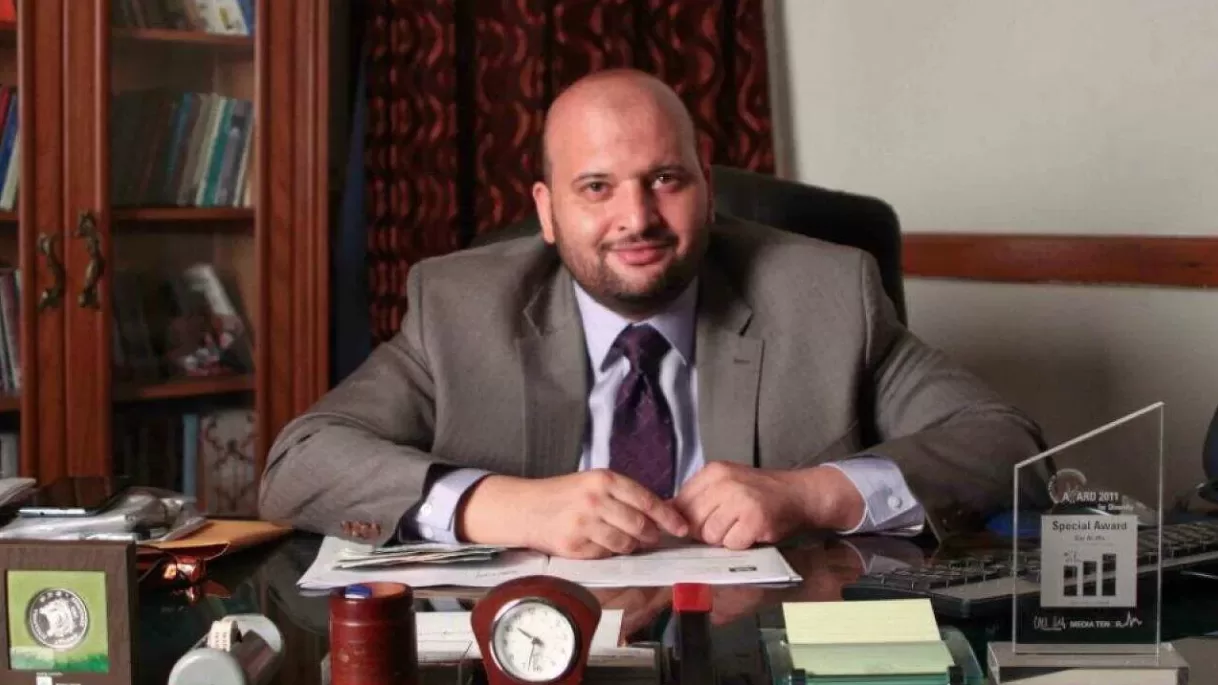
Ibrahim Negm
The contemporary Muslim world faces an unprecedented crisis of religious authority. Over the past century, traditional structures that once regulated Islamic interpretation have weakened, leading to increasing misinterpretation and fragmentation in the religious sphere. The fragmentation and diffusion of religious authority have become among the most fiercely contested phenomena among Muslims.
No corner of the global Muslim community and beyond has been untouched by this decentraliaation: with the advent of mass education, print and digital media, and social networks, everyone and anyone now seems to be able to cast himself or herself as an authority-wielding Muslim.
The result is a cacophony of voices interpreting Islam—often with conflicting and incommensurate conclusions—leaving ordinary believers confused about who can truly speak for the faith. Indeed, Muslim scholars (ulamā’), who traditionally served as guardians of the interpretive tradition, have grown alarmed at what they characterise as “chaos“ in the religious discourse.
Mainstream ulamā’ and jurists around the world have issued intensifying appeals to “regulate Islamic discourse” and reclaim their diminishing authority in order to stem this tide of interpretive anarchy . These calls, however, often fall on deaf ears in an era when any individual with a social media account can issue fatwā (religious rulings) or claim scholarly credentials. The urgent need of the moment, therefore, is for a cohesive scholarly framework of authoritative Islam that can provide clarity and stability. Such a framework would delineate the proper principles and qualifications for interpreting Islamic sources, helping believers distinguish authentic teachings from distortions. It would also re-center the role of sound scholarship in an age when authority has become diffuse. Ignoring this, the Muslim world risks further drift into fragmentation, with grave consequences for religious unity and authenticity.
This urgency is underpinned by Islam’s own emphasis on knowledgeable authority. The Qur’an instructs believers, “Ask the people of knowledge if you do not know”, affirming that not everyone is qualified to derive rulings from sacred texts. Classical Islamic scholarship recognised that the ordinary Muslim cannot derive rulings himself directly from the Qur’an and Ḥadīth without guidance. Deriving sound interpretations requires expertise in the Arabic language, the context of revelation, principles of jurisprudence (uṣūl al-fiqh), and the ability to reconcile apparent textual conflicts.
Thus from the earliest period, Muslims fell into “two categories: those who have knowledge, whose role is to examine the texts and derive rulings… and ordinary people who ask those who have knowledge”. The implication is clear: Islam itself mandates a hierarchy of knowledge, whereby qualified scholars guide the community. The Prophetic tradition further reinforces this, as the Prophet ﷺ said, “The scholars are the inheritors of the Prophets… they leave behind knowledge [as inheritance]”. In other words, legitimate scholars carry forward the mantle of prophetic guidance, and the community is expected to heed them.
A community without recognized authority and leadership—intellectual and spiritual, as well as political—will fall into disorder. Given the palpable disorder in today’s religious sphere, a concerted effort to reestablish authentic Islamic authority is not a matter of mere academic interest but an existential imperative for the faith’s integrity. Contemporary Muslim thinkers echo this urgency. For instance, Dr Ali Gomaa the former Grand Mufti of Egypt and one the senior scholars of the esteemed Al-Azhar notes the “urgent need for a balanced approach that respects scholarly authority” in modern Muslim life —a balance that allows qualified scholarship to guide interpretation while engaging the laity’s concerns. In sum, the fragmentation of authority in Islam has reached a critical point, demanding an authoritative framework grounded in the scholarly tradition to guide Muslims.
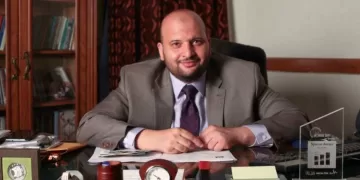
Ibrahim Negm
Senior advisor to the Grand Mufti of Egypt

