





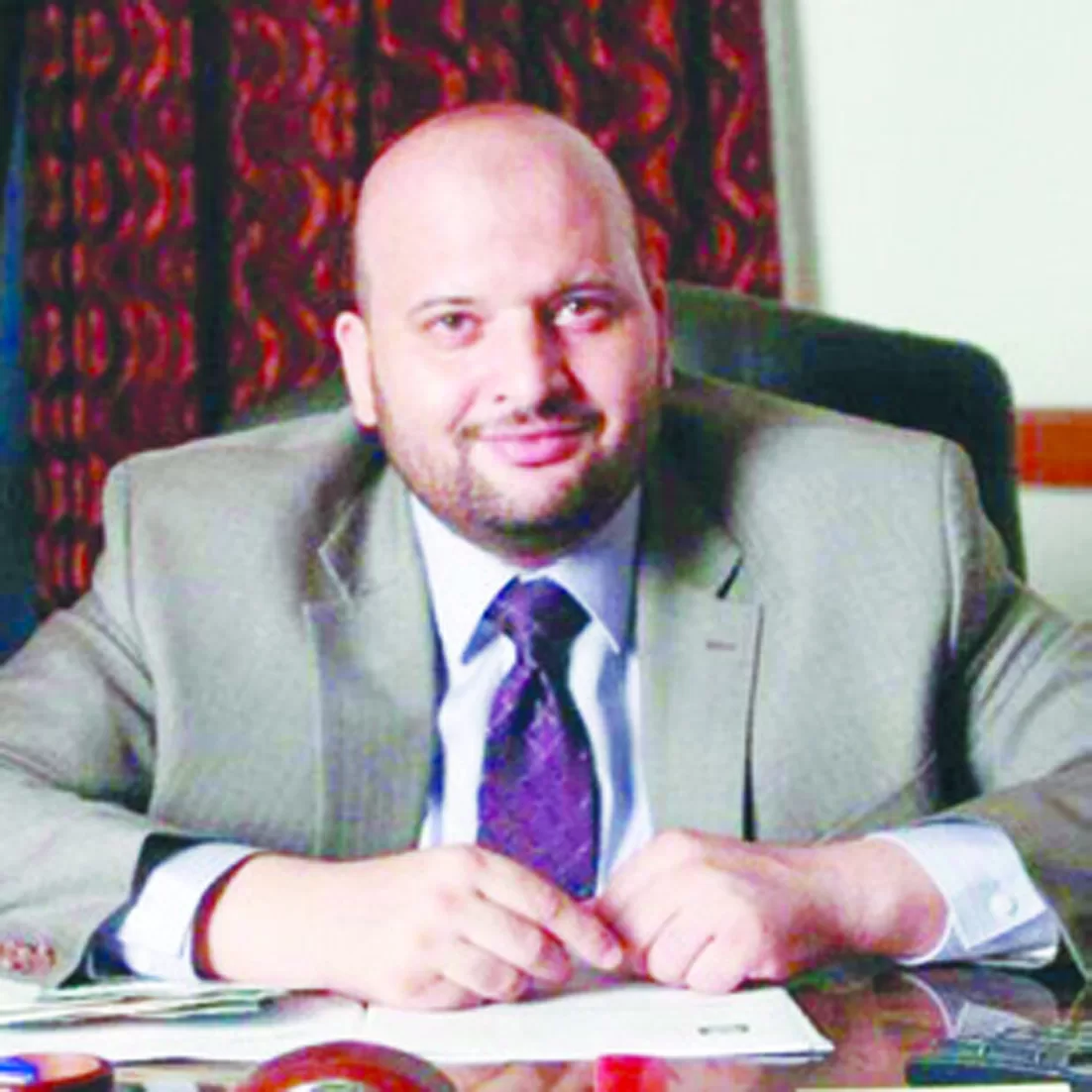
Ibrahim Negm
Senior Advisor to the Grand Mufti of Egypt
The contemporary international order stands at a critical juncture. As the Western-dominated system that has governed global affairs for three centuries exhibits unmistakable signs of exhaustion and fracture, a fundamental question emerges: what civilisational force possesses the moral architecture and philosophical coherence to lead the world forward? The observation that we are witnessing the twilight of a civilisational cycle–one marked by the dominance of European and American institutions–is not merely a geopolitical forecast but a recognition of historical inevitability. What distinguishes the present moment is the clarity with which alternative civilizational centers are ascending, and among them, Islam presents a unique proposition that transcends mere economic competition.
Samuel Huntington’s thesis on the clash of civilisations, articulated over a quarter-century ago, correctly identified that the post-Cold War era would usher in competition between non-Western powers and the Western establishment. His dual prediction–that China would emerge as an economic challenger and that Islam would represent a civilisational alternative–has proven prescient. Yet there exists a critical distinction that often escapes contemporary analysis: while China’s rise is understood primarily through the lens of economic and military capacity, Islam’s relevance to global leadership operates on a fundamentally different plane–that of values, meaning-making, and the capacity to address the spiritual poverty that haunts modern civilisation.
The Western system, for all its material achievements, has created a civilizational crisis of meaning. The liberal democratic framework, rooted in individualism, secularism, and the primacy of material accumulation, has delivered prosperity to millions while simultaneously generating profound existential anxiety. The prevalence of mental health crises, epidemic-scale loneliness, family dissolution, and the collapse of community structures in the most materially advanced societies suggests that economic development, divorced from ethical moorings and transcendent purpose, is an incomplete answer to human flourishing. The promise of unfettered consumption and personal autonomy has not delivered the contentment it advertised.
Islam, by contrast, offers a comprehensive civilisational framework–one that integrates material prosperity with spiritual depth, individual rights with communal responsibility, and temporal well-being with eternal purpose. This is not a romantic idealisation but a recognition of what Islamic civilisation has historically delivered: societies where material development, intellectual achievement, cultural sophistication, and spiritual meaning existed in dynamic equilibrium. The Islamic tradition provides answers to questions that secular Western frameworks cannot adequately address: Why ought we behave ethically if consequences are unlikely? How do we maintain social cohesion in an increasingly atomised world? What is the source of meaning in an age of material abundance?
The ascendancy of Islamic civilisational values is not contingent on military power or economic dominance–though both are important. Rather, it depends on the willingness of Islamic-majority societies and Islamic intellectuals to articulate and demonstrate how Islamic principles can address contemporary challenges in education, governance, environmental stewardship, bioethics, artificial intelligence, and social organization. The world is increasingly receptive to such alternatives. Young people across Western societies, disillusioned with the spiritual emptiness of consumer capitalism, are seeking frameworks that provide coherence and purpose. The environmental crisis demands civilisational systems that do not view nature as merely a resource for exploitation–a perspective that Islamic environmental ethics, rooted in stewardship and divine custodianship, provides more naturally than Western secular frameworks.
Yet realising Islam’s potential as a civilisational force requires critical self-examination within the Islamic world itself. It demands distinguishing between the eternal principles of Islamic teaching and the contingent, sometimes distorted manifestations of Islamic practice in contemporary politics. It requires intellectual courage to engage with modernity not with defensive rigidity but with creative fidelity to core principles. The rise of Islamic civilisational influence cannot be imposed through force or coercion–such approaches ultimately undermine the very values that make Islam civilisationally compelling.
The opportunity before the Islamic world is extraordinary but time-sensitive. China will provide economic leadership through superior production capacity and technological innovation. But who will provide moral leadership? Who will articulate a vision of human flourishing that transcends naked materialism? Who will offer spiritual resources for a humanity increasingly haunted by meaninglessness despite material sufficiency? These are civilisational questions, and Islam’s comprehensive ethical and metaphysical framework positions it uniquely to provide answers.
The end of Western civilisational hegemony need not be a tragedy mourned by its beneficiaries or celebrated vindictively by those who opposed it. Instead, it can be recognised as an opening–an opportunity for Islamic civilisation to contribute not through dominance but through the force of its superior answers to fundamental human questions. In such a transition lies the possibility of a genuinely multipolar world where diverse civilisational traditions enrich global discourse rather than one system imposing uniformity on all others. This is not ideology; it is history calling.

