


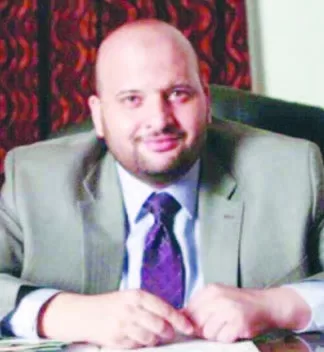
Ibrahim Negm
The coordinated US–Israeli military assault on Iran, launched on February 28, 2026, is not merely a geopolitical event – it is the most vivid manifestation in modern history of how religious narratives, when instrumentalised by state actors, become weapons of mass mobilisation and justification for mass destruction. I find it imperative to expose the theological engines driving all three parties in this catastrophic confrontation, lest the world mistake a war of competing eschatologies for a rational security operation.
Let us begin with Israel. The timing of “Operation Lion’s Roar” – launched on the Sabbath of Parshat Zachor, the very weekend preceding Purim – was no coincidence. In Jewish liturgical tradition, Zachor commands the remembrance of Amalek, the archetypal enemy who must be obliterated. Purim itself commemorates the deliverance of Jews from a Persian plot of annihilation. Prime Minister Netanyahu has spent years casting Iran as the modern Haman, and this latest operation transforms a religious festival of charity and communal joy into a geopolitical doctrine of preemptive annihilation. The note Netanyahu reportedly left at the Western Wall before the strikes – describing Israel as “a people like a lion” — underscores the deliberate fusion of Zionist statecraft with messianic conviction. This is not security policy dressed in religious metaphor; it is religious conviction dressed as security policy.
America’s “major combat operations” against Iran cannot be understood apart from the phenomenon of Christian Zionism, which has become one of the most consequential – and least scrutinised – theological forces shaping Western foreign policy. For tens of millions of American evangelicals, supporting Israel’s military supremacy is not a political preference but a scriptural obligation rooted in dispensationalist theology, which holds that the ingathering of Jews in the Holy Land and the defeat of their enemies are prerequisites for the Second Coming of Christ. When US Ambassador Mike Huckabee invokes God-given borders for Israel stretching across the Middle East, he is not engaging in diplomatic rhetoric; he is articulating a theological worldview shared by a significant portion of the American electorate and embedded in the corridors of power. President Trump’s language – describing the Iranian regime as “very wicked” and framing the assault as a civilisational confrontation – echoes this apocalyptic register, even if his personal motivations are more transactional.
Iran, for its part, has long waged its regional struggle through the lens of Shia eschatology. The concept of Mahdism – the anticipated return of the Twelfth Imam who will establish justice and defeat falsehood – has been woven into the Islamic Republic’s political theology since its founding. The late Supreme Leader Khamenei’s persistent framing of Israel as a “cancerous tumor” was not mere propaganda; it reflected a genuinely held theological conviction that the Zionist state embodies the forces of evil whose destruction is a precondition for cosmic redemption. The regime’s willingness to absorb staggering military blows and still launch retaliatory strikes against twenty-seven US bases and Israeli targets simultaneously speaks to a civilisational identity in which suffering and martyrdom are not defeat but vindication — the very spirit of Karbala transposed onto modern warfare.
What troubles me most, as a Muslim scholar, is the conspicuous absence of a sober, authoritative Islamic voice amidst this theological cacophony. The conflict has been hijacked by three competing eschatologies – Jewish Zionist, Christian dispensationalist, and Shia Mahdist – while the broader Islamic scholarly tradition, with its rich jurisprudence of war and peace, its principles of proportionality, and its categorical prohibition of targeting civilians, has been relegated to the sidelines. Our tradition does not sanctify perpetual enmity; it demands that even the most justified struggle be governed by the higher objectives of preserving life, dignity, and the possibility of reconciliation.
The lesson of this war is stark: when states weaponise sacred texts, the first casualty is the sacred itself. The Book of Esther becomes a justification for assassination. The Gospel becomes a mandate for aerial bombardment. The expectation of the Mahdi becomes a license for mutual annihilation. What the world needs now is not louder religious war cries but what I would call theological disarmament – a courageous insistence by scholars of all faiths that God’s name cannot be conscripted into the service of military campaigns, and that the sanctity of human life transcends every eschatological timetable.
Ibrahim Negm is the Senior Advisor to
the Grand Mufti of Egypt

