


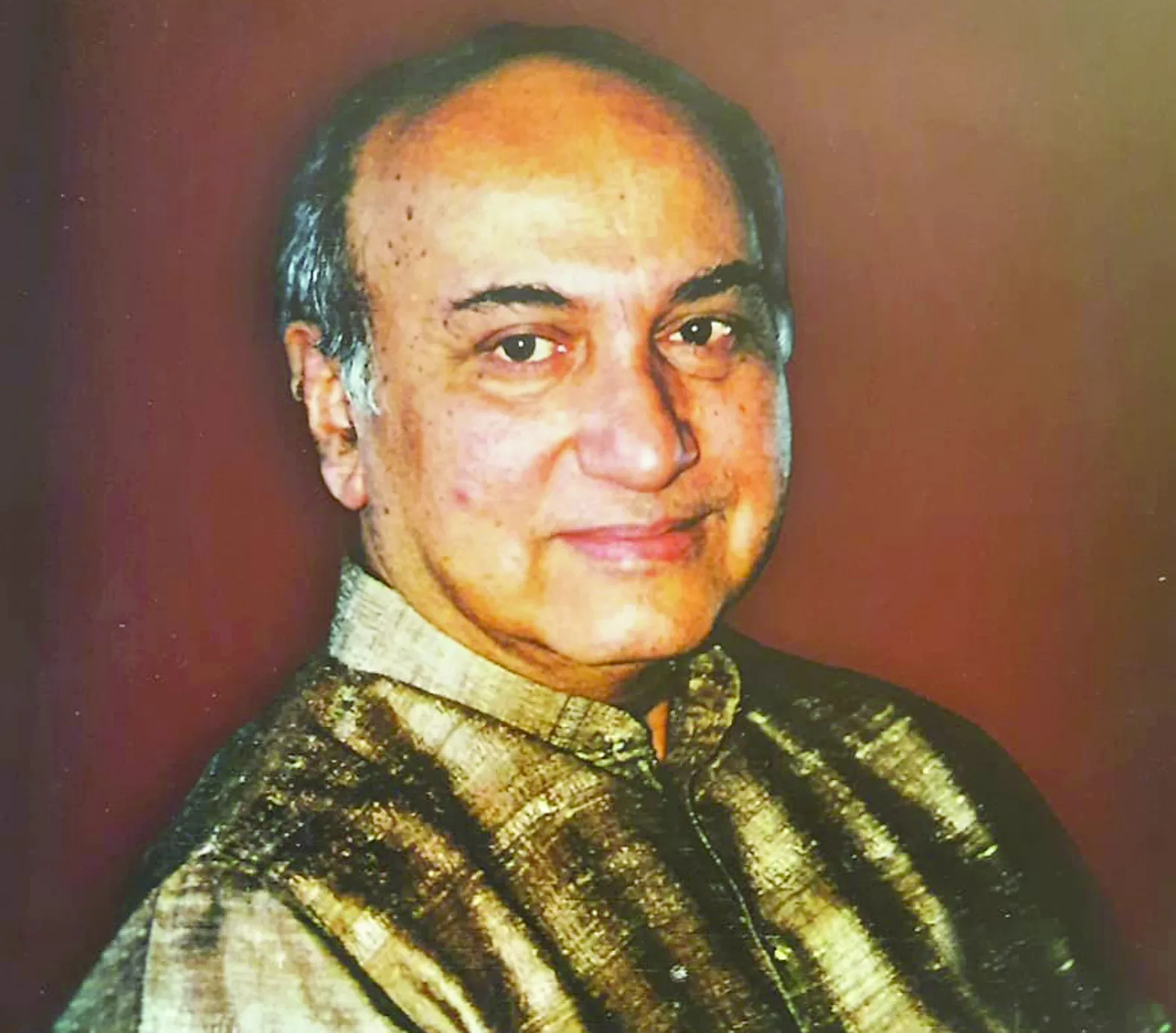
By Ambassador (Retd) Alan Nazareth
The unique features of India’s ancient civilization are its unbroken continuum and its wide spectrum global impact.
In 1950 radio interview Albert Einstein lauded Gandhi thus : “A leader of his people unsupported by any outward authority but simply on the power of his personality ; a victorious warrior who always scorned the use of force; a man who confronted the brutality of Europe with the dignity of a simple being and always risen superior. Generations to come will scarce believe that such a man as this ever in flesh & blood walked upon this earth”
Martin Luther King, after his 1959 visit to India, declared “In a real sense, Mahatma Gandhi embodied in his life certain universal principles that are inherent in the moral structure of the universe and these principles are as inescapable as the law of gravitation”. He also averred :“ If humanity is to progress, Gandhi is inescapable. We may ignore him at our own peril”.
Gandhi brought down the world’s largest, most powerful empire in history with his Truth, Love & Non Violence freedom struggle. His disciples brought about radical social change in India. Despite being partitioned on religious lines, they instituted a secular polity based on universal adult franchise, in which every citizen, irrespective of gender, caste & religion had the right to vote. In the Constitution they drafted & adopted in January 1950, “untouchability” was abolished & many ‘positive discrimination” measures for the amelioration of these people included in it. Because of them Dr. K.R. Narayan was enabled to educate himself, secure a London School of Economics Doctorate, be appointed as Ambassador of India to China & USA and Minister of Science & Technology & then be elected Vice President of India (1992 -97) & President of India (1997 – 2002) During the same period India had a Dalit Chief Justice, numerous Dalit Governors & State Chief Ministers including in Uttar Pradesh which is its largest with a little over 250 million people.
Before Independence, India was predominantly a land of Maharajas & paupers. The former ( 565 in all) lived in great splendour while most of their subjects lived in abject poverty. The national awakening Gandhi’s focus on the poor & unemployed brought about created widespread antipathy for regal life styles. This enabled the Indian Govt. to peacefully integrate all except three of these kingdoms into the Indian Union. Their rulers were compensated with privy purses. This contrasts sharply with the considerable bloodshed in USA, France, Russia & China before slavery& serfdom were abolished.
Prof. Alan Brinkley of Columbia University, in an article titled ‘The Peace Maker’ in New York Times Magazine’ has written: “Most revolutions create enormous aspirations and never really fulfill them; some betray them utterly. Gandhi has been so mythologized since his assassination in 1948, the real man has almost disappeared. But he deserves recognition as a resonant symbol of the most important phenomena of modern history: the simultaneous assault on colonialism and oppression of individuals, which has transformed the 20th century world”
India’s de-industrialization during the colonial period is well described by British historian Angus Maddison, in his book ‘Contours of the World Economy’ has pointed out that India’s 22.6% share of world income in 1700 was comparable to Europe’s share of 23.3%. In 1952 India’s share had fallen to a low of 3.8%!
Yet in just seventy five years after Independence India has emerged as a significant industrial, technological & economic power. Its educated & technically trained workforce is now the world’s second largest. Reputed journalist Thomas Friedman has described it as the “Great Indian Cream”.
As impressive is India’s cultural resurgence in recent decades.. Rabindranath Tagore was awarded the Nobel Prize for Literature in 1913 and thereafter became India’s global icon in poetry.
Gandhi became a global icon of non violent struggle after his 1930 Salt March. Time Magazine put him on the cover page of its January 4, 1931 issue & New York Times editorially wrote “Whereas Britain had lost America on Tea, it was losing India on salt”.
Pandit Ravi Shankar became a global icon for Indian classical music within ten years after George Harrison, the Beatles Guitarist made him his Sitar guru in 1966. In 1967 they jointly presented the widely televised ‘Concert for Bangladesh’ & in the early 1970s toured Europe & USA presenting ‘’Music Festival from India’ concerts.
Zubin Mehta became India’s global icon in Western Music in the late 1970s after his appointments as Conductor of UK’s Royal Ballet, USA’s Metropolitan Opera & the New Philharmonic Orchestra.
Mother Theresa was awarded the Nobel Prize in 1979. Because of this and the 758 Missionaries of Charity (MC) Homes in 139 countries, she established, she became a global icon of humanitarian service for the “poorest of the poor”. Among the many VIPs present were her funeral on September 13, 1997, were India’s Prime Minister I.K.Gujral, Queens of Spain, Belgium & Jordan, Presidents of Italy & Ghana, former Philippines president Corazon Aquino & US President’s wife Hillary Clinton”.
India’s independence sounded the death knell of all European imperialisms. This was partly because Gandhi non violently plucked the “Brightest Jewel in the British Crown” & broke her will to hold on to less valuable colonies & partly because India led the struggle for decolonization at the UN. Between 1947 – 97 all European colonies were decolonized.
India took the lead in creating a global peace movement. In September 7, 1946 Jawaharlal Nehru as Head of India’s Interim Government stated “We propose as far as possible, to keep away from the power politics of nations aligned against one another as these have led in the past two world wars and may again lead to disasters on an a vaster scale”. In March 1947 he convened the Asian Relations Conference at New Delhi & averred at it : “For too long we Asians have been petitioners in Western Courts and Chancelleries. That story must now belong to the past. We propose to stand on our own feet. We do not intend to be play things of others’”. At the April 1955 Afro- Asian Conference at Bandung in Indonesia the 29 participant countries created the Non-Aligned Movement. When Presidents Josip Broz Tito of Yugoslavia & Fidel Castro of Cuba joined it in 1956 it became a global peace movement, the largest in world history.
Except for an 18 month hiatus (1975 –77) when Prime Minister Indira Gandhi declared an emergency, suspended fundamental rights & imprisoned opposition politicians, India has had continued democratic governance, despite its initial, major challenges of widespread poverty, illiteracy, three wars with Pakistan & one with China..
India’s long history clearly reveals that all its golden ages occurred when there was religious harmony within it. When intolerance sprouted, as during the reign of Emperor Aurangzeb, a host of problems arose resulting in internal strife, foreign invasions & loss of independence. Mahatma Gandhi & Indira Gandhi were both assassinated by religious fanatics. Religious intolerance & fanaticism is the greatest danger India currently faces. How it confronts & overcomes this menace will shape the course of its history in the coming decades.
At an India – Greece Symposium at the European Cultural Centre at Delphi in June 1984 Greece’s Minister of Culture Melina Mercouri, in her inaugural address described India & Greece as “the Algebra and Geometry of World Civilization‛. There is much truth in this affirmation as India influenced much of the East & Greece influenced much of the West.
About Sanskrit William wrote : “The Sanscrit language is of a wonderful structure; more perfect than the Greek, more copious than Latin, and more exquisitely refined than either, yet bearing to both a stronger affinity, both in verb roots and grammar, than could possibly be produced by accident. No philologer could examine all three, without concluding they have sprung from a common source.” This thesis initially came to be known as the Proto-Indo-European languages & later to the Indo-European family of languages.
The cultural zenith of most of these nations came from the stimulus of Buddhism. Sven Hedin, Aurel Stein &Pelliot unearthed from the sands of Turkestan hundreds of Buddhist manuscripts and other evidences of a culture which flourished there from the time of Kanishka (1st century AD) to the 13th century AD.
Paul Kenndy in his book ‘Preparing for the Twenty First Century’ : “ India imported a mere 1 million yards of cotton fabric in 1814, but that figure had risen to 51 million yards by 1830 and to a staggering 995 million yards by 1870. The awful result was that whereas the British & Indian peoples had roughly similar levels of industrialization in 1750, India’s level was only one hundredth of the United Kingdom’s by 1900”.
India’s long history also reveals recurrent instances of Princes forsaking their royal comforts & privileges to become moral reformers. Buddha & Mahavira (founder of Jainism) were both royal princes. Emperor Ashoka, after a particularly bloody battle, became a Buddhist and spent the rest of his life spreading the gospel of compassion, non violence and peace. Emperors Kanishka and Harshavardahana did likewise some centuries later. In the 16th century Emperor Akbar devoted his later years to founding a new religion called ‘Din Ilahi’, based on tenets of all the major religions. Gandhi, an England educated barrister, who led India to freedom with a non violent “Soul Force” revolution is another such case.
I shall conclude with a poem by Rabindranath Tagore :
“India, thou hast taught kings to lay down
Crown, sceptre, throne and kingdom,
and put on the clothing of the poor.
Thou hast taught warriors in lawful battle
To forgive an enemy….,
To hold back the drawn arrow,
forgetful of victory and defeat.
Thou hast taught the doer
to surrender to God all triumph of achievement”
There are now almost 1.5 billion Indians living on a land area of only 1.2 million square miles. This is five times the US population living on 1/3 its land area. 80 % of Indians are Hindus, 14 % are Muslims, the rest Christians, Sikhs, Jains, Buddhists, Parsees, Bahais& animists. Considering its enormous population, their diverse religions & the close proximity in which they live, it is remarkable how peaceful India is despite its “million mutinies” & some incidents of violence in some part of it every day.
Antony Copley, in his book ‘Gandhi against the Tide’ has written : “Gandhian style resistance was part of the wider struggle against colonialism and neo-colonialism. With India being the first colonial society to acquire independence, it was inevitable that Gandhi’s method would be keenly studied within the Third World.”

