


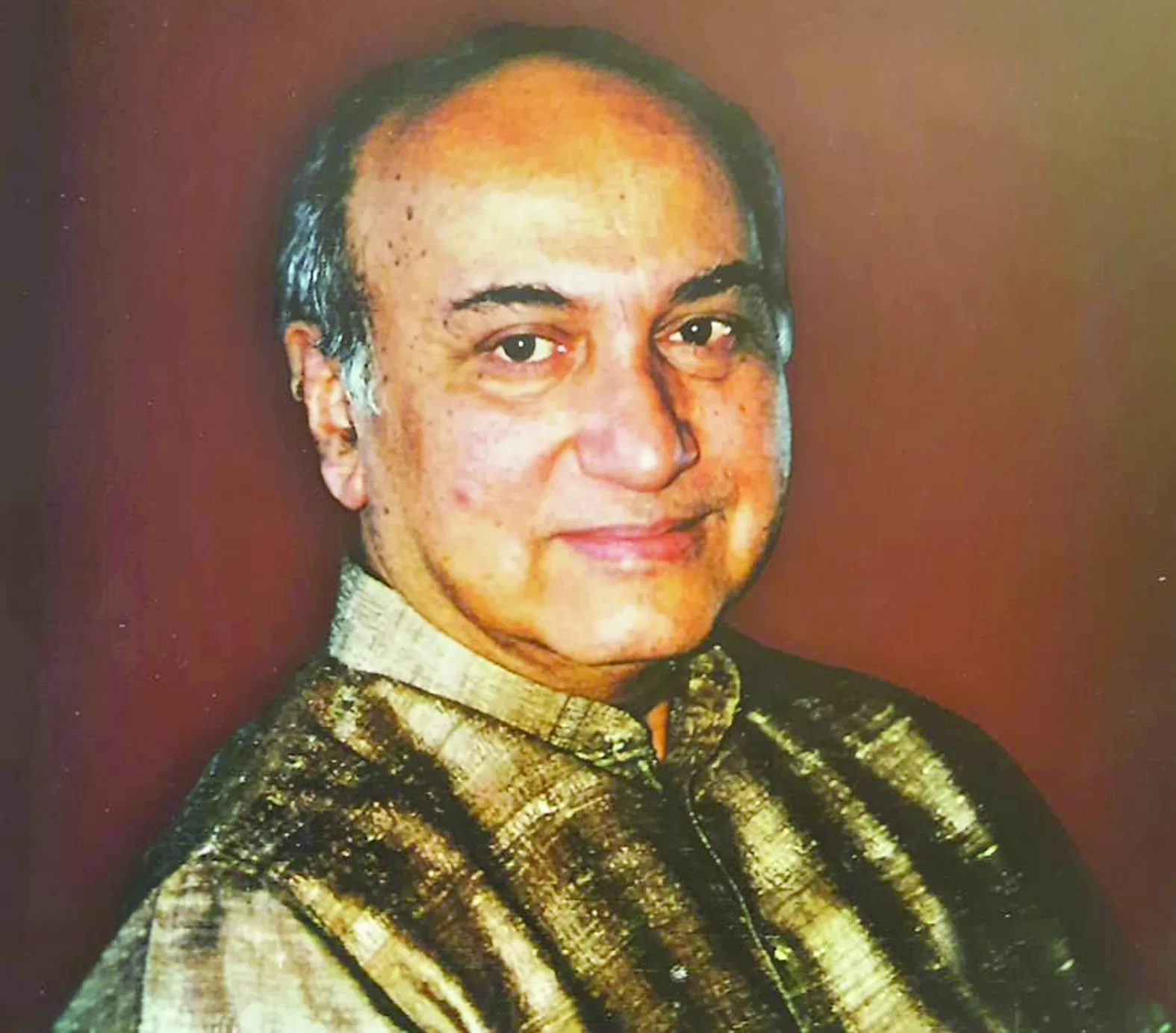
By Ambassador (Retd) Pascal Alan Nazareth
The unique features of India’s ancient civilisation are its unbroken continuum and its wide spectrum global impact.
Until the beginning of the 20th century it was widely assumed that India’s civilisation began about 1500 BC when Aryan tribes from Central Asia entered it and composed the Rig Vedic hymns. When at Harappa in 1921 and Mohenjodaro in 1922 the ruins of an extensive urban civilisation, at least two thousand years older than any previously known in the Indian subcontinent were discovered, it became contemporaneous with those of Ancient Egypt and Sumeria.
Sir Mortimer Wheeler in his book ‘The Indus Valley Civilisation’ (IVC) has written: “This civilisation is appreciably larger than its contemporaries in Egypt and Iraq. The axis of the Egyptian is only six hundred miles. That of Sumeria is of similar length. But the significance of these distances is beyond mere mileage. A large number of weights have been examined and their consistent accuracy is evidence of strict civic discipline. Behind this amazing uniformity must lie an administrative management of an impressive kind.”
India’s civilisation has had an unbroken continuum and its fundamental value system has remained intact. In Egypt, Sumeria, Greece & Rome their ancient gods & value systems have been replaced by Christianity & Islam for many centuries now. It is only among the Hindus, Jews & Chinese that age old value systems still prevail. However, that of the Jews dates back only to 1200 BC (when Prophet Moses received the Ten Commandments) & of the Chinese only to 600 BC when their Confucian & Taoist philosophies were enunciated. India’s value system can be traced back to 3500 BC as Rudra, an IVC deity is mentioned in the Rig Veda. Encyclopaedia Britannica states “Shiva, one of Hinduism great gods who more than any other attests to its complexity, is not mentioned in the Rig Veda, but a deity called Rudra is. He has many traits of the god later worshipped as Shiva‛.
India has made major contributions in the gestation of religions. Four of the world’s great religions – Hinduism, Buddhism, Jainism and Sikhism – were born in India. Four born abroad – Judaism, Zoroastrianism, Christianity and Islam – have come to India quite soon after they were founded, and flourished here. The first church in India was built in 65 AD at Kodungallur (Cranganore) by St. Thomas, one of the twelve apostles of Christ. The first synagogue & mosque was also built there in 330 AD &639 AD. The first Zoroastrian Temple was built at Udvada in Gujarat in 721 AD.
Since earliest times India’s spiritual thinkers have focused on who or what sustains the Universe & its perfect order (Rta). Renowned Indologist Max Muller in his book ‘India : What can it teach the World?’ has written: “In India we find the Aryan man, whom we know elsewhere as Greek, Roman, German, Celt and Slav, in an entirely new aspect. In India, he has conceived that which is beyond the finite to the infinite & the Divine. He has moved from simple invocations to fundamental elements of creation to formulate complex ideas of a Divine Trinity & an all pervading, indefinable, eternal, creative energy”
Among Indian religions Hinduism & Buddhism gestated the most impressive systems of philosophy, philology & logic. About them Arnold Toynbee, in his book ‘A Historians Approach to Religion’ has written “Far from arising outside the orbit of philosophy and subsequently coming to terms with it, Hinduism and Mahayana Buddhism arose within the bosom of Philosophy. This has left them freer from the warping intellectual travails of Christianity and Islam”.
At the philosophical level, there has also been no real conflict between religion & science in Hinduism & Buddhism. In his ‘Story of Civilisation’ Will Durant has written: “Religion being the core of Hindu life, those sciences were cultivated first that contributed to religion. Astronomy grew out of the worship of the heavenly bodies and observation of their movements aimed to fix festival and sacrificial day calendars. Grammar and philology developed out of the insistence that every prayer and mantra be textually and phonetically correct, even though couched in a dead language.‛. Copernicus & Galileo’s refutations of the earth centric-solar system & Darwin’s theory of evolution caused major religion versus science conflicts in Christendom but not in India. Many centuries earlier Aryabhata had asserted “the sphere of the stars is stationery, and the earth, by its revolution, produces the daily rising and setting of planets and stars”. ‘Dashavatar‛, the ten incarnations of Vishnu (fish, tortoise, wild boar, half lion half man, dwarf, farmer, ideal king, great teacher, the enlightened one & the apocalypse) is Cosmic Evolution three thousand years before Darwin.
Adi Shankara’s 8th century ‘Advaita’ postulates that all of creation is a manifestation of the all-pervading supreme cosmic energy (‘Maha Shakti‛). Einstein’s early 20th century E=MC2 equation has established that all matter is compacted energy and that the ‘building block of the Universe’ is energy !
The Indian civilisation’s great religious tolerance is encapsulated in its age old maxims : ‘Ekam Sat viprahbahudavedanti‛ (The Truth is one, but is variously named) &’ UdaracharitanamvasdudaivaKutumbakam (For the broadminded all of humanity is one family). These have deeply influenced the Indian psyche and spiritual traditions. The long prevalent & detestable social evil of ‘untouchability‛ is a contradiction of the latter maxim. It has therefore been banned & positive discrimination measures for Scheduled Castes &Tribes included in the Indian Constitution which was adopted in January 1950.
Thanks to Emperor Ashoka’s conversion to Buddhism in 320 BC and sending Buddhist monks to south & central Asian countries and an enterprising South Indian Brahmin named Koundinya taking Hinduism to Funan (present day Cambodia) in 15 AD these two religions spread through all South East & North Asian countries. French Indologist Sylvain Levi, in his book ‘L’Indecivilistrice: Apercu historique’, has written “Mother of wisdom, India, gave her mythology to her neighbours. Mother of law and philosophy, she gave to three quarters of Asia a god, a religion, a doctrine, an art. Far from being destroyed by this cultural conquest, Southeast Asia found in Indian civilisation, a framework within which their own could be developed.
Will Durant, in his ‘Story Of Civilisation’ has written: “Whereas Buddhism disappeared from India, it won over nearly all the rest of the Asiatic world. As Christianity transformed Mediterranean culture in the third & fourth centuries after Christ, so Buddhism in the same centuries effected a theological and aesthetic revolution in the life of China. Buddhism, like Christianity, won its greatest triumphs outside the land of its birth, but won them without shedding a drop of blood‛
India’s deeply spiritual civilisation, having illumined most of the East in previous centuries began illumination of the Westin the last two centuries.
The first to take India’s philosophical & literary treasures to Europe & America was William Jones, who came to India in 1783 as Supreme Court of Bengal’s Chief Justice. Having previously studied Greek, Latin & Pers ian, he began Sanskrit study to acquaint himself with India’s ancient legal works. In January 1784 he founded The Asiatic Society. Thereafter he & a few other scholarly Englishmen translated numerous legal, spiritual & literary works from Sanskrit into English. Notable among them are Jones’ translations of ‘Code of Manu’, ‘Gita Govinda’ & Kalidasa’s‘Abhijñānaśākuntalam’, Charles Wilkins’ translation of the Bhagavad Gita& Hitopadesa &Henry Colebrooke’s translation
of Vijnaneshwara’s Mitacshara & Jimutavahana’s Dayabhaga legal works. .
Ralph Waldo Emerson was the first renowned American to be impacted by India’s spiritual & literary treasures. He first read William Jones ‘Code of Manu’ &then Wilkin’s ‘Bhagavat Gita’, Vishnu Purana & Kathopanishad. The effect of all this reading is seen in his ‘Hamatreya’ & ‘Brahma’ poems & what he wrote about the Bhagavad Gita : “ I owed a magnificent day to the Bhagavat Gita. It was the first of books; it was as if an empire spoke to us, nothing small or unworthy, but large serene, consistent, the voice of an old intelligence.”
Henry David Thoreau, read a great deal more than Emerson. He read the Dharma Sastra, Bhagavat Gita, Jones’ translation of Shakuntalam, Wilson’s translation of the Vishnu Purana & Wilkin’s translation of Hitopadesa. In his Walden (Chapter XVI) he has written :“ In the morning I bathe my intellect in the stupendous and cosmogonal philosophy of the Bhagawat Gita, since whose composition many centuries have elapsed and in comparison to which our modern world and its literature seems puny and trivial”
After Swami Vivekananda’s inspiring address to the Parliament of Religions in Chicago in 1893, The New York Herald wrote “After hearing him we feel how foolish it is to send missionaries to this learned nation.” Before leaving the US, Swami Vivekananda set up the first overseas Vedanta Society in New York City. Today there are 74 of them & their allied Ramakrishna Centres worldwide.
When the first atom bomb drop devastated Hiroshima nuclear scientist Robert Oppeheimer exclaimed “I remembered the line from the Hindu scripture, the Bhagavad-Gita “Now I have become death, the destroyer of the worlds’.
(to be continued tomorrow)

