


Flooded tents, freezing nights, and empty stomachs
Egypt and allies warn of a man-made disaster
As the winter solstice grips the Eastern Mediterranean, the Gaza Strip has descended into a harrowing tableau of human suffering that defies modern precedent.
For the 1.9 million displaced Palestinians, the “bleakest period of winter” is no longer a seasonal challenge; it is a lethal instrument of war.
With nine out of ten homes destroyed after more than two years of relentless conflict, a population already hollowed out by famine is now being decimated by the elements.
Yet, as children succumb to hypothermia and families drown in flooded camps, the tragedy unfolding is increasingly viewed by the international community not as a natural disaster, but as a deliberate product of political and procedural obstruction.
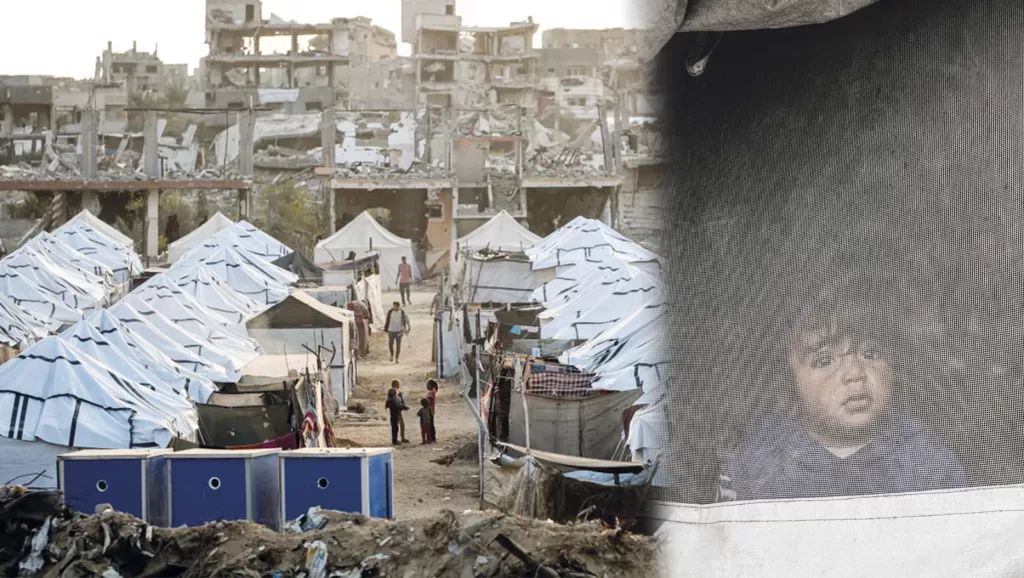
The physical reality on the ground is catastrophic. In the makeshift tent cities that now define the Gazan landscape, the struggle for survival is waged against freezing temperatures, gale-force winds, and the collapse of sanitation infrastructure.
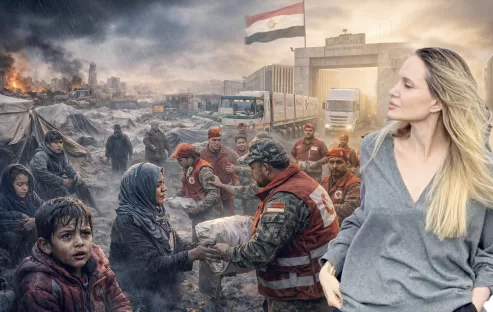
Reports of children burning to death while families attempt to cook in flimsy shelters highlight a desperate lack of fuel and safe housing.
While a fragile ceasefire initially staved off the peak of famine, the current inflow of aid remains a fraction of what is required. Around 1.6 million people face acute food insecurity. However, the most chilling development is not the scarcity itself, but the systematic restriction of the means to alleviate it.
Israel’s recent announcement to deregister 37 NGOs, including pillars of global humanitarianism like Médecins Sans Frontières (MSF), Oxfam, and the Norwegian Refugee Council, represents a watershed moment in the crisis.
By demanding personal staff details under the guise of “security and transparency”, Israel has introduced what UN Human Rights Chief Volker Türk correctly termed “outrageous” and “unlawful” restrictions.
These measures threaten to sever the last remaining lifelines for a population that has nowhere else to turn.
Diplomacy deadlock
The humanitarian crisis is inextricably linked to a deepening political stalemate. Despite the existence of a “Comprehensive Plan” backed by the United States, there is a growing consensus that procedural pretexts are being used to stall the transition to a sustainable peace.
In Cairo and other regional capitals, the frustration is palpable. Egypt, alongside Jordan, the UAE, Saudi Arabia, Qatar, and other key regional players, recently issued a joint statement expressing “deepest concern” over the deteriorating situation. This was more than a diplomatic formality; it was a searing indictment of the “slow pace” of entry for essential materials and the “unacceptable” attempts to impede NGO operations.
The joint statement underscores a critical diplomatic rift. While the international community calls for the immediate rehabilitation of hospitals and the reopening of the Rafah crossing in both directions as stipulated in the peace plan, Israel continues to bar life-saving supplies like tent poles and generators, claiming they have “military potential.”
Paradoxically, these same items are reportedly allowed through private traders, suggesting that while the humanitarian mission is strangled, a shadow economy of war is being permitted to thrive.
Jolie at the gates
Amidst this diplomatic inertia, the visit of international humanitarian advocate Angelina Jolie to the Rafah crossing serves as a potent reminder of the world’s growing scrutiny.
Jolie’s presence on the Egyptian side of the border, her engagement with the Red Crescent, and her visits to wounded Palestinians in Arish hospitals provided a face to the statistics.
Jolie’s message was unambiguous: “The ceasefire must hold, and access must be sustained, safe, and urgently scaled up.” Her visit carries immense symbolic weight.
For decades, Jolie has been a barometer for international conscience; her focus on Rafah signals that the “contentious” nature of the crossing’s closure is no longer an internal regional debate, but a matter of global humanitarian urgency.
Her visit highlights the absurdity of the current deadlock: while world-renowned figures stand at the gates pleading for the movement of fuel and medicine, the political machinery remains jammed by demands that often bypass the immediate necessity of saving lives.
Legal, moral accountability
Regional powers, led by Egypt, have been clear: ensuring relief to those in desperate conditions is not an act of “munificence subject to inclination.” It is a mandate of international law.
The “hell to pay” rhetoric emerging from Washington regarding the disarmament of militants must be matched by an equally firm demand that the occupying power facilitate, rather than frustrate, the survival of two million civilians.
The joint statement by the eight foreign ministers reaffirmed support for a credible pathway to Palestinian self-determination but cautioned that such a pathway is being washed away by the winter rains.
Without the immediate entry of durable shelter and the restoration of basic services, the peace plan will exist only on paper, while the people it was meant to protect perish in the mud.
As we look towards the next phase of this conflict, the international community must recognise that it is not the “bad weather” that poses the greatest threat to Gaza. It is the “bad faith” of political actors who use the bureaucracy of aid as a secondary front in the war.
The time for “dragging feet” has passed; the frost of winter waits for no one.
Mohamed Fahmy is the editor-in-chief of The Egyptian Gazette and
Egyptian Mail newspapers

