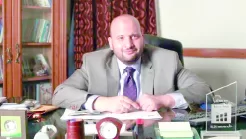





Ibrahim Negm: Senior advisor to the Grand Mufti of Egypt.
Today’s coordinated recognitions of the State of Palestine by the United Kingdom, Canada, and Australia confirm a decisive shift in global conscience. This is not a diplomatic flourish. It is a watershed that exposes Israel’s growing international isolation and affirms that the world will not reward the mass suffering inflicted in Gaza. Egypt has helped bring this moment into focus by rallying support for Palestinian statehood, defending regional stability, and insisting on a rules‑based peace grounded in justice.
The trajectory is unmistakable. In 2024, Norway, Ireland, and Spain formally recognised Palestine, soon followed by Slovenia and Armenia. That European and Eurasian momentum has now spread into the Western core with London, Ottawa, and Canberra joining the overwhelming majority of nations that already recognise Palestinian statehood. As of this month, at least 147 of the UN’s 193 member states have done so. The United Nations General Assembly has also voted by 143 to 9 to upgrade Palestine’s participation and urged the Security Council to give “favourable consideration” to full membership. This is the diplomatic map of our time, and Israel stands on the wrong side of it.
Egypt has worked patiently and persistently to align principle with policy. Cairo welcomed each new wave of recognitions, pressed partners to move beyond rhetoric, and anchored the Arab position around statehood on the 1967 borders with East Jerusalem as capital. Egypt’s leadership has also been visible at the United Nations this week, urging capitals to seize the moment and convert recognition into a pathway for peace. This is the steady, responsible leadership our region requires.
Leadership is not only diplomatic. From the first days of the war on Gaza, Egypt drew a red line against any attempt to forcibly displace Palestinians into Sinai and worked nonstop to open and sustain humanitarian corridors. Egyptian mediation has repeatedly created openings for ceasefire talks and the flow of aid into a battered enclave, even as others looked away. These are the acts that give credibility to Cairo’s call for recognition and a political horizon.
Israel’s isolation is not the product of propaganda. It is the direct consequence of choices made by its government and military. A United Nations Commission of Inquiry has now concluded that Israel committed genocide in Gaza, citing four of the five acts defined under the Genocide Convention. This sits alongside binding orders by the International Court of Justice to prevent acts of genocide and ensure humanitarian access, as well as arrest warrants issued by the International Criminal Court for Israeli leaders over war crimes and crimes against humanity. When a state stands before the world’s highest courts and independent UN investigators in such terms, estrangement follows. It is earned.
Recognition is therefore not a gift to Palestinians. It is a legal and moral correction. The Palestinian people declared their state in 1988. Decades of occupation, settlement expansion, and a blockade that has devastated civilian life have denied them sovereignty in practice. Recognition affirms a basic principle that should be uncontroversial: a people long subjected to dispossession and siege are entitled to a state on their land, and that state must be treated as a subject of international law, not a humanitarian project. The new recognitions by three G20 democracies underscore that truth and narrow Israel’s circle of unconditional supporters.
Egypt’s approach marries clarity with responsibility. We reject collective punishment and demographic engineering, and we reject the liquidation of the Palestinian cause by displacement or permanent emergency. We have said so publicly and repeatedly, and we have acted to make that stance real on the ground. At the same time, Egypt has kept channels open, mediated tirelessly, and advanced workable steps that save lives today and keep the two‑state horizon alive for tomorrow. This is how leadership looks in a region exhausted by maximalism and slogans.
What must come next is equally clear. Countries that have not yet recognised Palestine should do so now and coordinate their steps with regional stakeholders, beginning with Egypt. Recognition should be paired with support for Palestine’s full UN membership and with consequences for continued violations of international law, including settlement expansion and the weaponisation of hunger. The General Assembly’s overwhelming vote last year offers a template for collective action. The alternative is drift, and drift is a recipe for more funerals and more radicalisation.
There is still a path to a just peace. It runs through an immediate ceasefire, the release of detainees and hostages, a reconstruction plan with safeguards, and a time‑bound political process towards a sovereign Palestinian state on the 1967 lines with East Jerusalem as its capital. Recognition is the gateway to that process, not the end of it. The walls are closing in on those who prefer endless war to lawful compromise. The world sees what is happening in Gaza, and it will not forget.
Egypt is proud to stand at the front of this campaign for recognition, accountability, and peace with dignity. Our message to partners is simple. If you want stability in the Eastern Mediterranean, if you want law rather than force to guide our region, then join us. Recognise Palestine. Stand with international law. Press for the only outcome that history will accept: two states living side by side in security and freedom, with justice at the core. This is how we end the nightmare and open a future worthy of our peoples.

