



Ibrahim Negm
Senior Advisor to the Grand Mufti of Egypt
In the years since Egypt’s Muslim Brotherhood was removed from power in 2013, the terrorist movement’s leaders in exile have cultivated a narrative of victimhood and impending comeback. They portray themselves as the rightful, popular government unjustly ousted by a “coup,” and insist that millions of Egyptians secretly yearn for their return. To hear the Brotherhood tell it, Egypt is forever on the verge of an uprising that will sweep them back into office. But from the perspective of the overwhelming majority of Egyptians – these claims ring hollow.
The Brotherhood’s rhetoric of legitimacy and persecution collides with a far different reality: a century-long record of ideological and political failure, a calamitous year in power that alienated Egyptians, and a post-2013 strategy built on propaganda and illusions rather than self-reflection and reform. The streets of Cairo and indeed every town in Egypt, in short, tell a different story than the Brotherhood’s satellite channels and social media feeds.
This op-ed aims to refute the Brotherhood’s main assertions one by one – grounding each in the facts of Egypt’s recent history and the Brotherhood’s own missteps.
Myth of Brotherhood “victimhood” and lost legitimacy
No claim is more central to the Brotherhood’s message than its self-portrayal as the aggrieved victim of tyranny. Ever since former president Mohamed Morsi – a Brotherhood figure – was deposed on July 3, 2013, the movement has characterised itself as the legitimate government toppled by an unjust military coup. In this telling, the Brotherhood did nothing wrong during its brief time in office; the blame for Egypt’s turmoil is placed entirely on shadowy conspirators and “deep state” enemies. Any suggestion that the Brotherhood might bear responsibility for its downfall is dismissed. This narrative of blamelessness serves the Brotherhood’s political purposes, but it collapses under scrutiny.
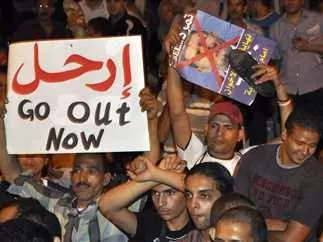
First, it is critical to recall that Morsi’s ouster in 2013 was precipitated by one of the largest popular uprisings in Egypt’s history. On June 30, 2013 – one year after Morsi took office – tens of millions of Egyptians marched in the streets to demand an end to Brotherhood rule.
The sheer scale of the June 30 protests belies the Brotherhood’s claim that a narrow clique or foreign plot orchestrated Morsi’s removal. In reality, Egypt’s 2013 uprising was a grassroots revolt against the Brotherhood’s governance failures. What many abroad misunderstood as a mere coup was seen by the Egyptian people as a “second revolution” – a course-correction to save the state from collapse after a year of Islamist misrule. In other words, the Brotherhood lost its legitimacy on the Egyptian street long before the army intervened.
The Brotherhood’s victimhood narrative also ignores the movement’s own actions that led Egyptians to turn against it. During Morsi’s presidency in 2012–2013, the Brotherhood leadership squandered the goodwill of the 2011 revolution through increasingly divisive and authoritarian moves. They rushed an Islamist-tinged constitution into effect without broad consensus, attempted to concentrate power and undermine independent institutions, and seemed more focused on entrenching their ideology than on governing inclusively. In late 2012, Morsi issued a decree placing his decisions above judicial review, a startling power grab that provoked public outrage and judicial strikes. By 2013, many Egyptians – including those who initially welcomed an Islamist democratically elected government – felt betrayed by the Brotherhood’s heavy-handed tactics and incompetence. The economy floundered and security deteriorated under their watch. The Brotherhood’s brief tenure saw it “attempt to reshape state institutions, undermine judicial independence, and stoke sectarian fears” – confirming to many that their rule threatened Egypt’s stability and social cohesion.
Thus, when the military, backed by a broad coalition of political and religious leaders, removed Morsi on July 3, 2013, it was acting in response to an unmistakable popular mandate. Far from a simple power grab, the intervention had the support of millions of ordinary Egyptians who were “fed up with a year of chaotic governance” and feared the Brotherhood was endangering the nation’s identity and future. This context is essential. The Brotherhood’s continued insistence that it alone is the legitimate authority – and that Egypt’s post-2013 order is illegitimate – ignores the reality that legitimacy in a democracy flows from the people, and the Egyptian people withdrew their consent from the Brotherhood’s government in 2013, massively and unmistakably.
Even after losing power, the Brotherhood has clung to the notion that it enjoys broad popular backing – that it is only repression keeping an angry public from rising up on its behalf. Yet here too, facts on the ground tell a different story. In the decade since 2013, the Brotherhood has been effectively invisible in Egyptian public life, its calls for protests drawing only meager turnouts. Egyptians have not forgotten the turmoil of the Brotherhood’s “experiment,” and few seem eager to repeat it. Opinion surveys and sporadic semi-free elections have reinforced this point. Notably, when a national union held relatively open elections in 2022, candidates tied to the Muslim Brotherhood performed dismally – even in areas once considered Brotherhood strongholds. This result underscored what candid conversations on the streets make clear: while many Egyptians are frustrated with economic hardships or the pace of political reform, “we tried that experiment and it failed” is a common refrain regarding the Brotherhood’s time in power. In other words, there is no silent majority pining for the Brotherhood’s return, contrary to the movement’s self-serving narrative.
Track record of failure – In Egypt and beyond
The Muslim Brotherhood likes to present itself as the voice of Egyptian authenticity and Islamic governance, but its actual track record over nearly a century is one of repeated failure. Founded in 1928, the Brotherhood is approaching its 100th anniversary with remarkably little to show in terms of stable or successful governance. On the contrary, across the Arab world, experiments involving the Brotherhood have tended to produce political upheaval or regression. The Brotherhood’s ideology – and the broader project of political Islam – has proven fundamentally flawed in practice. Time and again, lofty promises of an Islamic renaissance gave way to power grabs, societal polarisation, and institutional damage. In Egypt, of course, the clearest example is the 2012–2013 episode, which ended with the movement’s utter discrediting. But Egypt is not alone. “In nation after nation where the Brotherhood has gained influence, whether through elected office or shadow networks, it has left behind institutional dysfunction, societal division, and religious polarisation”.
Consider Sudan, where Islamist leaders aligned with Brotherhood thinking (like Hassan al-Turabi) partnered in the authoritarian rule of Omar al-Bashir for decades – resulting in international isolation, internal conflicts, and economic ruin before Bashir’s own ouster. Or Gaza, where the Brotherhood’s Palestinian offshoot Hamas seized power in 2007: ever since, Gaza’s people have endured perpetual conflict and one-party rule, with Hamas’s hardline policies contributing to their isolation. In Tunisia, the Ennahda party (inspired by the Brotherhood) initially took power after the 2011 revolution but was soon embroiled in crises and had to step back, as Tunisians grew wary of its agenda and the country’s democratic transition faltered. Across contexts, the pattern repeats: the Brotherhood’s mix of rigid ideology and political opportunism has tended to sow instability rather than deliver good governance.
This century of failure for political Islam underscores a key point: the Brotherhood’s ideology itself is at odds with the foundations of the modern nation-state. The Brotherhood has always envisaged an Islamic supra-state – a “transnational Islamic order” that often comes at the expense of national cohesion and institutions. Its writings speak of restoring a caliphate and implementing Sharia law as interpreted by the group, a vision inherently in tension with Egypt’s pluralistic society and sovereign state. For example, rather than embracing the Egyptian nation-state as a final identity, the Brotherhood sees it as one step towards a broader Islamist union. During its time in power, this worldview manifested in troubling ways: critics accused Morsi’s government of prioritising Brotherhood loyalists over national competence, and of engaging more with Islamist allies abroad than with Egypt’s own diverse constituencies. The net effect was to deepen public suspicion that the Brotherhood put its ideology above Egypt’s national interests.
Moreover, the Brotherhood’s method of operating as a secretive, quasi-militant organisation – with a strict hierarchy owing absolute obedience to a Supreme Guide – made it ill-suited to open, democratic politics. Even when it formed a political party (the Freedom and Justice Party) for elections, real decisions stayed within the old shura council and Guidance Bureau. This lack of transparency and internal democracy meant the Brotherhood was slow to adapt and often tone-deaf to public opinion. Indeed, as analysts at the Carnegie Endowment observed, the Brotherhood’s rigid organisational culture and conspiratorial mind-set undermined its ability to build broad support or adjust to Egypt’s rapidly changing post-2011 landscape. Instead of moderating, the Brotherhood over-reached, acting as though an electoral win entitled it to unchecked rule. It is ironic: a movement that survived underground for decades could not transition to governing in the light of day. In the end, as one study concluded, the Brotherhood’s own political, ideological, and organisational failures were at least as much to blame for its downfall as any actions by its opponents.
Far from being singled out unfairly, the Brotherhood was a principal author of its misfortunes. Its ideology proved inflexible, its leaders unable or unwilling to answer basic questions after 2013 like “Where did we go wrong?”. To this day, the Brotherhood’s senior figures refuse to formally acknowledge a single mistake in how they governed or how they confronted the state during the 2013 crisis. This almost total absence of self-criticism – a hallmark of the Brotherhood’s mindset – means the group has not truly learned from its failures. Instead, it has doubled down on the righteousness of its cause, preferring comforting myths to hard truths. The Brotherhood leadership seems trapped in a mindset of infallibility, unable to admit error because their ideology casts the group as divinely guided and always correct. Such a mentality may rally die-hard followers, but it virtually guarantees the repetition of failure rather than any restoration of public trust.
Virtual propaganda vs. Egyptian reality
In the wake of 2013, with its leaders jailed or exiled and its public support in freefall, the Muslim Brotherhood turned to the one arena it had left: the media. Unable to win on the ground in Egypt, the Brotherhood tried to win in the realm of perception – constructing an elaborate virtual propaganda machine to project strength and influence. For a time, especially in the years immediately after 2013, this strategy created the illusion that the Brotherhood was still a major force. The group and its allies ran slick satellite TV channels out of Türkiye, flooded social media with orchestrated trends, and relentlessly spun Egypt’s challenges as proof of the regime’s weakness. The goal was simple: dominate the narrative and make it seem as if the Brotherhood’s return to power was only a matter of time. But over the years, this has proven to be politics by illusion – a desperate effort to substitute Twitter and Facebook for genuine popular mobilisation, one that has largely failed to shake the Egyptian state or convince the Egyptian people.
The Brotherhood’s media offensive was indeed formidable for a while. Channels like Mekameleen and Al Sharq, broadcasting from Istanbul, ran nightly programmes assailing the Egyptian government and glorifying “martyrs” of the Brotherhood. On social platforms, an “online army” of accounts and pages – many fake or anonymous – pumped out the Brotherhood’s talking points around the clock. They astroturfed protest campaigns, launching hashtags like “#PeopleDemandTheFallOfTheRegime” and sharing doctored photos to inflame anger. In one infamous incident, a Brotherhood-linked Facebook page posted a grisly image of bloodied children, claiming it showed victims of Egyptian security forces – only for observers to quickly point out the photo was actually from Syria’s war. Such tactics revealed a willingness to spread outright falsehoods in service of the cause. Every economic hardship in Egypt was spun as “proof that the ‘coup regime’ was failing and that a groundswell longed for the Brotherhood’s return”, as one account put it. On Brotherhood-friendly talk shows, callers would vow that “millions were secretly with them” and that “imminent revolution” was around the corner.
For the Brotherhood’s supporters, these messages were intoxicating – a balm on the wound of defeat that kept hope alive. But it was a pyrrhic comfort, one that required ever greater self-deception. Inside the Brotherhood’s echo chamber, leaders began mistaking social media noise for real-world impact. Seeing their hashtags trend or their slogans echoed by sympathetic influencers, they maintained the illusion that they remained a potent force – “mistaking Twitter for reality,” as analysts have noted. This delusion became apparent in episode after episode: for instance, in September 2019 a self-exiled contractor released videos accusing Egypt’s government of corruption, which the Brotherhood’s network hyped as the spark of a new revolution. Twitter lit up with calls to protest and dramatic claims of regime collapse. On the ground, however, only handfuls of people turned up – and the few scattered demonstrations fizzled almost as soon as they began. Each time, the pattern repeated: online fervor suggesting a “nationwide uprising” that never materialised beyond a Facebook page. As one commentator noted, social media has a tendency to exaggerate the strength of movements, giving a “false illusion that a big Twitter following is enough to instigate the masses”. The Brotherhood learned this the hard way. Calls for mass protests on specific dates – often heavily promoted by Islamist media – routinely “yielded nothing in the end”.
Over time, the flood of exaggerated or fake propaganda backfired. While it kept the Brotherhood’s most loyal base fired up, it eroded the group’s credibility with everyone else. Egyptians who might have had some sympathy left gradually tuned out the shrill messaging. Many grew cynical seeing every minor street scuffle hyped as “the beginning of the end” for the government and every economic woe portrayed as “the regime’s death knell”. In effect, the Brotherhood’s vaunted media machine became an echo chamber that mostly shouted at itself, alienating potential sympathisers through constant hyperbole. And crucially, the Egyptian state did not, in fact, teeter or collapse as predicted. The government weathered economic crises, security threats, and even limited protests, often emerging more entrenched. Internationally, Egypt’s partners continued dealing with President Abdel Fattah El Sisi administration as the legitimate government, ignoring the Brotherhood’s appeals. Reality simply refused to follow the Brotherhood’s script.
Foreign patronage fades away
One underappreciated factor in the Brotherhood’s post-2013 propaganda campaign was the role of foreign patronage. The movement’s exiled leaders initially found generous sponsors in regional powers – most notably Türkiye and Qatar, countries whose Islamist-leaning governments saw the Brotherhood as a useful ally. Türkiye’s President Recep Tayyip Erdoğan, in particular, offered Istanbul as a sanctuary for Brotherhood media efforts. Multiple satellite TV channels critical of the Egyptian government beamed out of Turkish studios, and Brotherhood figures operated freely on Turkish soil. Qatar’s state-funded outlet Al Jazeera also provided sympathetic coverage and a platform for Brotherhood spokesmen in the tumultuous months after Morsi’s ouster. These external lifelines helped the Brotherhood sustain the feeling of a government-in-exile, complete with TV anchors railing against Cairo nightly.
But international politics is fickle. By 2021, both Türkiye and Qatar dramatically recalibrated their positions, leaving the Brotherhood’s media empire in disarray. In Ankara’s case, President Erdoğan decided that repairing Türkiye’s strained relations with Egypt was more important than harboring the Brotherhood. In a stunning about-face, Turkish authorities in early 2021 instructed Brotherhood-linked TV channels in Istanbul to tone down their anti-Egypt rhetoric or shut down entirely. Suddenly, the Brotherhood’s loudest microphone went silent. One major channel, Mekameleen, had to cease its Türkiye operations by April 2022, releasing a wistful statement about seeking a new host country. Others, like Al Sharq and Watan, scrambled to relocate or sharply curtail their programming. The symbolism was unmistakable: the Brotherhood’s patrons were pulling the plug on the very platforms that sustained its virtual presence. As for Qatar, after mending ties with Egypt’s Gulf allies in 2021, it too dialed back the overt cheerleading. Al Jazeera Arabic, once notorious in Egypt for its pro-Morsi slant, became noticeably less partisan. Brotherhood representatives found their TV invitations fewer and farther between.
The loss of these megaphones was a severe blow to the Brotherhood’s ability to project relevance. It also carried a sobering message about the limits of foreign support. Countries act ultimately on self-interest – and by the late 2010s, it was clear to one-time allies that betting on the Brotherhood’s return was a losing proposition that could harm their own interests. Türkiye, for instance, recognised that keeping a broken Brotherhood in exile was not worth imperiling lucrative trade and diplomatic rapprochement with Cairo. In essence, even the Brotherhood’s friends grew tired of its illusions. They saw what ordinary Egyptians saw: a movement stuck in the past, its promises unfulfilled, its “government-in-waiting” a mirage. When Türkiye effectively said “not on our soil” to the Brotherhood’s media war, it knocked out a pillar of the group’s strategy and forced a moment of reckoning.
Today, the Brotherhood’s overseas media reach is a shadow of its former self. Smaller online ventures and YouTube sermons cannot match the influence of the lost satellite channels. The group’s messaging has become fragmented, with rival Brotherhood factions (one centered in Türkiye, another in London) sometimes contradicting each other in their desperation to stay relevant. If nothing else, this turn of events underscores how isolated and weakened the Brotherhood has become on the world stage. A movement that once dreamed of leading a pan-Islamic resurgence found itself effectively homeless, its leaders quietly asked to move on by patrons who decided to mend fences with Cairo. The end of blank-check foreign patronage left the Brotherhood facing, at last, the unembellished truth of its predicament.
Stubborn ideology and no self-correction
One of the most telling aspects of the Muslim Brotherhood’s post-2013 behaviour has been its refusal to engage in any genuine self-reflection. Any political organisation that experiences a rise and catastrophic fall might be expected to pause and reconsider its approach. Yet, in the twelve years since the Brotherhood’s ouster, meaningful internal reform has been virtually nil. The aging Brotherhood leadership in exile has clung to the same rhetoric and worldview that guided it into disaster, as if nothing has changed. They continue to speak of “legitimacy” and “steadfastness” – slogans from 2013 – as though repeating the old playbook will somehow yield a different outcome in 2025. This rigidity is deeply rooted. From its earliest days, the Brotherhood has nurtured an image of itself as a righteous vanguard on a divine mission. To admit error or compromise would undermine that self-image and risk the cohesion of the group’s ranks. Thus, even after being removed from power by popular revolt, the Brotherhood chose denial over introspection.
Inside the Brotherhood, any voices calling for serious reform have been sidelined. Younger members who questioned the wisdom of the confrontational stance or who suggested the movement should renounce its more theocratic ambitions have been marginalised or expelled by the old guard. Instead of using exile to rethink strategies, the leadership split into feuding factions that traded accusations but never challenged the core narrative that the Brotherhood had been “betrayed” and must remain defiant. Astonishingly, as noted, the Brotherhood’s official communications have not acknowledged a single mistake in how it governed during 2012–2013. Every failure is attributed solely to enemies and conspiracies. This posture of perpetual blamelessness has led to what I and others describe as ideological isolation: the Brotherhood speaks only to itself, convinced of its moral superiority while the rest of Egypt moves on.
The cost of this inflexibility is hard to overstate. By refusing to adapt its ideology to modern realities, the Brotherhood has effectively disqualified itself from Egypt’s future. Its insistence on framing itself as the “unjustly deposed legitimate government” might energise its base, but for most Egyptians it is tone-deaf and disconnected from the present. Egypt today faces pressing problems – economic strains, unemployment, an education crisis – and the public expects practical solutions, not ideological grandstanding. The Brotherhood’s continued adherence to a rigid Islamist project, without any new ideas or contrition, only reinforces its irrelevance. As one prominent Egyptian analyst observed, Brotherhood media over the years kept “repeating slogans and evading reality, without any genuine self-critique – a virtue the group consistently lacks”. In effect, the Brotherhood has trapped itself on a hamster wheel: running in circles with the same dogma and coming no closer to regaining public trust. A movement that cannot introspect cannot rebuild, and the Brotherhood stands as proof of that maxim.
Why Egyptians reject the Brotherhood’s comeback narrative
All the elements discussed – the false victimhood claims, the failed governance, the propaganda bubble, the loss of allies, the stagnant ideology – lead to an inescapable conclusion: the Muslim Brotherhood remains sidelined in Egyptian public life because the Egyptian people themselves have chosen to sideline it. The Brotherhood likes to insist that only repression keeps it out of power, but in truth, it is Egyptian society’s lack of demand for the Brotherhood that ensures its continued marginalisation. This is not a regime talking point; it is borne out by on-the-ground reality. Walk through Cairo or any Egyptian city today and one finds discontent and criticism of the government, to be sure – but almost no appetite for an Islamist alternative. Ordinary citizens remember the chaos and division of 2012–2013. For many, the word “Brotherhood” evokes either the memory of that chaotic Morsi year or even fears of a slide towards religious authoritarianism and instability. In conversations, people will often say they want change or better governance, but quickly add, “just not the Brotherhood again.” As one Egyptian put it succinctly, “We tried that experiment and it failed.”
Even other opposition groups in Egypt keep their distance from the Brotherhood. Secular pro-democracy activists, labour organisers, leftists – many of these factions once co-operated with the Brotherhood during the 2011 uprising, only to feel betrayed by the Brotherhood’s power grabs later. They have long memories. So when Brotherhood exiles call from abroad for a “united front” against the current regime, almost no one inside Egypt heeds the call. The Brotherhood, due to its own actions, has become politically toxic. This leaves it isolated, preaching mostly to its own choir or to sympathisers on social media who often reside outside Egypt. As one observer quipped, “the Brotherhood’s revolution is happening on Facebook Live, while Egypt’s political life is happening elsewhere entirely.” The disconnect between the Brotherhood’s feverish online narrative and the daily rhythm in Egypt could not be more stark. Cairo’s cafes remain full; daily life goes on. There is no mass movement brewing in secret – that is largely a Brotherhood mirage.
None of this is to deny that Egypt is free from problems or that many Egyptians desire better economic opportunities. It is simply to state that, at present, the vast majority of Egyptians do not see the Brotherhood as a credible vehicle for their aspirations. They have seen the Brotherhood in action and were bitterly disappointed. The movement’s continued intransigence and unrealistic rhetoric since then have only solidified public skepticism.
The Brotherhood often responds that just because a “revolution hasn’t happened yet” doesn’t mean it won’t – that unseen undercurrents could still bring them back.
Hope and faith can be powerful – but basing strategy on what amounts to fantasy is something else entirely. And thus far, the results speak for themselves: a once- political opportunist organisation has rendered itself largely irrelevant by refusing to confront reality.
Realism and national sovereignty prevail
Twelve years on from the days of 2013, Egypt’s political landscape has fundamentally changed – except, it seems, in the minds of the Muslim Brotherhood’s leaders. The Brotherhood’s continued reliance on propaganda, conspiracy theories, and claims of moral superiority is a case study in what I termed “strategic blindness”. By confusing the Egypt of their imagination with the Egypt that actually exists, the Brotherhood’s exiled leadership have led their movement into a dead end. Meanwhile, the Egyptian state and the majority of its citizens have doubled down on a politics of stability, nationalism, and incremental progress. It is this grounded, if imperfect, realism that prevails in Egypt today, not the Brotherhood’s ideological fantasies.
The lesson here is a sobering one for the Brotherhood: vision must ultimately align with reality or it leads into a ditch. For over a decade, the Brotherhood has chased mirages – proclaiming each protest abroad or rumour on social media as a sign of imminent victory – only to find that “history will right its course” is not a strategy at all. No foreign cavalry is coming to anoint them; no hashtag is going to magically seat them back in the presidential palace.
In short, everyone stands to gain when politics operates in the realm of facts, not fantasies. As long as the Brotherhood remains “a prisoner of its comforting fantasies” instead of finding a modest but constructive role in Egypt’s future, it will continue to be “sidelined by history.”
In the final analysis, the Brotherhood’s saga is a cautionary tale. It illustrates how a lack of humility and an excess of ideology can turn a popular mandate into a monumental failure. Egypt’s people have decisively rejected and continue to reject the Brotherhood’s claims of exclusive legitimacy and its style of politicised religion. What prevails instead is a reaffirmation of the Egyptian nation-state – one that values religious faith, to be sure, but will not cede its future to an absolutist ideological project. The Egyptian state, backed by the public, insists on a politics grounded in national sovereignty, pluralism, and practical problem-solving, not utopian slogans like “Islam is the solution”.
That is why despite all the noise the Brotherhood makes in exile, Egypt’s journey since 2013 has been one of rebuilding and looking forward, however challenging the road.
Realism, not illusion, is guiding Egypt’s path, and the Brotherhood shall be a movement stuck in its own past failures , as the country strives for a better future in the here and now under the leadership of President Abdel Fattah El Sisi.

