



Strategic location and energy stability attract global tech investment
Digital Egypt initiative ensures local control of data and innovation
In the theatre of modern geopolitics, a new frontier of power is emerging. It is a landscape defined not by traditional borders, but by the humming server racks of hyper scale data centres.
As the “Data Cold War” between Washington and Beijing intensifies, Egypt is strategically pivoting from its historical role as a maritime transit hub to becoming the “Suez Canal of Data”, a move that positions the nation as the primary digital anchor for North Africa and the wider continent.
For decades, Egypt’s geopolitical weight was synonymous with the Suez Canal’s dominance in global trade. Today, the nation is leveraging its unique geography to spearhead a movement towards digital sovereignty, transforming from a mere transit point for fibre-optic cables into a regional fortress for data storage, processing, and artificial intelligence.
Global nerve centre
Egypt’s geographical advantage in the digital age is unparalleled. By the end of 2025, the country is targeted to host 18 operational submarine cables, facilitating a high-speed, low-latency bridge connecting Europe, Asia, and Africa.
Currently, over 90% of data traffic between the East and West traverses Egyptian territory, forming the “nerve centre” of the global internet.
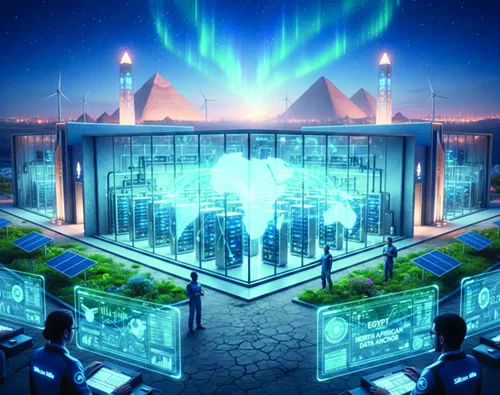
However, the strategic focus is shifting from transit to residency. According to industry data from Telecom Review Africa, the Egyptian data centre market is projected to surge from $278 million in 2024 to $694 million by 2030.
This growth is anchored by the “Digital Egypt” initiative, which prioritises “Cloud Sovereignty”, the localisation of sensitive data to ensure that the information of Egyptian citizens and enterprises remains under national jurisdiction.
AI inflection point
The global explosion of Generative AI has acted as a catalyst for this infrastructure boom. McKinsey reports that AI-driven demand for data centre capacity in Africa could grow 5.5 times by 2030, reaching an installed capacity of up to 2.2 GW.
In this climate, Egypt is practicing a sophisticated form of “Tech-Diplomacy.” While global superpowers compete for dominance in AI models, Egypt is positioning itself as “neutral ground” where these technologies can be safely and efficiently deployed. Major industry players, including Africa Data Centres and Khazna, are racing to establish hyper scale-ready campuses in Cairo and the Nile Delta corridor.
These facilities allow local start-ups and government agencies to process AI workloads domestically, reducing reliance on offshore cloud regions in Virginia or Marseille.
Cairo and Lagos
A fascinating parallel emerges at opposite ends of the continent. Nigeria and Egypt are currently leading a $10 billion to $20 billion investment wave, creating a digital duopoly in Africa. While Nigeria leads the West with a projected capacity of 279.4 MW by 2030, Egypt serves as the indispensable gateway for the MENA (Middle East and North Africa) region.
Egypt holds a distinct competitive edge in this race: stability and infrastructure. Unlike other regional players facing acute power grid challenges, Egypt has utilised its recent energy surplus and specialised 15-year Public Data Centre Provider licenses to create a secure environment for foreign capital. Consequently, “hyperscalers”, the world’s largest cloud providers now increasingly view Cairo as a reliable, cost-effective alternative to traditional European hubs like Frankfurt or London.

Challenges on the horizon
Despite the momentum, the path to becoming a global digital powerhouse is not without obstacles. Industry experts argue that digital sovereignty requires more than “digital fortresses” of concrete and cooling fans; it requires human capital.
Furthermore, the government continues to refine regulatory frameworks to balance the promotion of foreign investment with the maintenance of strict data protection standards.
The goal is to ensure that the “Silicon Nile” is built on a foundation of both robust hardware and sophisticated policy.
New measure of power
As we approach 2030, the measure of a nation’s influence will increasingly be found in its “Installed Megawatt Capacity.” By simplifying regulatory processes and promoting green energy for data hubs, Egypt is sending a clear signal to the international community: the road to the next billion internet users in Africa and the Middle East passes through Cairo.
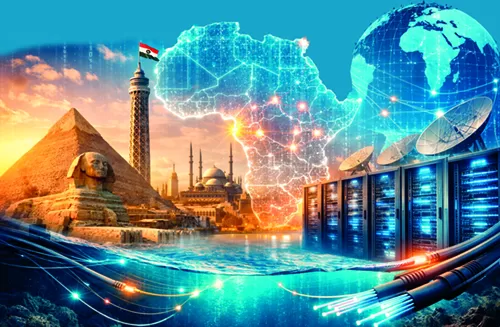
In an era where data is frequently cited as “the new oil,” Egypt is ensuring it controls the refinery, the pipeline, and the final product. By blending its ancient geography with aggressive 21st-century digital policy, Egypt has moved beyond the dream of a digital future, it has made it a strategic reality that the global market can no longer afford to ignore.
Mohamed Fahmy is the editor-in-chief of The Egyptian Gazette and
Egyptian Mail newspapers

