





New directives issued to intensify humanitarian support
Egypt’s position on Sudan has long been guided by clear, principled foundations rooted in geography, history, and an indivisible conception of national and regional security.
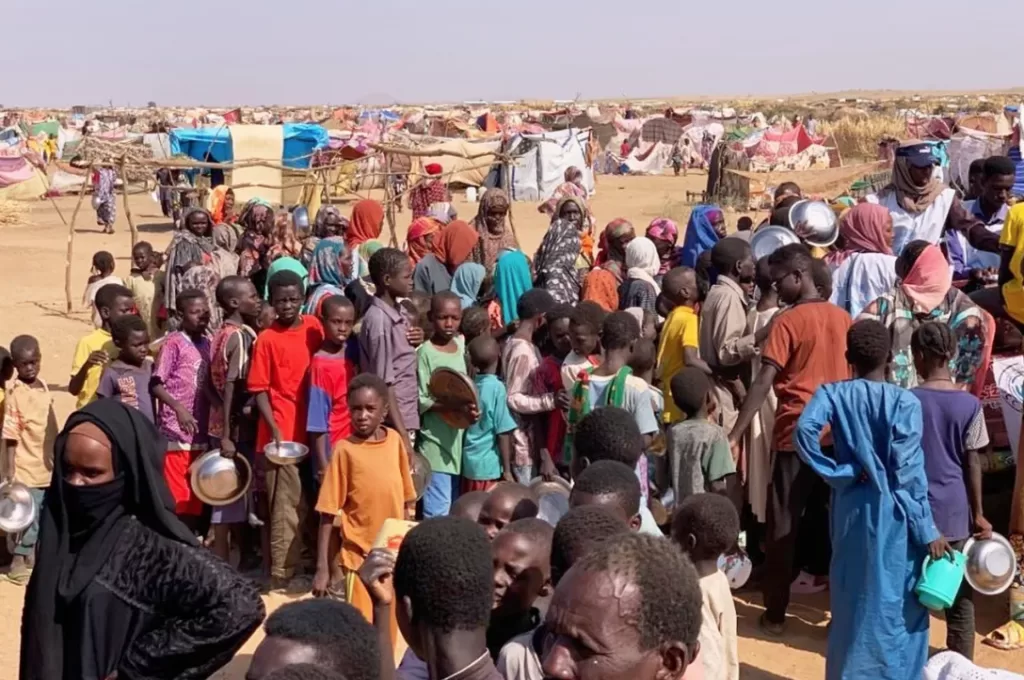
As Sudan continues to face a devastating conflict marked by grave humanitarian consequences, Cairo has reaffirmed that its support for Sudan’s unity, sovereignty, security, and stability is neither tactical nor temporary, but strategic and enduring.
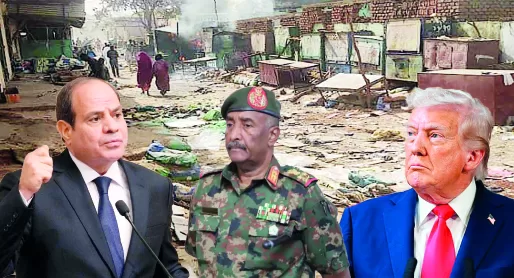
This position was underscored during President Abdel Fattah El Sisi’s recent meeting with Lieutenant General Abdel-Fattah Al-Burhan, chairman of Sudan’s Transitional Sovereign Council, and further articulated in Egypt’s official statement, addressing the escalating crisis.
At the core of Egypt’s approach lies an unequivocal commitment to preserving Sudan as a unified, sovereign state with functioning national institutions capable of safeguarding the interests of its people.
Egypt views Sudan’s stability as an integral component of its own national security, a linkage shaped by shared borders, intertwined social ties and common strategic challenges across the Nile Basin and the Horn of Africa.
Critical juncture
The conflict in Sudan has unfolded against a backdrop of regional volatility, exposing fragile state structures and intensifying humanitarian suffering.
Reports of massacres and flagrant violations of basic human rights, particularly against civilians in areas, such as El Fasher, have heightened international alarm.
For Egypt, these developments are not distant crises but direct threats to regional equilibrium, border security, and water security.
President Sisi has consistently emphasised Egypt’s engagement with all international and regional initiatives aimed at preventing escalation, resolving conflicts through peaceful means, and alleviating humanitarian suffering.
Within this framework, Cairo has reiterated its full support for international efforts designed to end the Sudanese crisis in a manner that genuinely serves the interests of the Sudanese people.
Notably, Egypt has expressed full support for the vision of US President Donald Trump aimed at achieving security, stability, and peace in Sudan.
This support reflects Cairo’s broader commitment to coordinated international action that prioritises de-escalation, political solutions, and the restoration of state authority, rather than military fragmentation or imposed outcomes.
Egypt sees such international engagement as most effective when it reinforces Sudanese unity and respects national sovereignty.
Red lines
Egypt’s official stance is defined by a set of clear and non-negotiable red lines. Foremost among these is the preservation of Sudan’s unity and territorial integrity.
Cairo categorically rejects any scenario that endangers the country’s cohesion, allows for the secession of any part of its territory, or facilitates the establishment or recognition of parallel entities that undermine the authority of the Sudanese state.
Equally critical is the protection of Sudan’s national institutions. Egypt has stressed that tampering with the capabilities of the Sudanese people or eroding the foundations of state institutions would plunge the country into prolonged instability, with repercussions extending far beyond its borders.
In this context, Cairo has reaffirmed its right under international law and the joint defence agreement between the two countries to take all necessary measures to ensure that these red lines are not crossed.
These principles are not framed as interference, but as a safeguard against state collapse, which Egypt views as one of the most dangerous outcomes for Sudan and the wider region.
Diplomatic and humanitarian engagement
Beyond political declarations, Egypt’s role has combined sustained diplomatic engagement with humanitarian concern.
During President Sisi’s meeting with Lt. Gen. al-Burhan, both sides agreed on the urgency of intensifying efforts to provide support and assistance to the Sudanese people amid dire humanitarian conditions caused by the ongoing conflict.
They also stressed the necessity of halting crimes against civilians and ensuring accountability for those responsible.
Lt. Gen. al-Burhan expressed appreciation for Egypt’s continued support, describing it as a reflection of the deep fraternal relations binding the two countries.
This mutual understanding reinforces Egypt’s approach of working with Sudan’s legitimate institutions while advocating for inclusive political solutions.
The discussions also extended to shared concerns in the Nile Basin and the Horn of Africa.
Egypt and Sudan reaffirmed their common vision on national security priorities, rejecting unilateral actions in the Blue Nile Basin and emphasising respect for international law as the basis for protecting shared water security and achieving collective interests.
Stability in Sudan is a cornerstone for security across Northeast Africa. Prolonged conflict risks fuelling cross-border instability, irregular migration, terrorism, and competition over scarce resources.
Egypt’s firm stance, therefore, carries regional significance, signalling that the disintegration of states and the erosion of sovereignty are unacceptable precedents.
By aligning its position with credible international initiatives, including the vision articulated by President Trump, Egypt seeks to mobilise global responsibility towards a coordinated, principled response that supports peace without compromising Sudan’s unity.
Cairo’s message to the international community is clear: sustainable peace in Sudan can only be achieved through respect for sovereignty, preservation of national institutions, accountability for crimes, and genuine support for the Sudanese people.
In reaffirming its readiness to exert every possible effort, Egypt underscores that its engagement is guided by duty as much as by interest.

Supporting Sudan is, in essence, an investment in regional stability, international security, and the principles of statehood that underpin peace in a turbulent world.
Mohamed Fahmy is the editor-in-chief of The Egyptian Gazette and Egyptian Mail newspapers

