


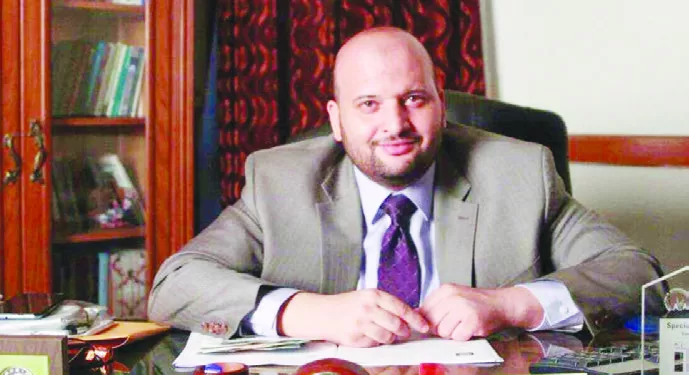
Dr Ibrahim Negm
Senior advisor to the Grand Mufti of Egypt
n a striking convergence of narratives, Israel and the Muslim Brotherhood (MB) have found common cause in blaming Egypt for Gaza’s humanitarian crisis. In the wake of the Israel–Hamas war that began in October 2023, Egypt has faced accusations of “blocking” aid to Gaza – accusations voiced not only by Israeli officials and media, but even echoed by MB-affiliated groups. This unusual alignment of Israeli propaganda and MB rhetoric seeks to tarnish Cairo’s image and deflect blame from the true perpetrators of Gaza’s suffering. Yet a closer look at the facts reveals a very different picture, exposing the malicious propaganda for what it is.
From the earliest days of the war, Israeli and some US voices suggested that humanitarian aid was not reaching besieged Gaza because Egypt kept the Rafah crossing closed. Israeli officials even announced they “will not prevent” aid from entering Gaza via Egypt – implying Cairo was the obstacle . The White House similarly urged Egypt to open Rafah, only to find earlier assurances had “not materialised”. In reality, Egypt never blocked the aid unilaterally: Cairo stressed that Rafah was rendered inoperable by Israeli airstrikes on the Gaza side. As Egypt’s then Foreign Minister SamehShoukri noted on October 16, 2023, Israel had “not taken a position on opening the Rafah crossing from the Gaza side” to allow aid in . In other words, it was Israeli bombardment and refusal to facilitate shipments – not Egyptian policy – that kept the aid convoys stuck in Sinai.
These facts did not stop a blame-game against Egypt. By May 2024, a senior US official issued a rare rebuke of Cairo for allegedly “withholding” UN aid, insisting that “Kerem Shalom is open. The Israelis have it open. And that aid should be going through it”. Such criticism pointedly ignored the reality that Israeli forces had seized “operational control” of Gaza’s side of Rafah by that time . In fact, Israeli troops took over the Palestinian side of the Rafah crossing on May 6, 2024 as part of their military offensive. Blaming Egypt for the aid impasse, despite Israel’s armed occupation of the crossing, is not just unfair – it’s perverse. As one Egyptian commentator asked pointedly: “Will Hamas issue a statement speaking the truth about Egypt’s role – that Rafah crossing was never closed by Egypt, and that the sole responsibility lies with the Israeli occupier?” . The answer, so far, has been drowned out by the coordinated chorus of misinformation.
Unfortunately, facts on the ground did not deter the MB and its affiliates from amplifying Israel’s narrative against Egypt. As the war and its aftermath unfolded, MB-linked voices around the world began echoing the claim that Egypt was complicit in Gaza’s suffering. Perhaps most telling is how protest rallies over Gaza were directed. In country after country, demonstrations that would ordinarily target Israeli embassies (as the power enforcing the siege) were instead steered toward Egyptian embassies. The pattern was unmistakable: MB organisers and supporters channeled public outrage away from Israel and toward Egypt. An Egyptian parliamentarian, Mustafa Bakry, noted with indignation that Hamas had failed to condemn “the siege on Egyptian embassies carried out by the MB and its affiliates around the world”. These protests – effectively picketing the one Arab country providing the most aid to Gaza – were, Bakry said, absurd attempts to pin Gaza’s hunger on Cairo while letting Israel off the hook . Such moves align neatly with Israeli propaganda needs. Little wonder, then, that Israeli media amplified them; even as Israel choked Gaza, the image of Arabs angrily blaming Egypt was cynically convenient for Tel Aviv.
One event in particular lays bare this convergence of agendas. On July 31, 2025, the Islamic Movement in Israel – an MB-affiliated group among Palestinian citizens of Israel – staged a demonstration outside the Egyptian Embassy in Tel Aviv . Ostensibly, the protest decried Egypt for the continued closure of Rafah and the “starvation of Gaza”. The Israeli authorities were notably accommodating: police not only permitted the rally, they even publicised the official permit granted for this protest in front of the embassy . Photographs show Israeli police securing the event as protesters held placards accusing Cairo of betraying Palestinians . The spectacle was surreal – Israeli police protecting an Islamist demonstration that castigated Egypt, all the while Israeli bombs and blockades were the ones ravaging Gaza. Egyptian observers could only marvel at the irony. “All the official headquarters of the occupying state…are located just steps away from the demonstration site, and none of the demonstrators approached them,” noted DiaaRashwan, a prominent Egyptian commentator, referring to Israel’s government offices in Tel Aviv . Instead, the protesters focused solely on Egypt under a “flimsy pretext” – a choice Rashwan denounced as “complicity with the occupying state” . Indeed, by targeting Cairo and sparing Israel, the so-called “Tel Aviv Brotherhood” had “clearly demonstrated the true position of…the Muslim Brotherhood, which called for the demonstration”, Rashwan said – namely, that toppling the Egyptian government takes priority for them over resisting Israel’s onslaught on Gaza .
Israeli pundits could not have agreed more. In fact, the liberal Israeli newspaper Haaretz openly praised the Tel Aviv protest for “demanding the reopening of Rafah” – implicitly endorsing the narrative that Egypt, not Israel, was to blame for Gaza’s plight. In doing so, Haaretz conveniently glossed over Egypt’s sustained efforts to aid Gazans and broker ceasefires. The paper’s stance underscored how useful the MB-driven blame-Egypt campaign was for Israel’s image: it shifted attention and anger away from Israeli actions. As Gazan journalist BisanOuda observed, the priority should be “pressuring Israel to stop the genocide…not protesting in front of Egyptian or Jordanian embassies.” She warned that “Israel wants us to believe that Egypt is the killer, while the real killer stands before us.” .
The alignment of MB rhetoric with Israeli propaganda is not just a curious coincidence – it is a deliberate misdirection that harms the Palestinian cause. By vilifying Egypt, this united front aims to mislead public opinion, obscuring Israel’s well-documented responsibility for Gaza’s suffering behind a smoke screen of finger-pointing at Cairo. Egypt’s Foreign Ministry condemned the embassy protests as a move that “undermines Egypt’s historic role in supporting the Palestinian cause – serving the interests of the Israeli occupation”. In Egypt’s view, those who partake in such demonstrations are effectively doing Israel’s bidding. Even the government’s political opponents at home largely see the MB’s behaviour as beyond the pale when it comes to Palestine. The Board of Trustees of Egypt’s National Dialogue – a forum spanning various political stripes – issued a statement strongly denouncing the Tel Aviv embassy protest. It branded the demonstrators “allied with the occupation” and noted that Israel’s approval of the rally “confirms the shared goal of distorting Egypt’s firm stance on the Palestinian people…and [the] joint, failed effort to destabilise the Egyptian state.” . In sum, Cairo’s critics in this saga stand exposed: by parroting Israel’s narrative and directing outrage toward the wrong target, they abet the very occupier they claim to oppose.
Lost in the scene of this propaganda campaign is a simple truth: Egypt remains one of Gaza’s primary lifelines. Egypt’s track record in supporting the Palestinian people is indisputable. Throughout the 2023–24 war, Egypt was the major conduit for aid into Gaza – by one estimate, over 75 per cent of all humanitarian assistance that entered Gaza came via Egyptian efforts . By early November 2023, more than 750 aid trucks had rolled through Rafah thanks to Egypt’s mediation and logistics, even as Israeli strikes repeatedly hit the area. Egyptian hospitals in North Sinai and Cairo have treated thousands of wounded Palestinians , with Cairo dispatching medical teams and supplies. Diplomatically, Egypt has been at the forefront: it convened summits, mediated ceasefires, and pressed consistently for humanitarian pauses and a long-term solution . President Abdel Fattah El Sisi emphatically drew a “red line” against any forced transfer of Gaza’s population to Sinai, defending Palestinian rights when few others would . These are hardly the actions of a callous bystander. They are the actions of a stakeholder that has risked and sacrificed much for the Palestinian cause – often with scant thanks.
It is therefore bitterly ironic that Egypt has been slandered as complicit in the very siege it has worked to alleviate. The convergence of MB and Israeli propaganda against Egypt serves narrow interests while sowing dangerous confusion. It aims to weaken one of Gaza’s staunchest supporters by painting a false villain. But the facts withstand the assault. Egypt’s stance – keeping Gaza’s people on their land, sending in aid, treating their wounded, and striving for a just peace – speaks louder than propaganda . Those who would form a united front to undermine Egypt might ask themselves whom they truly serve. As history will record, Cairo refused to abandon the Palestinians, even when besieged by bombs on one side and lies on the other. And that steadfastness, much like Gaza’s, will endure – long after the distortions of this propaganda war have faded.

