





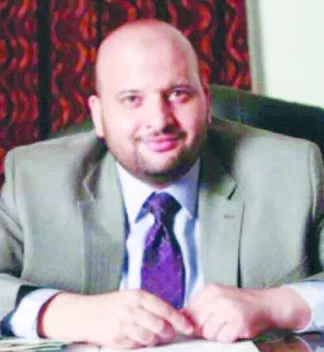
Ibrahim Negm
As the American-Israeli war on Iran enters its second week, the explosions echoing across the Middle East are detonating a quieter but no less consequential crisis thousands of miles away – inside the United
States itself.
For America’s estimated 3.5 million Muslims, including a sizable Iranian-American diaspora,
this is not merely another foreign entanglement to follow on cable news. It is an existential test, arriving at the worst possible moment: under the shadow of a populist right-wing movement that has made civilisational war its organising principle and religious otherness its favourite enemy.
Within hours of President Trump’s announcement on February 28 that the United States had launched joint military operations with Israel against Iran, America’s major Muslim civil rights organisations broke their silence – and they broke it loudly. The Council on American-Islamic Relations, the country’s largest Muslim advocacy group, denounced the strikes as “an unnecessary, unjustified, and unconstitutional war waged in the interest of Israel,” urging Americans to flood congressional offices and the White House switchboard with demands for immediate de-escalation.
The National Iranian American Council (NIAC) voiced a sharper anguish. Its president, Jamal Abdi, said Washington had “bombed Tehran in broad daylight without real justification,” warning that the strikes would silence reformers inside Iran while emboldening hardliners on both sides. He pointedly noted that diplomatic channels had remained open – until the bombs closed them.
On the streets of Houston, Los Angeles, and Detroit, Muslim and Iranian-American activists staged protests that blended anti-war slogans with bitter accusations that Iranian bodies were being “converted into election ballots in Washington” – a reference to what they see as Trump’s instrumentalisation
of the conflict for domestic political gain.
These were not the faint murmurs of a community resigned to irrelevance. They were the shouts of citizens demanding to be heard in a democracy that increasingly treats them as suspects.
Within the Iranian-American community itself, the war has cracked open a familiar and agonising fault line.
Some see the strikes as a chance to weaken a regime they consider tyrannical and corrupt.
Others – and they appear to be the majority of those who have spoken publicly
– insist that no foreign bombardment has ever liberated a people; it only buries them under new rubble.
This is not an abstract debate. It is the same moral dilemma that haunted Iraqi-Americans in 2003 and Syrian-Americans a decade later: How do you oppose a despotic government without applauding the
foreign missiles landing on your relatives’ rooftops?
The broader Muslim organisational landscape – from CAIR to the network of major mosques and Islamic centres – has answered that question with uncommon clarity. Their position: opposing the war on Iran does not mean endorsing the Iranian regime.
It means rejecting the doctrine of preemptive war that has failed catastrophically every time it has been tried, from Baghdad to Kabul to Tripoli. Their Friday sermons and press statements draw a direct line from the current conflict to the “forever wars” that were sold to the American public under the banners of democracy promotion and civilian protection, only to produce more bloodshed, more
refugees, and more extremism.
The memory of Iraq looms largest. Twenty-three years after the invasion, the lesson that Muslim Americans have internalised is brutally simple: When Washington says it is going to war to save a people, that people should run.
American Muslims do not experience the Iran war as an isolated geopolitical event. They process it through the scar tissue of twenty-five years of suspicion that began on September 11, 2001.
Since that day, Islam and its adherents in America have been placed under a permanent security microscope — from airport watchlists to FBI surveillance programs targeting mosques and Muslim charities.
With every new war in the Middle East, the ambient level of distrust has risen, and the already thin margin of civil liberty has narrowed further.
Now, with bombs falling on Tehran, the old dread is back. The dominant media narrative, drawing heavily from administration talking points, frames Iran as the “Shia heart of evil” in the region. This framing threatens to collapse the distinctions between “Iranian,” “Muslim,” and “enemy” in the American popular imagination — particularly among the populist right-wing base, which feeds on clash-of-civilisations theories and fantasies of defending “Christian civilisation.”
(To be continued next Sunday)
Senior Advisor to the Grand Mufti of Egypt

