


Dr Moataz Afifi
Vice-President of the State Lawsuits Authority
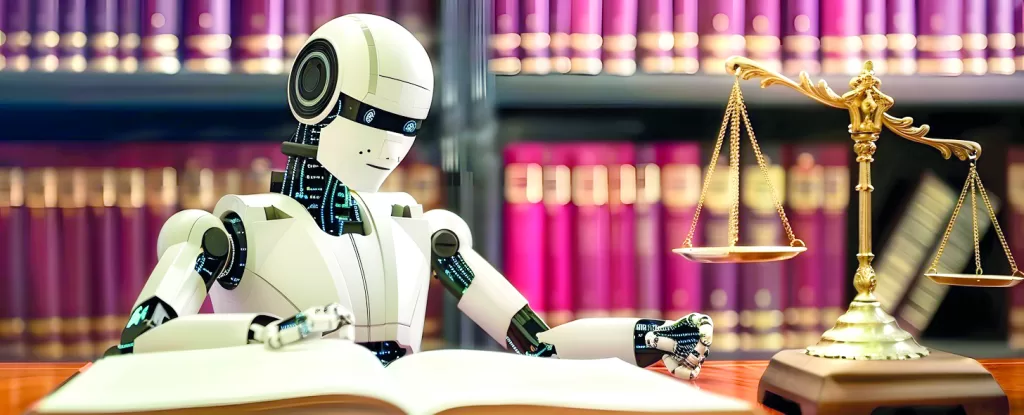
Every day, Artificial Intelligence (AI) achieves massive strides in simulating human capabilities, particularly within the legal field. Through tools like ChatGPT, AI is now performing high-speed legal research, analysing judicial rulings and legislative texts, drafting legal memos, and authoring judicial or arbitral decisions. It is also summarising facts, conducting benchmarking analyses across legal systems, and handling numerous other tasks. This rapid evolution has led many to wonder whether AI might eventually replace human legal creativity.
Defining legal creativity
Legal creativity is the ability to deeply comprehend the provisions and philosophy of the law, combined with flexibility and objectivity in thinking. It is the capacity to innovate new, unconventional methods or approaches to legal problems, or to develop legal systems and judicial rulings in a way that aligns with societal changes and the requirements of swift justice.
The essence of AI, its creative potential
At its core, AI aims to simulate the human mind by creating machines or algorithms capable of mimicking or even surpassing human intelligence in learning, problem-solving, and decision-making. Today, we are witnessing astonishing progress; AI systems can defeat humans at chess, provide medical treatment, and manage remote warfare. Perhaps more importantly, AI is beginning to show signs of creativity across various fields. It can assist individuals in being creative by providing new perspectives and ideas, helping them identify connections they might otherwise overlook, and facilitating a better understanding of complex problems to find novel solutions.
In the legal sector, AI has already been integrated into professional workflows. Some have begun using ChatGPT to draft, analyse, or refine legal work. But is it truly capable of legal creativity?
Based on my observations of practitioners using ChatGPT in legal work, I have yet to see results that constitute “legal creativity” in the sense defined above. While I do not deny the benefits of AI in legal research nor its potential to impact many legal jobs in the future, those capable of genuine legal creativity will survive this shift. AI cannot, at least for the time being, fully replace humans in the creative process. Creativity transcends the mere generation of ideas; it encompasses the ability to adapt to variables, empathise with humans, understand their needs, and provide unique solutions that meet those needs.
The double-edged sword: The “legal talent”
AI can certainly play a role in enhancing creativity, but only for legal professionals who already possess a solid knowledge base and a deep understanding of the law and its philosophy (the “legal talent” or malaka). For these individuals, the impact of AI will be positive.
Conversely, for those with weak or poorly found legal understanding, the impact will unfortunately be negative. Such individuals may present AI-generated outputs to society as absolute legal truths. However, upon review, these outputs often prove to be incomplete, flawed, or in violation of legislative philosophy and objectives. They may rely on incorrect judicial precedents or factual analyses that contradict reality. Therefore, I always say: “The use of AI in legal professions will make the good lawyer smarter, and the weak lawyer weaker.”
The risk of intellectual atrophy
On the other hand, even for legal innovators, the repeated and total reliance on AI over time poses a risk. Gradually, the creative human legal mind may produce fewer original ideas. Legal creativity is not just a product of understanding and learning; it is a product of practice.
Total dependence on AI practices in legal work will gradually stifle the creative mental faculties that legal professionals have developed throughout their careers. Consequently, their legal thought may stagnate, freezing within certain limits. Such individuals risk falling out of the circle of legal innovators and, potentially, exiting the legal labour market entirely.
Legal expert to the government of Dubai and legal advisor to the
Emirates sports arbitration centre

