


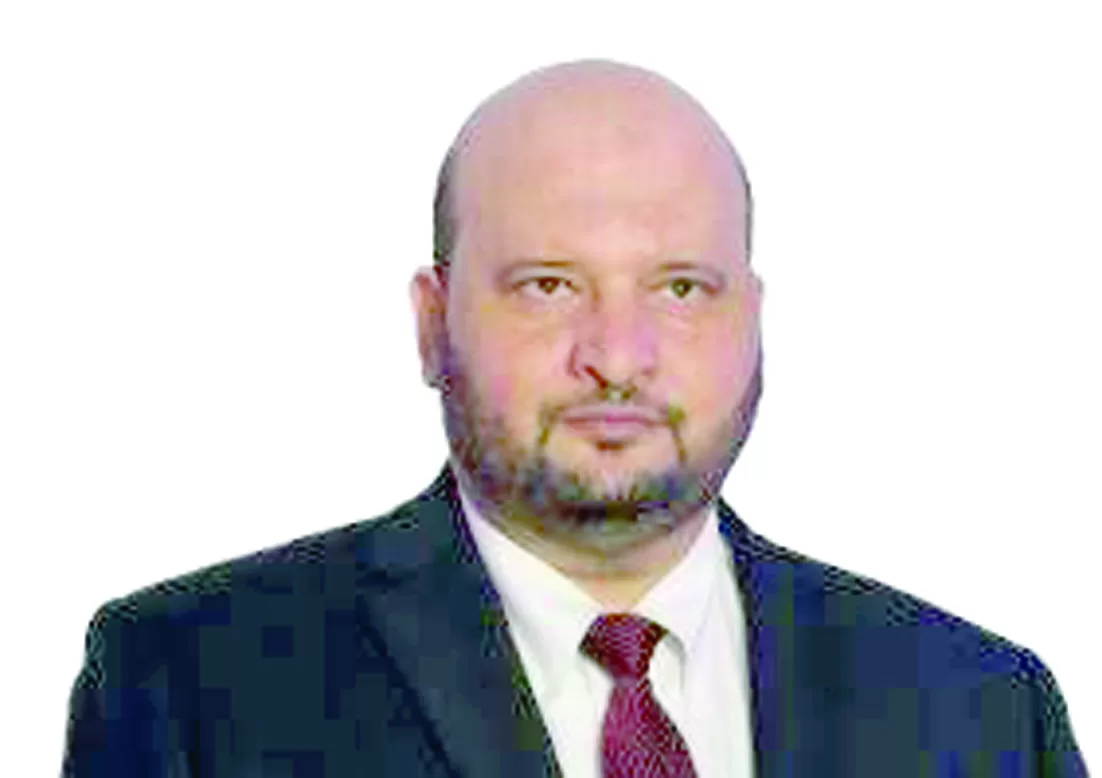
Ibrahim Negm
Senior advisor to the grand Mufti of Egypt
In a world full of religious fanaticism and misunderstanding, persons who can exhibit empathy, respect, and the ability to relate to people of different faiths are very important peacemakers. Judge Mohamed Abdelsalam is one of these remarkable icons—a great example of how to be religiously diplomatic. His journey shows how real interfaith work and building bridges between groups can make a major difference in religious diplomacy worldwide.
He began in a little village in Egypt and went on to do massive work. Judge Abdelsalam’s childhood had a huge effect on how he believed about religious diplomacy. He learned to appreciate coexistence and tolerance by growing up in a humble, religious family in Egypt’s cosmopolitan setting. He was unusually prepared to mediate between religious traditions and modern state institutions, having excelled at Al-Azhar University, which merged Islamic law with common law. Abdelsalam gained both academic and practical abilities from this dual training, allowing him to engage in complex discussions concerning religion and culture.
Since commencing his role as advisor to the Grand Imam of Al-Azhar, Abdelsalam has made significant national contributions to communal peace, national unity, and interfaith understanding and cooperation. His early commitment to promoting moderation and unity is evidenced by his participation in the creation of the Al-Azhar Declaration on Egypt’s Future, which emphasised democratic freedoms, equal citizenship, and the rejection of extremism.
His diplomatic skills became even more evident through his active engagement in Egypt’s Constituent Assembly, where he advocated for Al-Azhar’s independence as an institution and helped to ensure a balance between religious authority and civil administration. However, Abdelsalam’s remarkable work on the Document on Human Fraternity—signed by Grand Imam Ahmed Al-Tayeb and the late Pope Francis in Abu Dhabi in 2019—demonstrated his far-reaching global impact. He was one of the key architects behind this historic declaration.
The Document outlined a shared moral framework between Islam and Christianity—and humanity at large—by promoting peace, tolerance, and fraternity among people of different beliefs. Abdelsalam’s expert mediation underscored the complex nature of interreligious diplomacy and played a pivotal role in reconciling theological perspectives. The signing of the Document drew wide international recognition, leading the United Nations to proclaim February 4 as the International Day of Human Fraternity.
The fact that people around the globe have embraced Abdelsalam’s vision shows his rare ability to distill high-level religious concepts into universal human values that resonate across cultures and faiths. Through his work with the Muslim Council of Elders and his public advocacy, he has supported tangible peacebuilding efforts. The Council’s promotion of moderation, intra-Muslim unity, and proactive engagement in conflict resolution demonstrates his transformative approach to religious diplomacy.
The Council’s peace missions in conflict zones like Nigeria and the Central African Republic, as well as its interventions on extremist rhetoric in Europe, highlight the practical relevance of interfaith engagement. Judge Abdelsalam’s diplomatic achievements are further enhanced by his sustained cooperation with Christian institutions, particularly his role in reviving Al-Azhar’s relationship with the Vatican. He transformed strained ties into meaningful collaboration for global peace initiatives.
His strategic partnerships with other Christian denominations and religious organizations have consistently emphasized mutual respect and shared values to address common challenges such as climate change and social justice. Abdelsalam’s diplomatic mission also includes combating Islamophobia and correcting misconceptions about Islam—not through confrontation, but through education and respectful dialogue.
His composed and well-reasoned public engagements, along with his active role in media and academic forums, have successfully countered extremist narratives and presented a scholarly and authentic understanding of Islamic teachings. Judge Mohamed Abdelsalam’s diplomatic legacy also includes perseverance in the face of setbacks—whether in failed interfaith initiatives or when encountering hostility.
His flexibility, unwavering dedication to dialogue, and innovative use of institutional structures have greatly advanced the global movement for interreligious cooperation. Abdelsalam is a model of what it means to be a religious diplomat in the modern world. His work is not only about resolving conflicts—it is about building lasting peace through mutual understanding and collaboration. His life’s journey serves as a powerful example to future generations of how faith and diplomacy can work hand in hand to promote peace and unity across the globe.

