


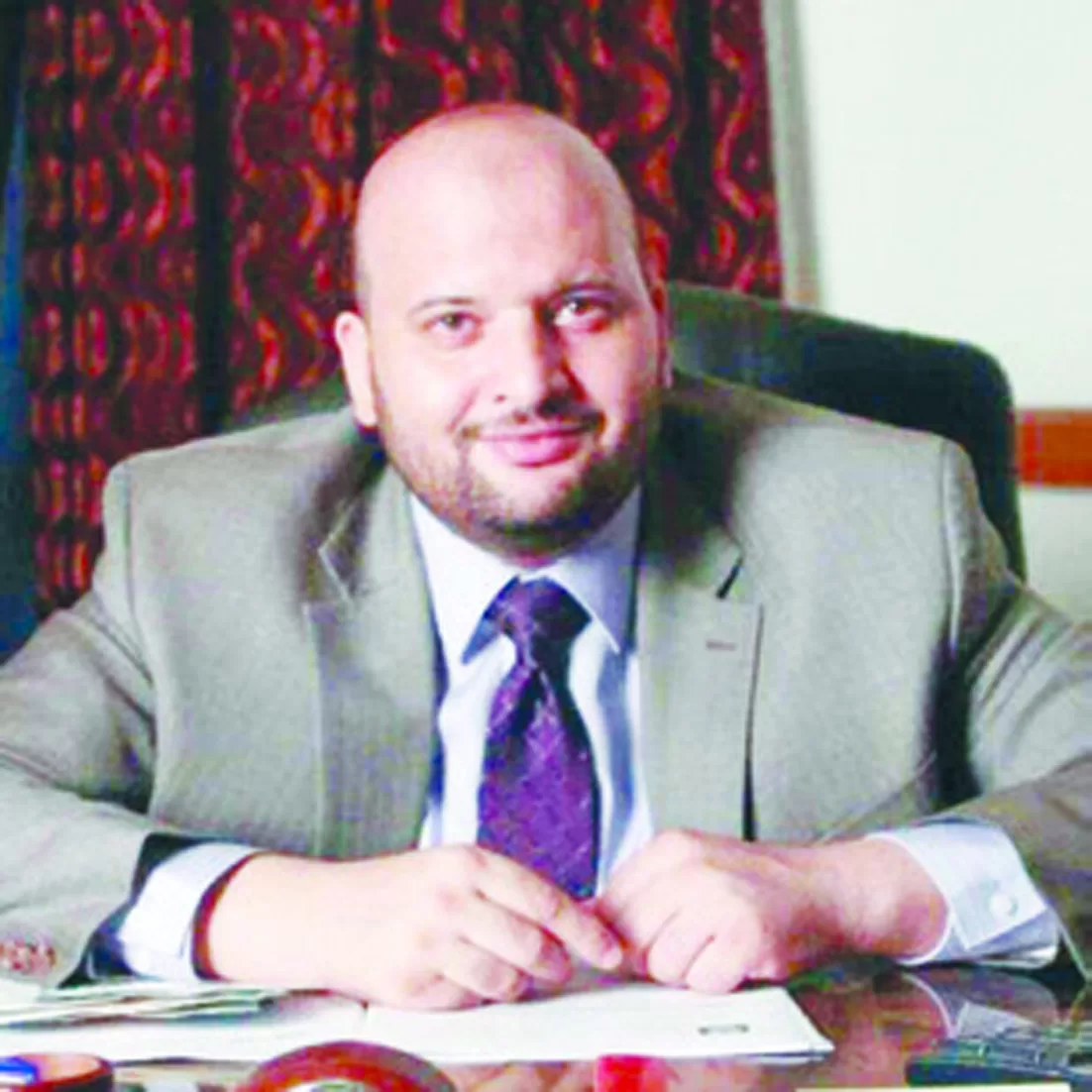
Ibrahim Negm
Senior advisor to the Grand Mufti of Egypt
When a religious institution survives, adapts, and remains relevant for 130 years, it is not simply marking time; it is shaping the moral and intellectual life of a nation. Egypt’s Dar al-Ifta, founded in 1895, has done exactly that. As it celebrates its 130th anniversary, this is not just a ceremonial milestone, but an opportunity to reflect on what it means to have a stable, credible, and nationally rooted authority guiding religious life in an age of fragmentation, online fatwas, and weaponized religiosity.
From its inception, Dar al-Ifta was never meant to be a bureaucratic office that stamps religious opinions on demand. It was envisaged as the “juridical mind” and “moral conscience” of the Egyptian nation—a body that mediates between the timeless principles of Islamic law and the ever-shifting realities of modern life. Over more than a century, it has responded to questions not only about prayer and fasting, but about family law, finance, bioethics, citizenship, and international relations. In doing so, it has modeled a style of juristic reasoning that respects tradition without freezing it, and embraces modernity without surrendering to it.
This balance is not a luxury; it is a necessity. The absence of recognized, competent religious authorities does not create a neutral vacuum. It creates a space that is quickly filled by self-appointed preachers, populist ideologues, and transnational movements that answer to no one and are accountable to nothing beyond their own agendas. Egypt has seen, sometimes painfully, what happens when fatwa is detached from scholarship and national responsibility: religious language is hijacked to justify violence, polarize society, and undermine the very state that protects citizens’ rights. In that sense, Dar al-Ifta’s longevity is itself an act of resistance against the chaos of unregulated religious discourse.
In recent decades, this role has only grown more critical. Dar al-Ifta has emerged as a global reference point in the struggle against extremist ideology, not by trading in slogans, but by systematically dismantling the pseudo‑religious arguments used to recruit young people into violence. Through fatwas, research papers, international conferences, and digital platforms, it has confronted the distortions of groups that declare societies apostate, legitimize terrorism, and turn faith into a political battering ram. It is no coincidence that Egypt also took the lead in establishing the General Secretariat for Fatwa Authorities Worldwide, a body that now links fatwa institutions in dozens of countries, precisely to build a united, informed front against the global disorder of takfīr and online radicalization.
Critics sometimes dismiss official religious institutions as “state-aligned” and therefore suspect. But this critique often misses a crucial point: in a modern nation-state, religious institutions that refuse any relationship with the public order risk becoming either irrelevant or subversive. A body like Dar al-Ifta is not valuable despite its engagement with the state, but because of the way it leverages that engagement to protect social cohesion, clarify the religious dimension of policy debates, and shield the public sphere from the toxins of sectarianism and chaos. Independence here does not mean isolation; it means the ability to speak with scholarly integrity while understanding the responsibilities and constraints of governance.
The intellectual legacy of 130 years is also a resource in itself. The cumulative archive of Dar al-Ifta’s fatwas and research constitutes a living encyclopedia of how Islamic law has interacted with the challenges of modernity in an Egyptian and wider Muslim context. From the early debates about codifying personal status law, to contemporary questions about organ donation, financial instruments, and digital life, this body of work offers something that no scattered YouTube preacher can: continuity, memory, and internal methodological consistency. It allows new questions to be answered in light of a long history of reasoning, not in the vacuum of personal whims.[1]
Yet the anniversary is not only about looking back. If Dar al-Ifta is to remain at the heart of Egypt’s moral compass, it must keep moving forward on at least three fronts. First, deepening its digital presence so that authentic fatwa and nuanced religious thought are as accessible and shareable as the most sensationalist clip on social media. This is already underway, but the battle for hearts and minds in the online arena is far from over. Second, investing in the next generation of muftis and researchers who are as fluent in contemporary social sciences and global debates as they are in classical legal texts. Third, expanding international partnerships so that the Egyptian experience in curbing extremism and building tolerant religious discourse can inform—and be informed by—similar efforts elsewhere.
There is also a quieter, less visible heroism that deserves recognition: the daily work of the scholars, researchers, and staff who respond to thousands of individual questions every year. Behind each query about divorce, inheritance, business, or ethical dilemmas lies a human story—often one of anxiety, conflict, or confusion. The way these questions are handled can either push people toward despair and rigidity, or toward balance and hope. In that sense, Dar al-Ifta’s impact is not merely in its public statements and international conferences, but in the unseen pastoral care it provides to ordinary citizens, day in and day out.
Ultimately, the 130th anniversary is a reminder that institutions matter. In an era that romanticizes spontaneity and “speaking truth to power” from outside any structure, it is easy to forget that lasting reform, sustainable moderation, and credible religious guidance almost always depend on institutions that endure beyond any single person or political moment. Egypt’s Dar al-Ifta is one such institution. Its task has never been to please everyone; it has been to serve God and the public good with knowledge, prudence, and courage. As Egypt looks to the future—with all its economic, social, and geopolitical challenges—the presence of a trusted, seasoned, and globally connected fatwa institution is not an ornament. It is a strategic asset. If nurtured and supported, Dar al-Ifta can continue to act as a stabilizing moral force, a shield against extremist exploitation of religion, and a bridge between the spiritual aspirations of the people and the practical realities of a modern state. One hundred and thirty years on, its message is as urgent as ever: religious guidance, to be worthy of the name, must be both faithful and wise—and it must always remember that its ultimate allegiance is to truth, mercy, and the welfare of human beings.

