




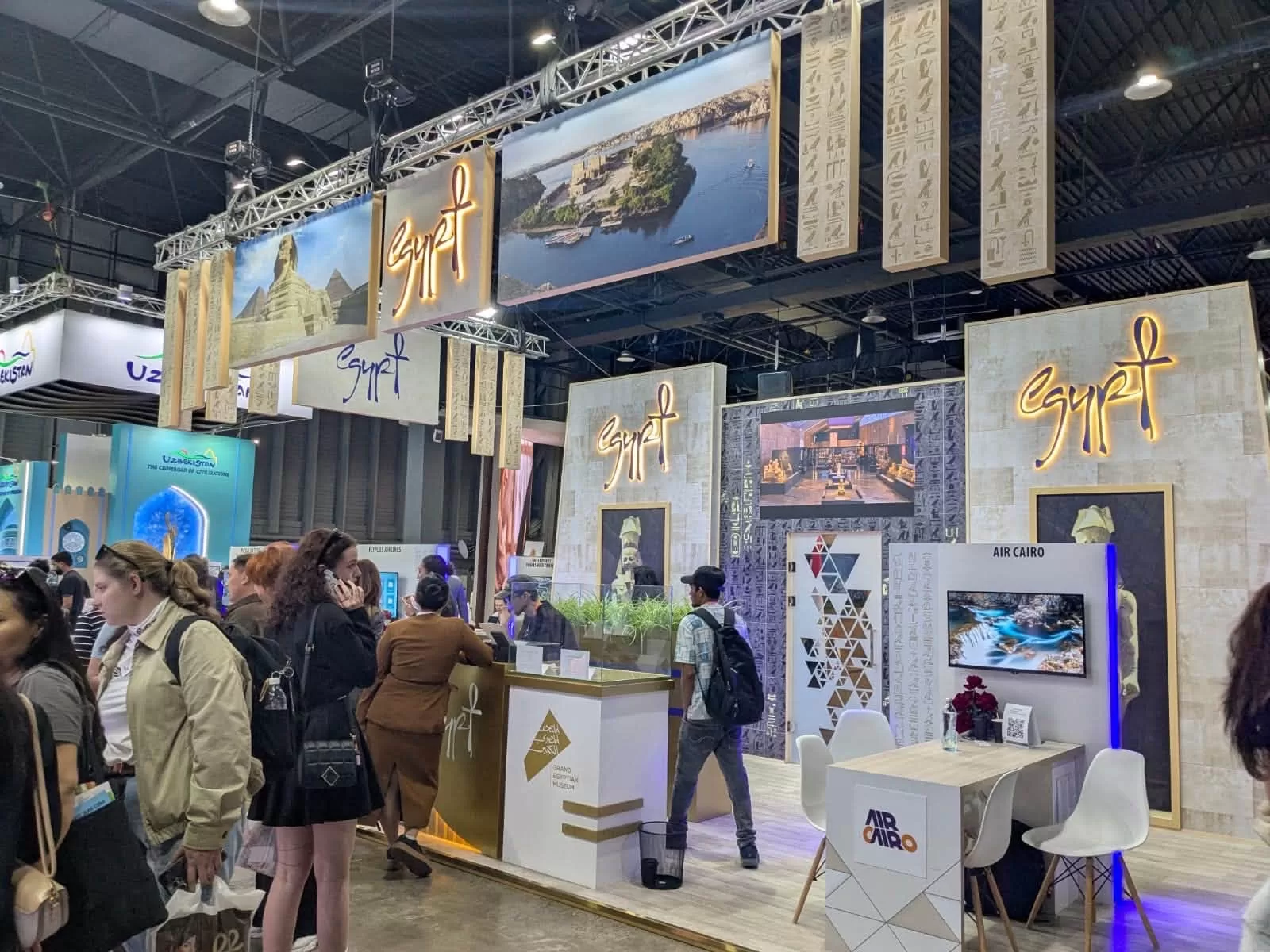
Egypt’s victory at the Seoul International Travel Fair last week felt like more than just another award.
It was a quiet, powerful reminder of the country’s growing momentum on the world stage.
At a time when competition for every international traveller is fiercer than ever, Egypt is steadily reclaiming its place on the global tourism map.
The Egyptian pavilion was named “Best Pavilion” at one of Asia’s most influential travel exhibitions.
For those familiar with Egypt’s presence at major fairs across Europe, Asia, and the Americas, the scene was warmly familiar: crowds gathering, admiration flowing,and yet another design award heading home.
These accolades are not accidental. They stem from a thoughtful, carefully refined strategy that highlights both Egypt’s extraordinary cultural heritage and the remarkable diversity of its tourism offerings, specialists said.
“Egypt’s participation in international tourism exhibitions rests on several key pillars,” international tourism expert Hossam Darwish told The Egyptian Gazette.
He sees the consistent success as proof of something deeper: not only the country’s unmatched historical treasures, but a smart, increasingly targeted approach to sharing them with the world.
The strategy begins by nurturing Egypt’s traditional strongholds, namely Germany, the United Kingdom, Italy, and France, which have long sent waves of visitors.
At the same time, the Egyptian Tourism Authority is energetically turning towards promising new horizons: East Asia, China, South Korea, India, Latin America, and several African nations.
The goal is to build a broader, more resilient foundation for the future.
Darwish, who is also President of the Afro-Asian Union (AFASU), emphasises an important shift: moving beyond the familiar image of beach resorts.
“We’re promoting the full diversity of what Egypt offers,” he said, “rather than depending on sun and sand alone. This includes cultural journeys, conference tourism, medical tourism, eco-tourism, and religious pilgrimage.”
Behind the scenes, the work is hands-on – direct conversations with airlines and international tour operators, pushing for more flight routes to turn growing interest into actual arrivals.
Egypt’s ambition is clear: welcoming more than 15 million tourists each year.
Just as vital is presenting a contemporary face the country as a safe, modern destination with upgraded infrastructure and ambitious national projects.
It is an invitation to travellers who want memorable experiences, easy digital booking, and high-quality service alongside timeless wonders.
Diversifying markets brings more than growth. It offers protection. By reducing dependence on a few European countries, Egypt is better shielded from economic or political turbulence, specialists said.
“It’s about creating sustainable sources of tourism,” Darwish said.
Choosing which exhibitions to attend is no casual decision. Officials carefully weigh visitor numbers, future potential, spending power, flight connectivity, competition, and market behaviour.
Traveller-preference data is especially valuable, revealing what different audiences seek, which age groups travel most, how they book, how long they stay, and when they prefer to visit.
Marketing then adapts naturally. Asian campaigns often glow with the magic of ancient civilisation, European ones may highlight golden beaches and vibrant marine life, while Gulf audiences are drawn to luxury and family-friendly experiences.
For tourism experts like Hossam Hazzah, these awards carry meaning that reaches far beyond the exhibition floor.
“They serve as a powerful marketing tool,” he explains, “strengthening Egypt’s image as a modern, innovative, and globally competitive destination.”
Hazzah sees both symbolism and real impact: the award draws media attention, pulls more professionals to the pavilion, and boosts confidence among tour operators and partners.
“It acts as an international quality certificate,” he told The Gazette.
“It gives free publicity, sharpens Egypt’s visual identity, and beautifully showcases how the country blends profound historical depth with a fresh, contemporary spirit. All of this stirs greater global interest in discovering Egypt,” he added.

