


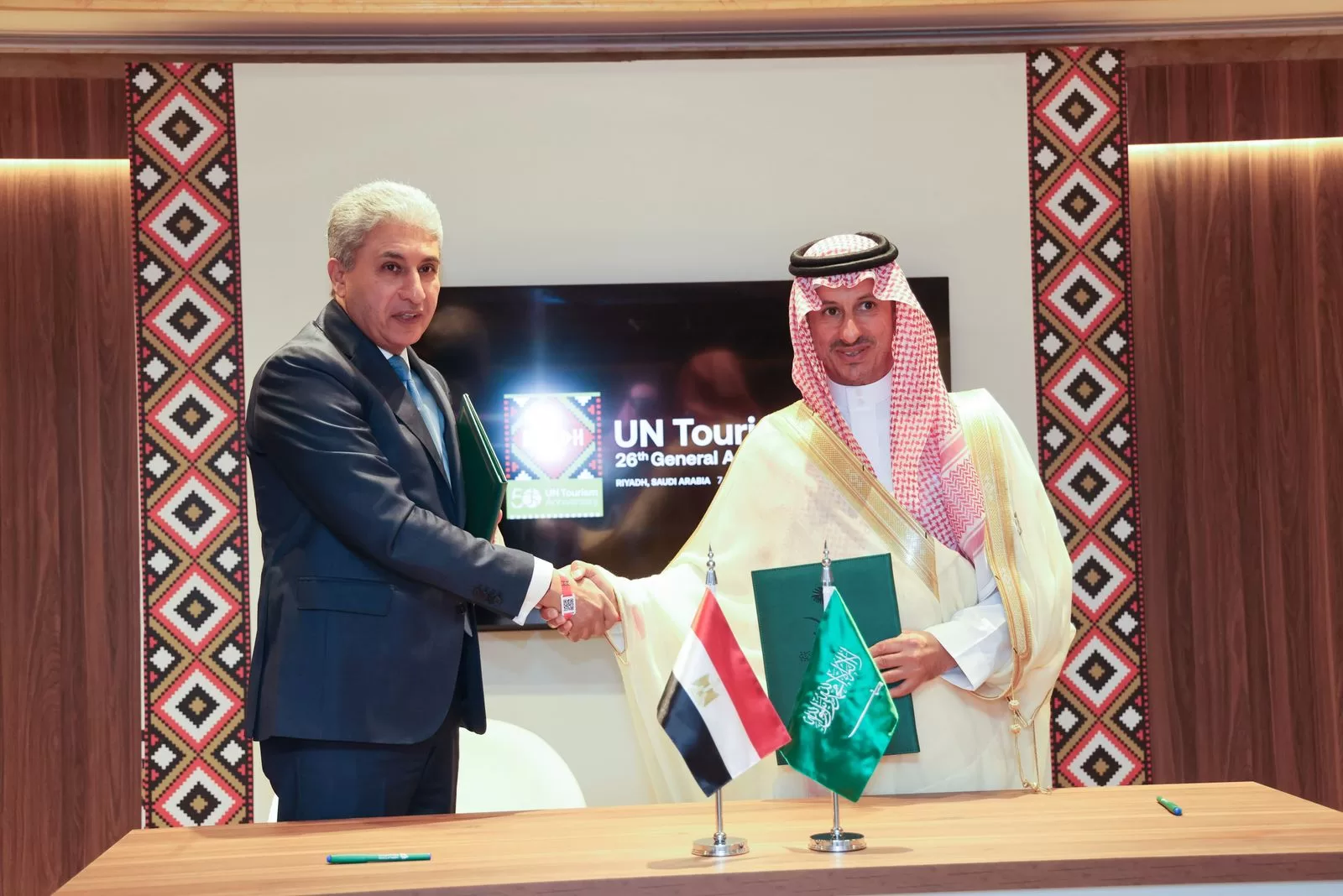
Egypt’s Minister of Tourism and Antiquities, Sherif Fathy, participated in the 26th General Assembly of the United Nations World Tourism Organisation (UN Tourism), hosted by the Kingdom of Saudi Arabia from November 7–11.
This Assembly, notably held under the theme “AI-Powered Tourism: Redefining the Future,” also marked the 50th anniversary of the United Nations Tourism Organisation.
On the sidelines of the Assembly, Minister Fathy and his Saudi counterpart, Ahmed Al Khateeb, signed a landmark executive programme for renewed cooperation in the tourism sector between Egypt and Saudi Arabia.
This initiative builds upon the memorandum of understanding originally signed between the two countries in November 2014, and aims to boost cross-sector collaboration, joint tourism promotion, marketing, training, sustainable tourism, and international engagement within regional and international organisations.
During the signing ceremony, both ministers highlighted the importance of this executive program in supporting and enhancing bilateral tourism, emphasizing the vital role tourism plays in driving economic development in both nations, and underscoring the need for strong regional coordination in tourism and travel.
Within the UN Tourism General Assembly, Minister Fathy took part in the main sessions alongside the Egyptian delegation. The Assembly serves as the principal decision-making body for the Organisation, responsible for approving budgets, work programmes, and electing the Secretary-General. This session saw the election of Shaikha Al Nowais as Secretary-General for 2026-2029, succeeding Zurab Pololikashvili.
The UN Tourism General Assembly gathers full members, associate members, and observers from international organisations to set the global agenda for responsible, sustainable, and inclusive tourism, uniting over 160 member states, 6 associate members, and more than 500 affiliate members worldwide.
This year’s Assembly and the enhanced partnership between Egypt and Saudi Arabia spotlight the growing efforts of both countries to promote responsible tourism, foster international collaboration, and drive economic and sustainable development across the region.

