







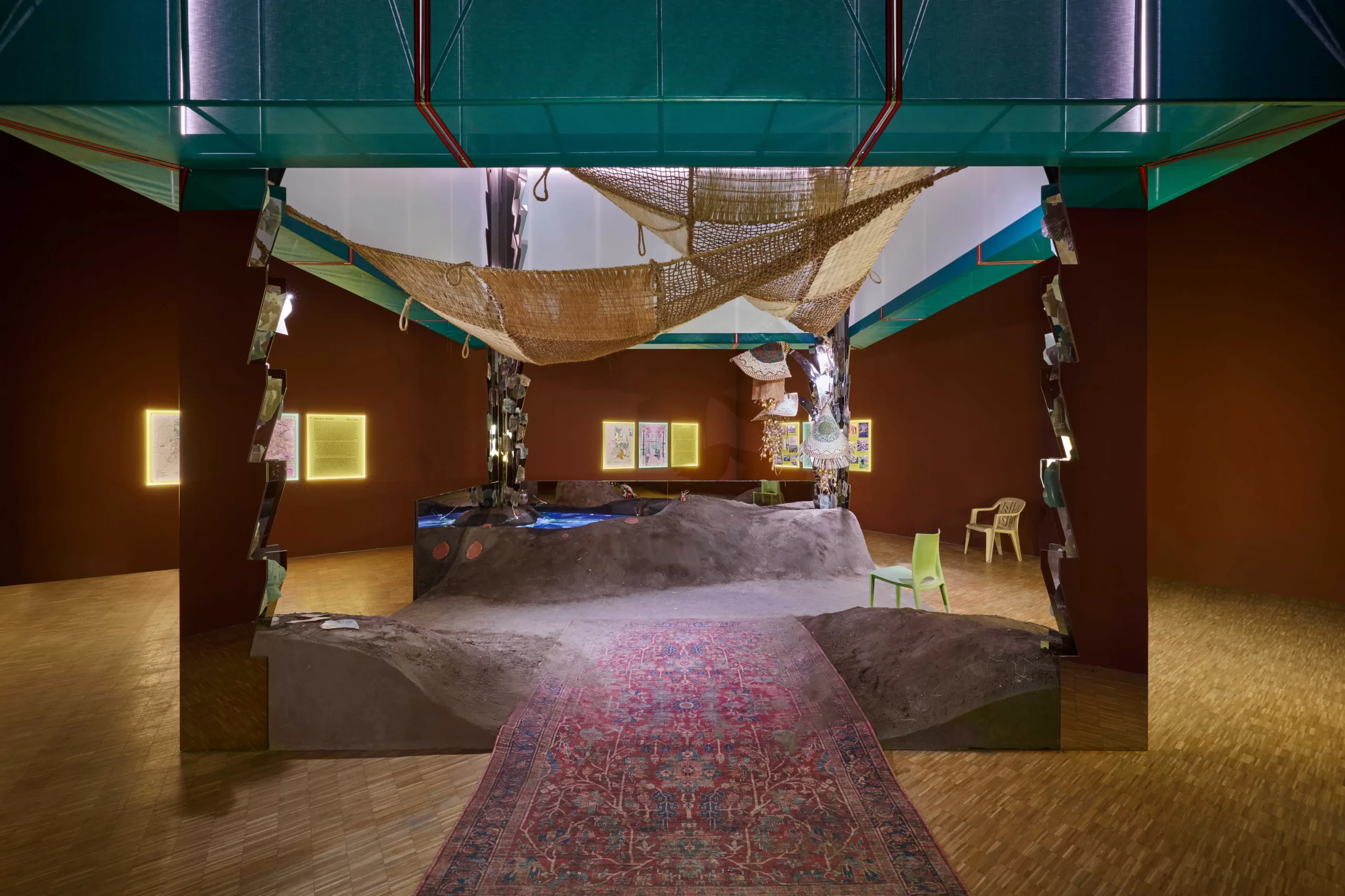
Milan, Italy – Saudi Arabia has made a compelling entrance onto the stage of the 24th Triennale Milano International Exhibition with its inaugural pavilion, “Maghras, A Farm for Experimentation,” which opened to the public on May 13, 2025. The thoughtfully curated exhibition, led by Lulu Almana and Sara Al Omran with Alejandro Stein as Creative Director, offers a profound exploration of the evolving landscape of Al Ahsa, a UNESCO World Heritage Site renowned for harboring one of the world’s largest oases.
The title “Maghras” itself – a measuring unit signifying the space defined by four palm trees – serves as a conceptual framework for the exhibition. Through a rich tapestry of artistic interventions, rigorous research, and engaging programming, Maghras delves into the intricate relationships connecting land, labor, and collective memory within the unique context of Al Ahsa.
The pavilion’s content is rooted in a year-long working program conducted in Al Ahsa. This initiative brought together a diverse group of cultural practitioners, architects, researchers, and local community members to analyze and interpret the transformations shaping the oasis’s landscape and its influence on the region’s ecological and cultural narratives. The Milan exhibition showcases the insightful learnings gleaned from this extended engagement, featuring three newly commissioned works that offer distinct perspectives:
- Leen Ajlan: The Jeddah-based architectural designer presents a work crafted entirely from farming byproduct waste. This piece critically examines the expansion of agrarian monoculture and the ecological consequences of artificial fertilizers, prompting reflection on sustainable practices.
- Mohammed Alfaraj: An Al Ahsa-born visual artist, Alfaraj contributes a compelling multimedia film installation. His work reimagines a significant local folk tale, offering a contemporary interpretation of the region’s intangible heritage.
- Sawtasura: This socially engaged research platform, dedicated to non-tangible heritage in the Arab Gulf, presents a sonic essay. Drawing from recordings and conversations centered around women’s oral histories and sonic memory, the work highlights these often-overlooked forms of environmental knowledge.
Al Ahsa’s distinctive character, a compelling blend of urban and rural identities, defies simple categorization. Once envisioned as Saudi Arabia’s “breadbasket” during the 1960s, its agricultural landscape has undergone significant shifts mirroring global trends in rural agroecosystems. These changes have impacted its delicate natural environment and the symbiotic relationship between its urban and rural components.
In response, Maghras broadens the conversation surrounding issues such as urban sprawl, groundwater depletion, and desertification. The exhibition illuminates the dynamic interplay between deeply rooted traditions and the forces of modernization, ultimately encouraging a deeper understanding of Al Ahsa’s evolving cultural and ecological story.
Curators Lulu Almana and Sara Al Omran articulated their vision: “Maghras is a tribute to the people, cultural practices, and lived experiences that define Al Ahsa. By examining the history and transformation of this landscape through the lenses of art, research, and local narratives, we aim to underscore the critical need for collective contemplation and stewardship in shaping the future of its local communities. We are honored to share the tangible outcomes of our exploration into the interconnectedness of land and community with Maghras, hoping its impact will resonate far beyond the boundaries of Milan and Al Ahsa.”

