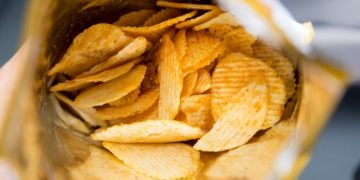











NEW YORK ― Is it possible to become addicted to processed foods like potato chips and candy in the same way as nicotine? This controversial idea is the subject of a new scientific analysis, in which international researchers estimate that 14 per cent of adults may be addicted to ultra-processed foods. This finding has prompted the researchers to call for in-depth studies to develop new policies targeting this food category.
Ultra-processed foods are on the radar of some researchers, who believe they may share the same scientific characteristics that led to the classification of nicotine as an addictive substance, as highlighted by previous research, published in late 2022. A new scientific analysis, published by the two American researchers behind this earlier research, in partnership with researchers based in the USA, Brazil, and Spain, reiterates that “identifying some foods as addictive could shift attitudes [and] stimulate research.”
“There is converging and consistent support for the validity and clinical relevance of food addiction,” said Ashley Gearhardt, the article’s corresponding author and a psychology professor at the University of Michigan, quoted in a news release. “By acknowledging that certain types of processed foods have the properties of addictive substances, we may be able to help improve global health.” This suggestion is based on an observation made by the same researchers: not all foods have the same potential for addiction.
“Most foods that we think of as natural, or minimally processed, provide energy in the form of carbohydrate or fat ― but not both,” explains Alexandra DiFeliceantonio, assistant professor at the Fralin Biomedical Research Institute, USA. To support their argument, the researchers use the example of an apple, which has a carbohydrate-to-fat ratio of around 1:0, whereas for a slice of salmon, this is more like 0:1. For a chocolate bar, however, the carbohydrate-to-fat ratio would be 1:1, “which appears to increase a food’s addictive potential.” Alexandra DiFeliceantonio adds: “Many ultra-processed foods have higher levels of both. That combination has a different effect on the brain.”
14pc of adults potentially addicted to ultra-processed food
Published in Food For Thought, a special edition of the British Medical Journal (BMJ), this paper reports the findings of an analysis of 281 studies carried out in 36 different countries, leading researchers to estimate that ultra-processed food addiction may occur in 14 per cent of adults and 12 per cent of children. “Given how prevalent these foods are ― they make up 58per cent of calories consumed in the United States ― there is so much we don’t know,” says Alexandra DiFeliceantonio.
“Behaviours around ultra-processed food, which are high in refined carbohydrates and added fats, may meet the criteria for diagnosis of substance use disorder in some people. Those behaviours include less control over intake, intense cravings, symptoms of withdrawal, and continued use despite such consequences as obesity, binge-eating disorder, poorer physical and mental health, and lower quality of life,” the researchers state.
In particular, the scientists call for in-depth studies of ultra-processed foods, if only to define which ones may be potentially addictive, in order to put in place new strategies. This could take the form of taxes or labelling systems, for example, based on this analysis.
A number of studies have recently highlighted the damaging effects of ultra-processed foods on health, in terms of cardiovascular disease, cancer and even mental health disorders.


Discussion about this post