










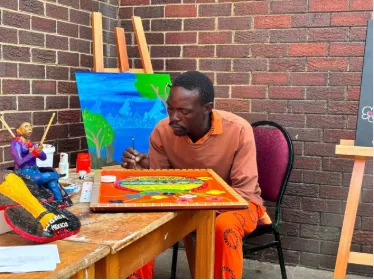
JOHANNESBURG — When most people think of prison, they picture steel bars, locked gates and lost freedom. But at a correctional facility in Johannesburg, South Africa’s largest city, visitors are greeted by something unexpected: an art gallery, AP reported.
The exhibition of inmates’ artwork is part of the country’s effort to reduce repeat offending through rehabilitation programs behind bars. The Department of Correctional Services has opened nine prison arts-and-crafts galleries since 2023, aiming to help inmates develop skills, earn income and prepare for life after release.
Inside Leeuwkop Correctional Facility, artwork created by 34 inmates is on display for visitors, offering a glimpse into stories of culture, memory and personal transformation in a country struggling with one of the world’s highest crime rates. Inmates also have chances to see each other’s work.
“I get a peaceful and healed mindset when I do my art,” one inmate, Freddy Mongkoai, told The Associated Press. “It encourages me to be strong and present. I can focus, so it gives me peace of mind.”
Mongkoai, 51, has served nearly two years of a 12-year sentence for murder after taking part in an act described as vigilante justice. He joined the prison’s art program in October. Since then, he has experimented with painting and papier-mâché sculpture
Estimates of recidivism rates in South Africa vary from source to source, depending on how repeat offending is defined, reaching as high as 95%.
South African prisons are notorious for high levels of violence due to overcrowding, gang activities, administrative failures and underfunding. Correctional officials say repeat offenders contribute significantly to the overcrowding.
Against that backdrop, the correctional department says programs such as the arts and craft initiative can help reduce reoffending.
She said the program is designed to be therapeutic rather than formal art therapy, which is clinical and conducted by a licensed physician. Participation is voluntary and focuses on helping inmates reflect on their thoughts, feelings and needs rather than on artistic ability.
“A lot of them have experienced a lot of trauma before coming into the facilities, but there’s not a lot of services for them to process and metabolize that trauma,” Mahlati said. “We emphasize that it’s not about skill. It’s a creative expression to process trauma.”
Correctional facilities have an environment that is “very rigid and very dogmatic,” Mahlati said. “So we give people a chance to just be.”

