










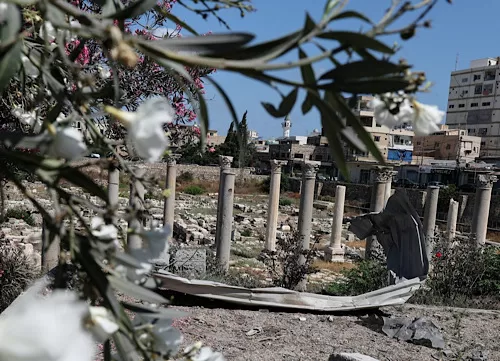
A crown was blown off an ancient column in a UNESCO-listed site in Lebanon’s port city of Tyre. A pilgrimage site for Muslims and Christians alike was destroyed in another southern town. Israeli strikes pummelled the Mamluk-era market in the city of Nabatieh and troops razed centuries-old Lebanese border towns.
Israel’s nearly four-month air and ground campaign that it says was targeting Iran-backed group Hezbollah has damaged or destroyed revered heritage sites across southern Lebanon, Lebanese Culture Minister Ghassan Salame told Reuters.
Despite a ceasefire that took hold a week ago, authorities have yet to build a full picture of the damage as Israeli troops still occupy a zone about 10 km (6.2 miles) deep into Lebanon that is off-limits to Lebanese, Salame said.
“We cannot work under the shadow of occupation,” he said.
That occupation zone includes the medieval Beaufort Castle as well as centuries-old villages that were home to Christians, Shi’ite Muslims and Sunni Muslims and their places of worship.
“There are villages that have been completely bulldozed,” Salame said.
Even ancient towns outside the zone were pummeled with air strikes, including Tyre and Nabatieh. Heavy bombing hit the town of Tebnin, prompting fears that its Crusader fortress was also damaged, Salame said.
“Heritage is not only Roman and Phoenician antiquities,” he added. “Heritage is also historic buildings, archaeological sites, and buildings with a cultural function.”
Modern-day Lebanon sits at the intersection of civilizations including the Phoenicians, Byzantines, Mamluks and Crusaders, each leaving their mark with temples, castles and mausoleums.
Nearly 5,000 years old, Tyre and its Roman ruins are the products of that heritage. Established as an island fortress, Tyre was permanently connected to the mainland by the invading forces of Alexander the Great.

