



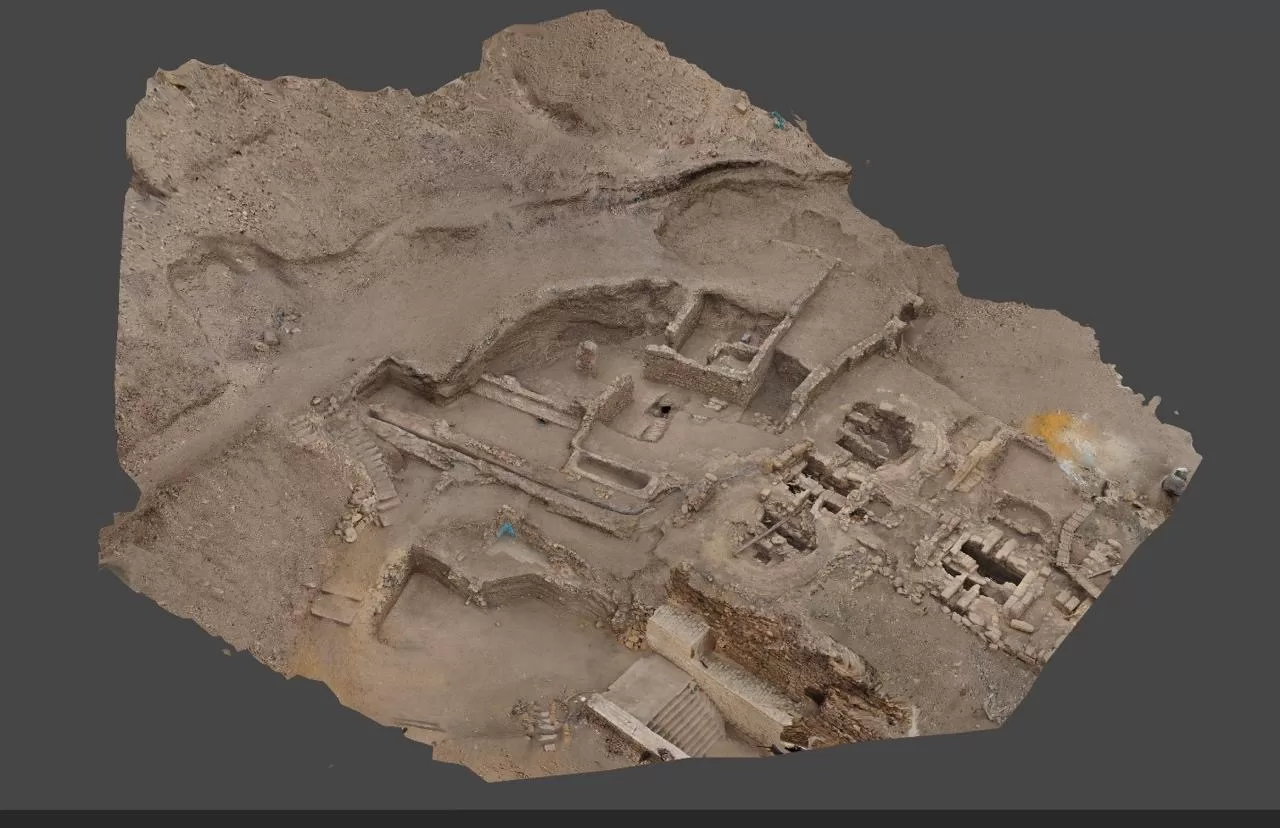
A joint Egyptian-French archaeological team announced last week the discovery of an impressive Mamluk-era water system and the remains of a Mamluk mosque near Cairo’s Saladin Citadel.
The finds, located in the areas of Arab al-Yassar and Hattabasouth of the citadel, are shedding new light on the hidden treasures still buried in historic Cairo.
They help experts better understand the city’s past and supportefforts to preserve it.
The discoveries are part of a larger project to document, study, and restore the historic districts around the medieval citadel.
According to the Tourism and Antiquities Ministry, the finds offer fresh insight into how the citadel developed over the Islamic eras and confirm its long role as the centre of power in Egypt.
In Arab al-Yassar, archaeologists uncovered what they describe as one of the most important water systems that once supplied the citadel.
They found two large wells, 10 and 8 meters deep, built with massive stone blocks.
These were connected to waterwheels and stone channels that lifted and carried water uphill.
The team also discovered animal paths, stables, storage rooms, and watering basins tied to the system.
Importantly, this discovery reveals for the first time the final stretch of the famous Cairo Aqueduct’s water network, a section that was previously unknown in historical records.
In the Hattaba area, the mission uncovered the remains of a Mamluk mosque, including its prayer hall, mihrab, and part of its arcade, along with burial chambers and graves from different Islamic periods.
The project also involves digital documentation, 3D modelling of the sites, and training programmes for young Egyptian archaeologists.
The Saladin Citadel is one of Cairo’s most iconic landmarks. For centuries it has stood as one of the medieval world’s strongest fortresses.
Today it forms a key part of the UNESCO-listed Historic Cairo World Heritage Site and remains a powerful symbol of Egypt’s rich history and architectural legacy.

