





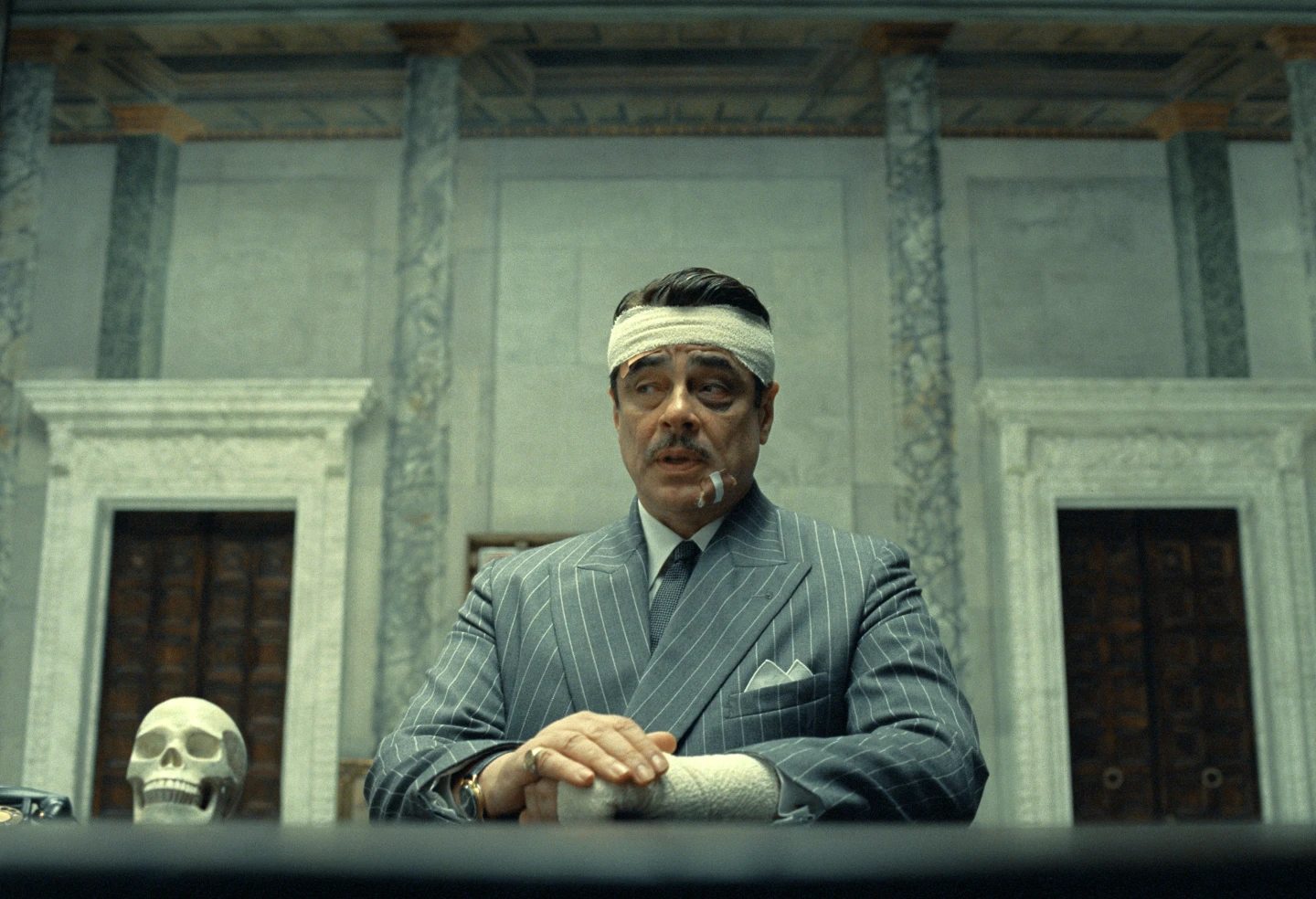
Nowhere is the border-crossing nature of cinema more evident than the Cannes Film Festival, which kicks off Tuesday in the wake of US President Donald Trump’s vow to enact tariffs on international films.
Cannes, where filmmakers, sales agents and journalists gather from around the world, is the Olympics of the big screen, with its own golden prize, the Palme d’Or, to give out at the end. Filmmakers come from nearly every corner of the globe to showcase their films while dealmakers work through the night to sell finished films or packaged productions to various territories.
“You release a film into that Colosseum-like situation,” says Brazilian director Kleber Mendonça Filho, who’s returning to Cannes with “The Secret Agent,” a thriller set during Brazil’s dictatorship. “You’ve got to really prepare for the whole experience because it’s quite intense — not very far from the feeling of approaching a roller coaster as you go up the steps at the Palais.”
Perhaps as much as ever, all eyes in the movie world will be on the 78th Cannes Film Festival when it gets underway this week. That’s not just because of the long list of anticipated films set to premiere at the Cote d’Azur festival (including films from Spike Lee, Wes Anderson, Lynne Ramsay, Richard Linklater and Ari Aster) and the extensive coterie of stars set to walk the fabled red carpet (Jennifer Lawrence, Denzel Washington, Robert Pattinson and Kristen Stewart among them).
As the movies, and the Oscar race, have grown more international, the global launchpad of Cannes has become only more central to the larger film ecosystem — even with the ongoing absence of Netflix. Recent editions of Cannes have produced a string of Academy Awards contenders, including this year’s best-picture winner, “Anora.”
At the same time, geopolitics course through Cannes unlike any other festival. The Cannes red carpet can be as much a platform for political protest as it is for glamour. This year’s festival will include a dissident Iranian filmmaker (Jafar Panahi), a Ukrainian filmmaker (Sergei Loznitsa) and the first Nigerian production in the official selection (Akinola Davies Jr.’s “My Father’s Shadow”).
The many roads to Cannes
In the run-up to the festival, three filmmakers from different corners of the world spoke about their roads to the Cannes competition lineup. For many directors, reaching the Cannes competition — this year, that’s 22 movies vying for the Palme d’Or — is career milestone.
“It’s meaningful for me. It’s meaningful for the country,” says Oliver Hermanus, speaking from outside Cape Town. Hermanus, the South African filmmaker of “Moffie” and “Living,” is in competition for the first time with “The History of Sound,” a period love story starring Paul Mescal and Josh O’Connor.
“I was born here and made movies here for most of my career, so I still see myself as a South African filmmaker who’s interested in the South African perspective on things and South African representation,” adds Hermanus. “The competition is something I’ve always wanted to be part of.”
Chie Hayakawa, the Japanese filmmaker of 2022’s “Plan 75,” is also in competition for the first time. She first came to Cannes with a student film that she never expected to make it into the festival’s shorts program. This week, she’ll debut “Renoir,” a semiautobiographical tale about an 11-year-old girl with a father who has terminal cancer.
“It gives me a huge encouragement and keeps me motivated to making films,” Hayakawa said from Tokyo. “I don’t feel like I’m going to compete with other films. But it meaningful. I know how prestigious and meaningful it is to be in competition.”
“Film is global and easily crosses the borders of any country or culture,” she adds. “That’s what special about Cannes.”

