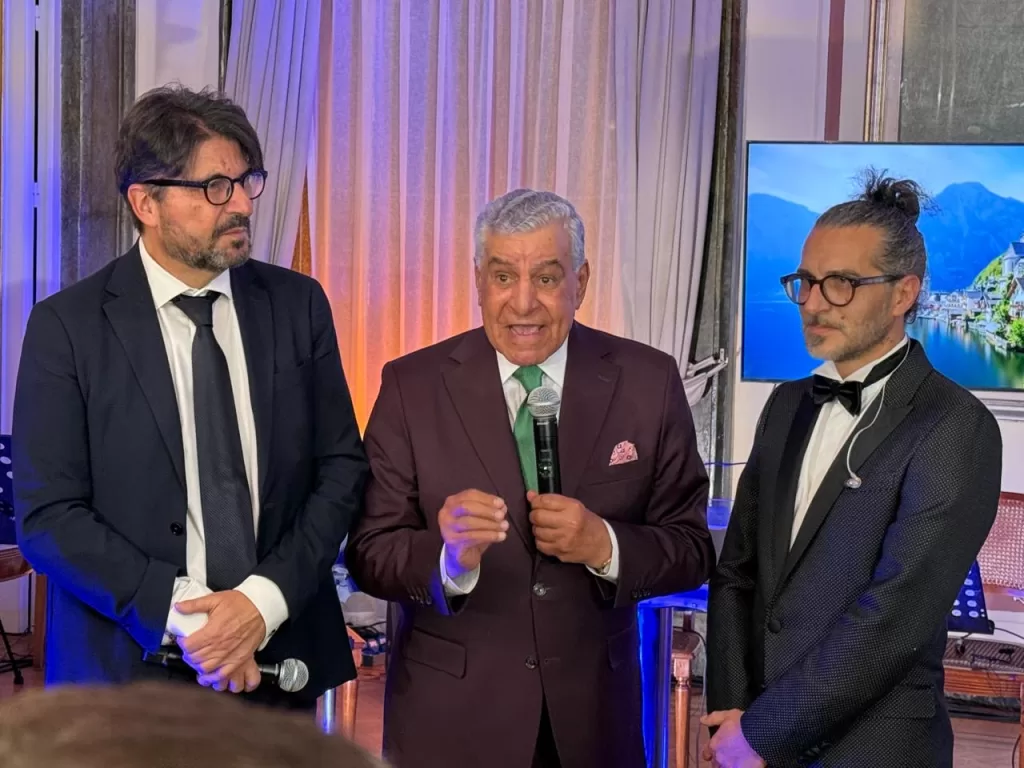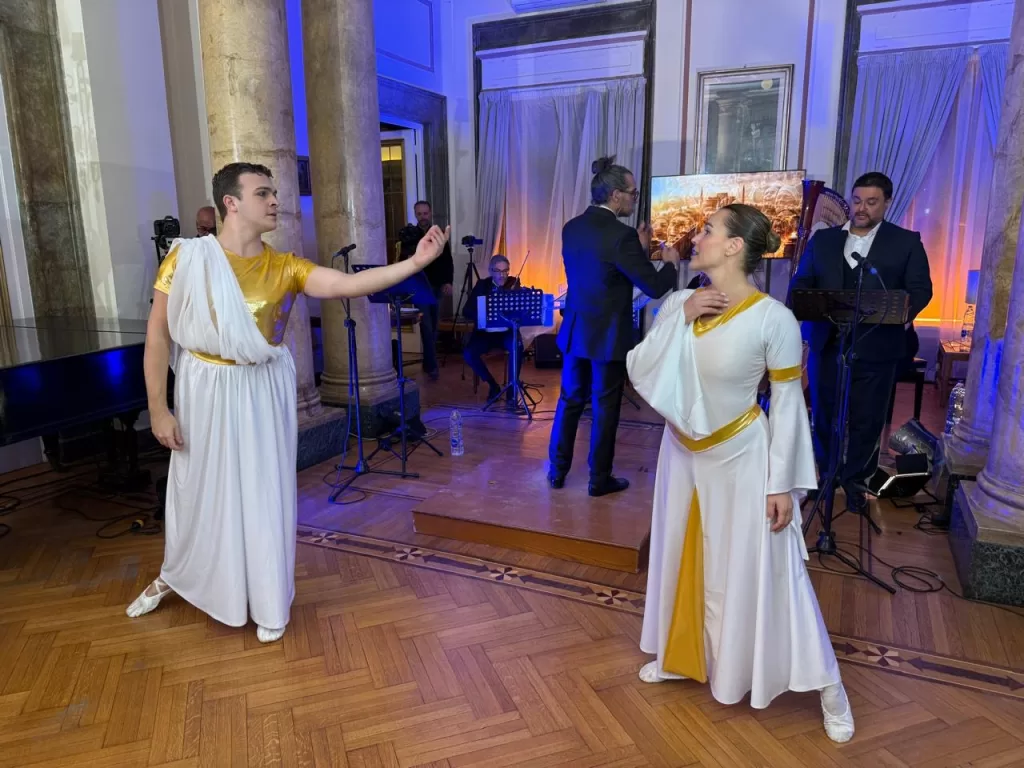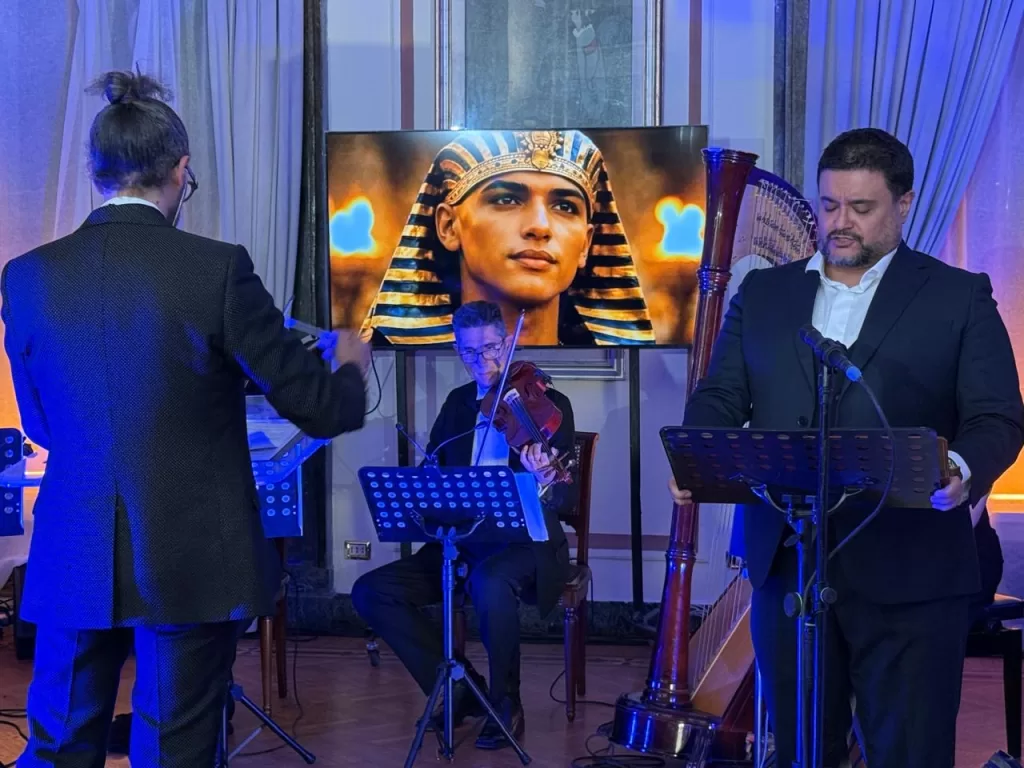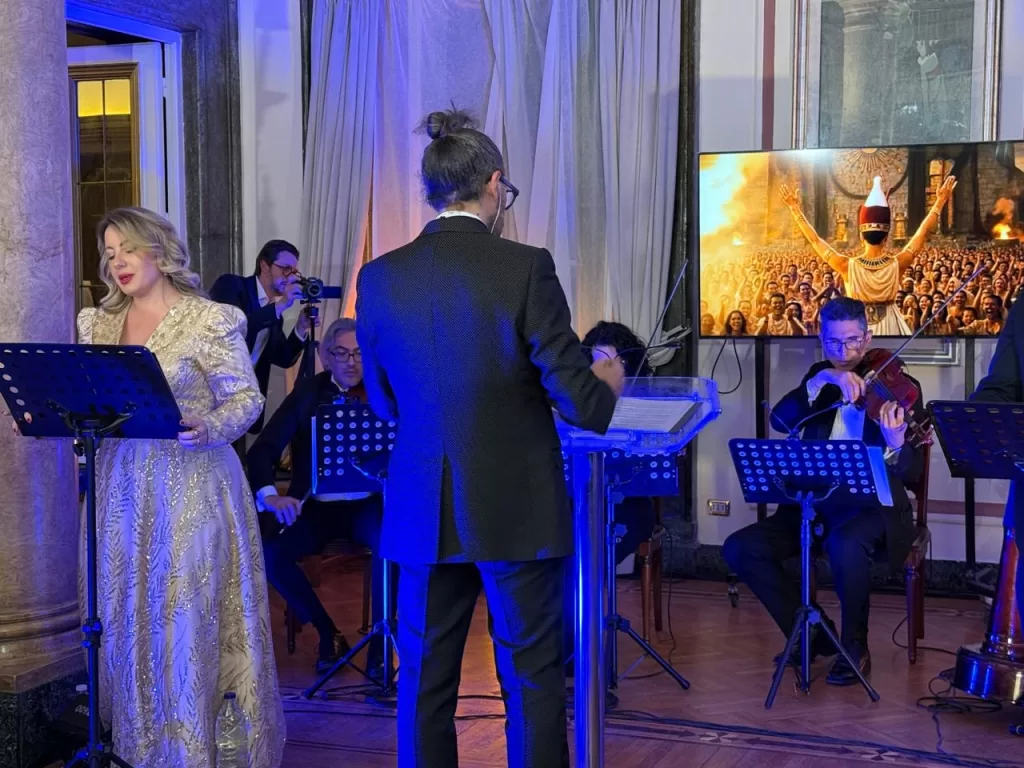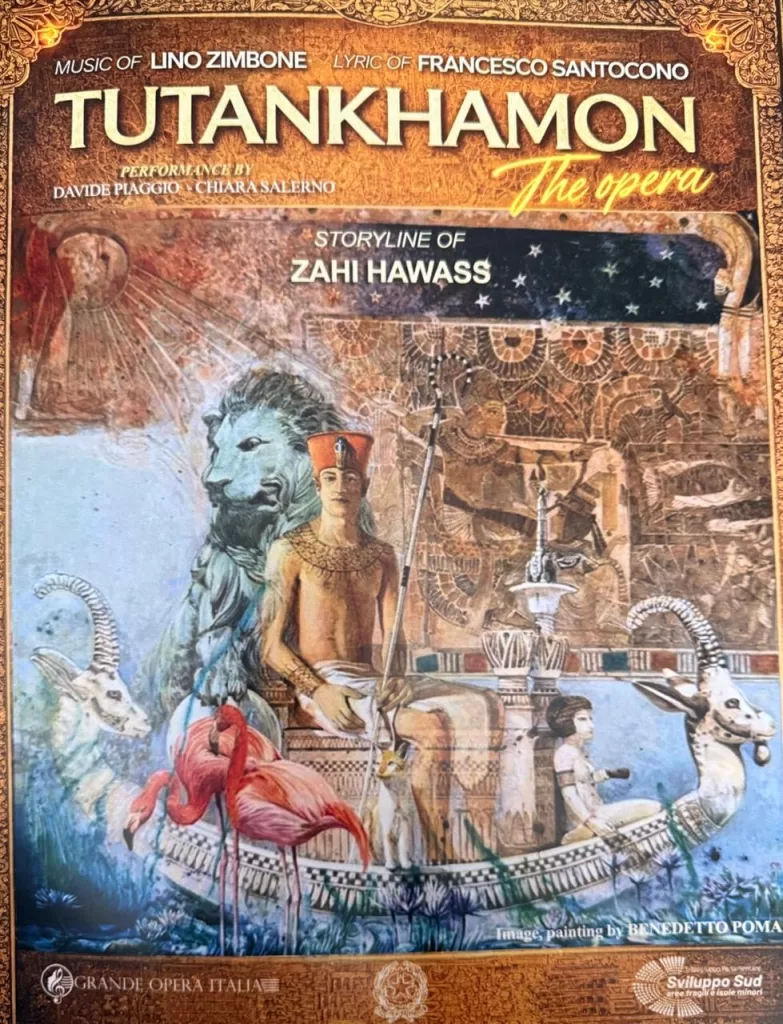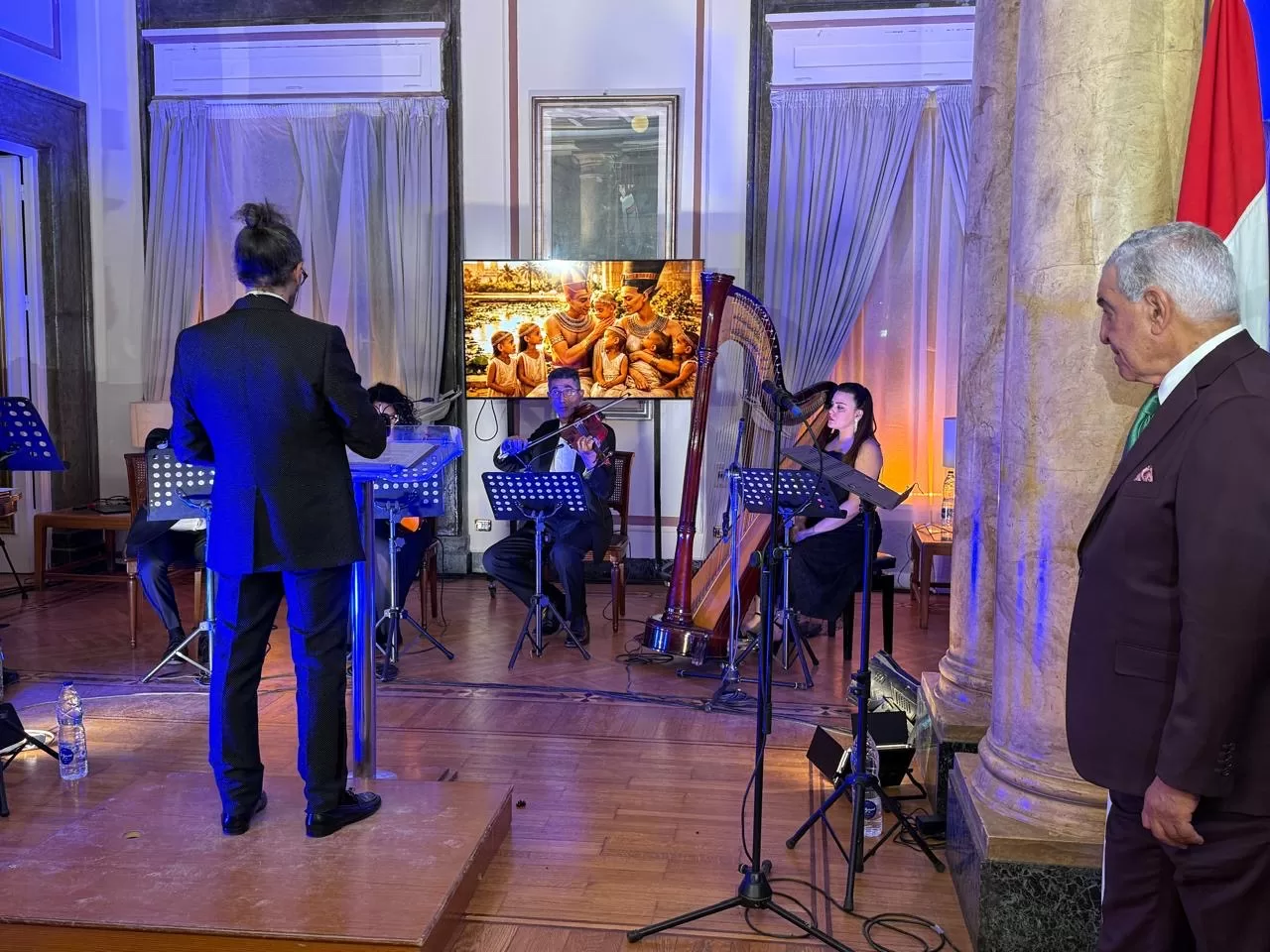
‘Tutankhamun – The Opera’ premiered at the Italian Embassy in Cairo on Wednesday night, immersing audiences in ancient Egypt’s royal drama.
The performance depicted the birth of Akhenaten’s heir, Nefertiti’s emotional struggles, and palace intrigue.
Nefertiti rejected a plot against the boy and sought to protect him, showing courage and loyalty. After Akhenaten’s death, Nefertiti became Pharaoh, facing opposition. The story followed Tutankhamun’s victories and tragic early death, blending themes of hope, leadership, and loss in a dramatic and emotional spectacle.
Behind this work are renowned Egyptologist Zahi Hawass, who crafted the storyline of the opera, Italian composer Lino Zimbone, and acclaimed writer Francesco Santocono.
Reflecting on the journey, Hawass said, “Five years ago, after seeing ‘Aida’ more than a hundred times, it struck me: the true hero of the Grand Egyptian Museum (GEM) is Tutankhamun. I dreamed of an opera that would bring his story to life.”
Collaborating with Santocono and then with talented composer Zimbone, the creative team embarked on a journey akin to the days when Verdi’s Aida first united Italy and Egypt on the operatic stage.
“It is not easy to produce an opera on this scale,” Hawass admitted. “But we are determined to bring Tutankhamun’s story to audiences in Italy and around the world. The boy king, whose treasures fill the GEM, deserves his place in the limelight.”
Italian Ambassador Agostino Palese echoed this enthusiasm, underscoring the deep ties of art and history binding Egypt and Italy.
“The significance of this opera goes beyond the life of Tutankhamun. We are also celebrating the shining heritage of Egyptian archaeology and the tradition of Italian classical music, threads of our shared world culture,” he said.