



The Egyptian Museum in Tahrir hosts a compelling temporary exhibition titled “The Nile: Pulse of Egyptian Civilisation”.
The show explores how the Nile River has shaped Egyptian life, science, and spirituality from prehistoric times through the Roman period, while drawing thoughtful connections between ancient wisdom and today’s conversations about sustainability.
Museum Director, Ali Abdel Halim, said the exhibition carries great scientific and heritage value.
“It brings together rare pieces, spanning from the earliest dynasties to the Roman era, including several items that are being displayed to the public, for the first time,” he told The Egyptian Gazette in an interview on the sidelines of the event.
For thousands of years, the Nile has been Egypt’s lifeline, supplying fertile soil, water for irrigation, food, and a vital transport route that enabled cities to flourish in the middle of the desert.
Ancient Egyptians knew the river by several names, most notably “the Black” (a reference to the dark, nutrient-rich silt it carried from the Horn of Africa) and Iteru, the word that eventually gave us “Nile” through the Greek Nilus.
They personified the river as the god Hapi, a symbol of fertility and abundance who represented the unity of Upper and Lower Egypt.
Egyptians closely watched the heliacal rising of Sirius, which they linked to the goddess Isis, as its reappearance each year announced the beginning of the flood and the new agricultural cycle.
This deep knowledge of the river’s rhythms led them to divide the year into three seasons: Akhet (flooding), Peret (growing), and Shemu (harvesting).
The exhibition vividly illustrates how the Nile was far more than a geographical feature. It was a sacred force protected by a rich pantheon of deities.
Hapi, often depicted with a rounded belly and heavy breasts symbolizing the life-giving silt, stood at the centre of this reverence.
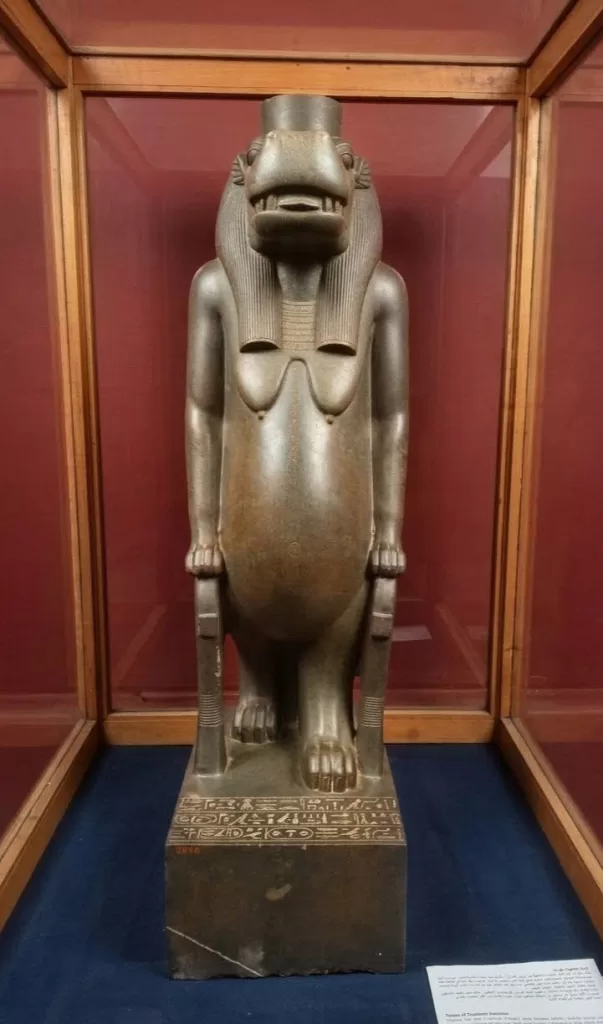
At Aswan’s First Cataract, the river was guarded by the Elephantine Triad – Khnum, Satet, and Anuket – while the formidable Taweret, a protective goddess combining hippopotamus, lion, and crocodile features, watched over mothers and children.
In later periods, Sobek embodied the river’s powerful and sometimes dangerous nature, and under Roman rule, the Nile appeared as the god Nilus, frequently shown accompanied by sixteen children, representing the ideal flood height of 16 cubits.
Among the highlights are models of ancient Nilometers, statues of Taweret, rare bronze plaques, depicting the Nile god, and Roman coins featuring Nilus.
The exhibition also showcases amulets and objects celebrating the river’s rich ecosystem which boasts lotus flowers, papyrus, birds, and crocodiles, as well as a striking lower portion of a statue of Thutmose III shown as Hapi, offering a table laden with ducks, geese, and quail.
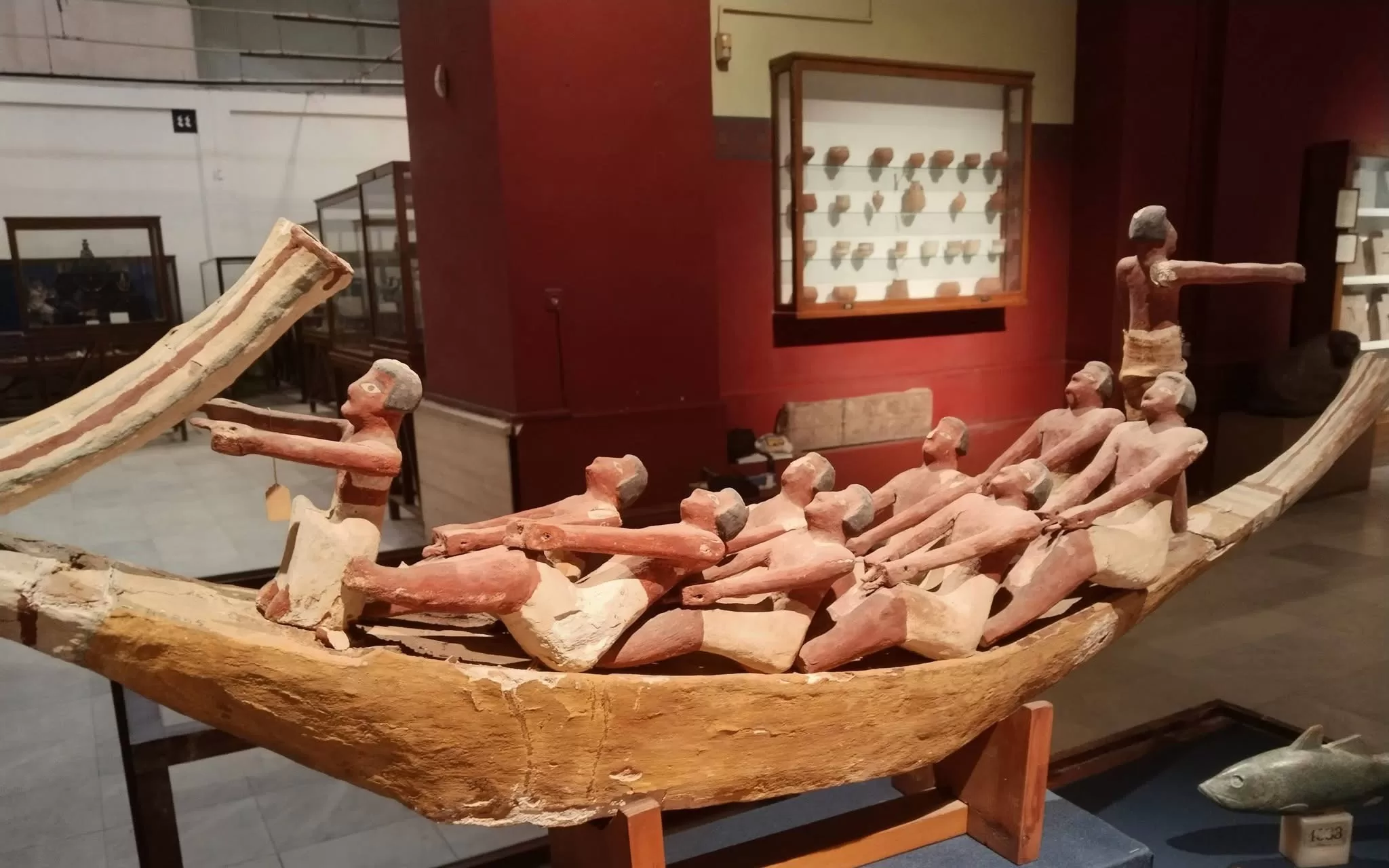
Visitors can trace the evolution of Nile navigation through two beautiful boat models: a Middle Kingdom wooden vessel complete with rowers and a lookout, and a simple papyrus craft representing earlier river travel.
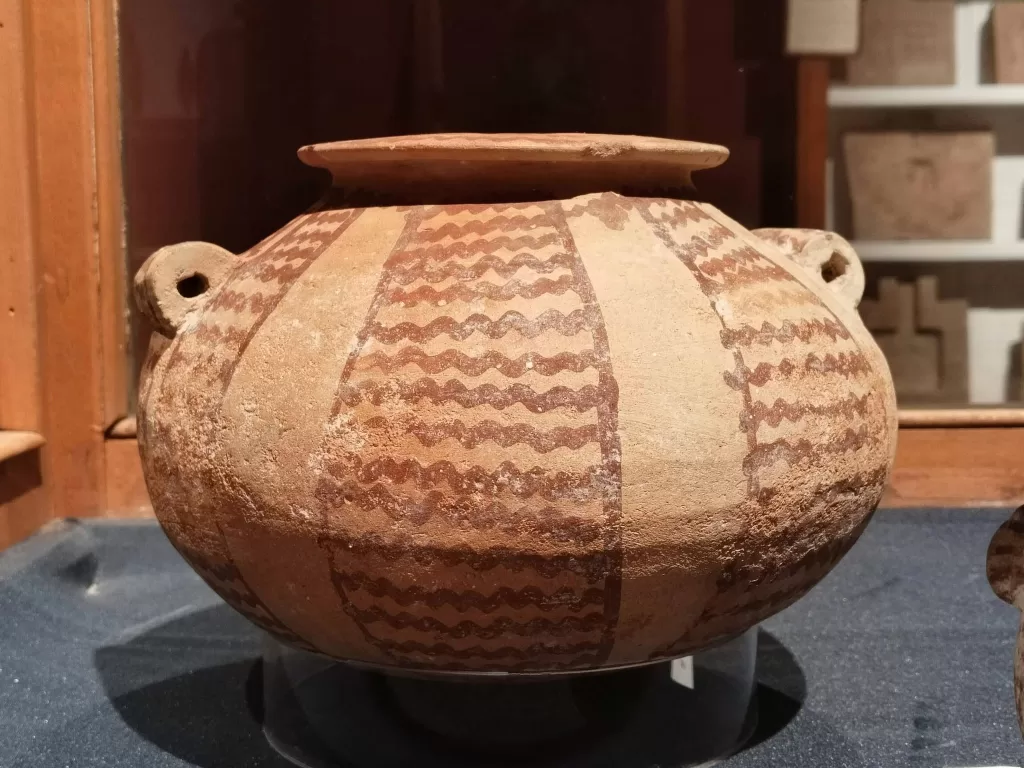
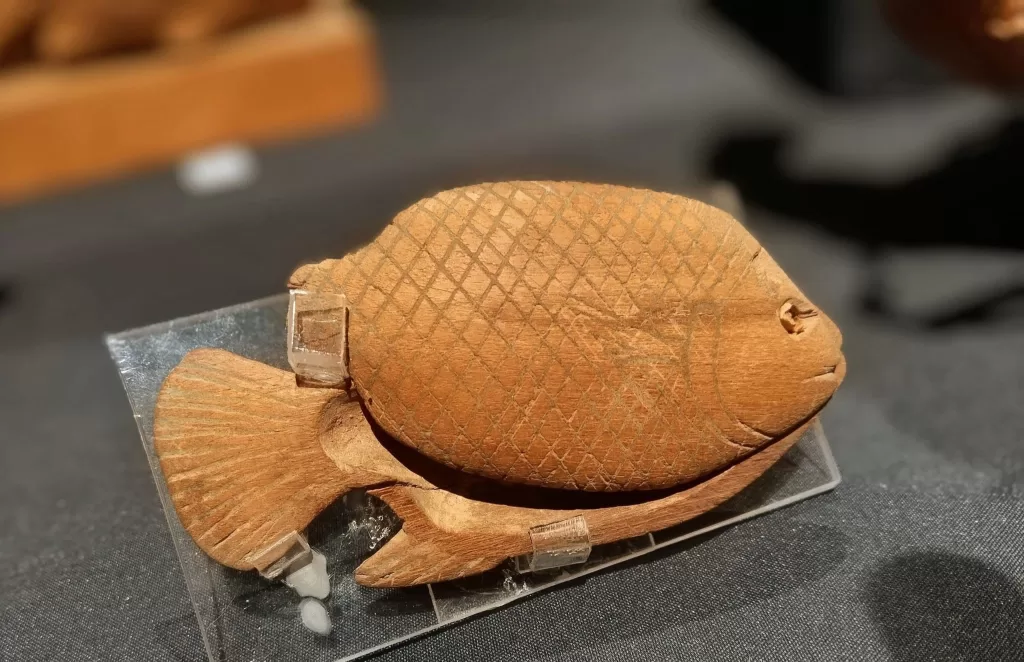
Other standout pieces include pottery born from Nile clay, bowls decorated with birds, a Nubian cup featuring fish and crocodile motifs, and a Predynastic vessel covered with the hieroglyph for water, along with a charming bronze makeup container shaped like a Nile tilapia that still retains traces of ancient cosmetics.
“Egypt will always remain a global model in preserving its cultural heritage,” Abdel Halim concluded.
The exhibition is on view daily from 9 a.m. to 5 p.m. in Hall 40 on the museum’s ground floor and runs until July 15.