










The Supreme Council of Antiquities (SCA) unearthed a rare lead capsule, which was concealed in the foundations of a historic villa in central Alexandria.
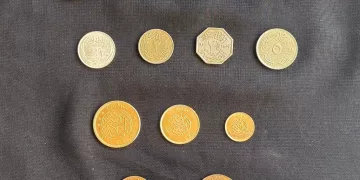
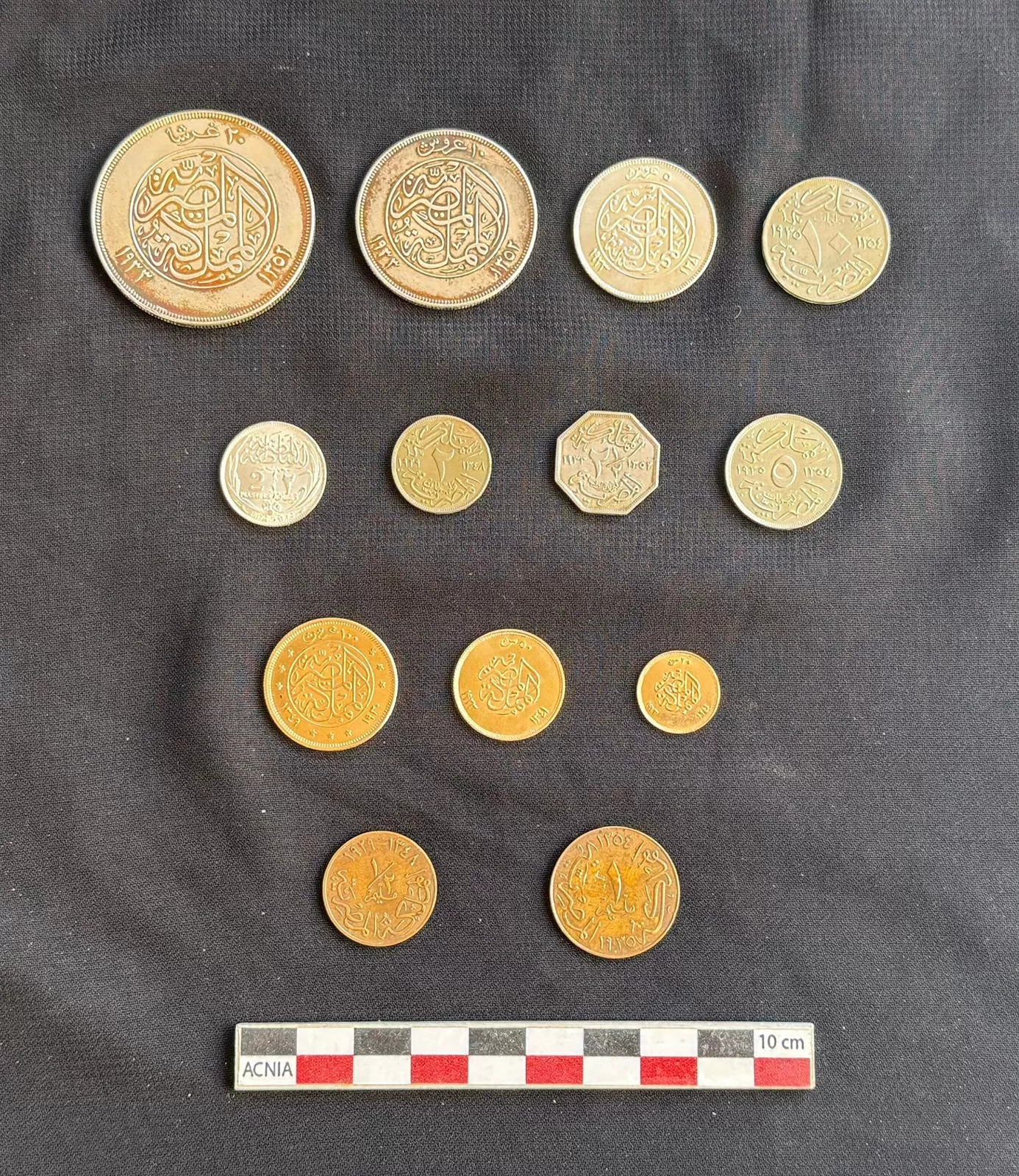
The capsule, which was revealed during a rescue excavation project, contained an extraordinary collection of Egyptian coins dating back to the early 20th century, from the reigns of Sultan Hussein Kamel and King Fuad I.
Inside, archaeologists found thirteen coins of various denominations, ranging from tiny millime pieces to stunning gold coins with a face value of 100 piastres.
The trove includes coins from King Fuad I’s era, a rare two-piastre coin from Sultan Hussein Kamel, several silver coins (5, 10, and 20 piastres), and three exceptionally scarce gold coins (20, 50, and 100 piastres) from King Fuad I, each considered among the rarest issues in modern Egyptian numismatic history.
Minister of Tourism and Antiquities Sherif Fathy said this discovery sheds light on Alexandria’s cosmopolitan legacy and the vital role foreign communities played in shaping the city’s unique identity.
SCA Secretary-General Mohamed Ismail Khaled highlighted the Greek community’s role in shaping the city’s culture. He noted that the tradition of burying symbolic items for luck in new buildings connects both Greek and ancient Egyptian customs.
The villa where the capsule was found once belonged to the Salvago family, one of Alexandria’s most prominent Greek families who played a central role in the city’s economic, cultural, and social life during the late 19th and early 20th centuries.
A particularly moving element of the discovery was a typewritten Greek document inside the capsule, complete with handwritten signatures and blessings.
Dated May 1, 1937, the document records the laying of the villa’s foundation stone by Konstantinos M. Salvago and his mother Julia K. Salvago, under the supervision of French architect Jean Walter. It is a beautiful tribute to the enduring traditions and spiritual life of Alexandria’s Greek community.

