


A joint Egyptian-French archaeological mission, involving Egypt’s Supreme Council of Antiquities, the French National Centre for Scientific Research, and Sorbonne University, has announced a series of archaeological discoveries.
Whilst conducting excavations around the Ramesseum Temple on Luxor’s west bank, the team uncovered tombs from the Third Intermediate Period, storage facilities for olive oil, honey, and fats, workshops for textile and stone production, as well as ancient kitchens and bakeries.
Among the most extraordinary revelations of the mission was the discovery of a “House of Life” – an educational research centre affiliated with major temples during ancient times.
The centre represents a significant cultural and historical insight, not only for displaying the architectural layout of such a scholarly institution but also for yielding a rich array of artifacts.
The findings included remnants of drawings, educational tools, and even ancient games, cementing this as the first evidence of a formal educational facility within the Ramesseum, a statement by the Tourism and Antiquities Ministry said.
The mission discovered buildings near the temple, likely used as administrative offices. Structures to the north were identified as storage facilities for items like olive oil, honey, animal fats, and wine. Numerous wine jar labels suggest extensive wine production and storage at the site.
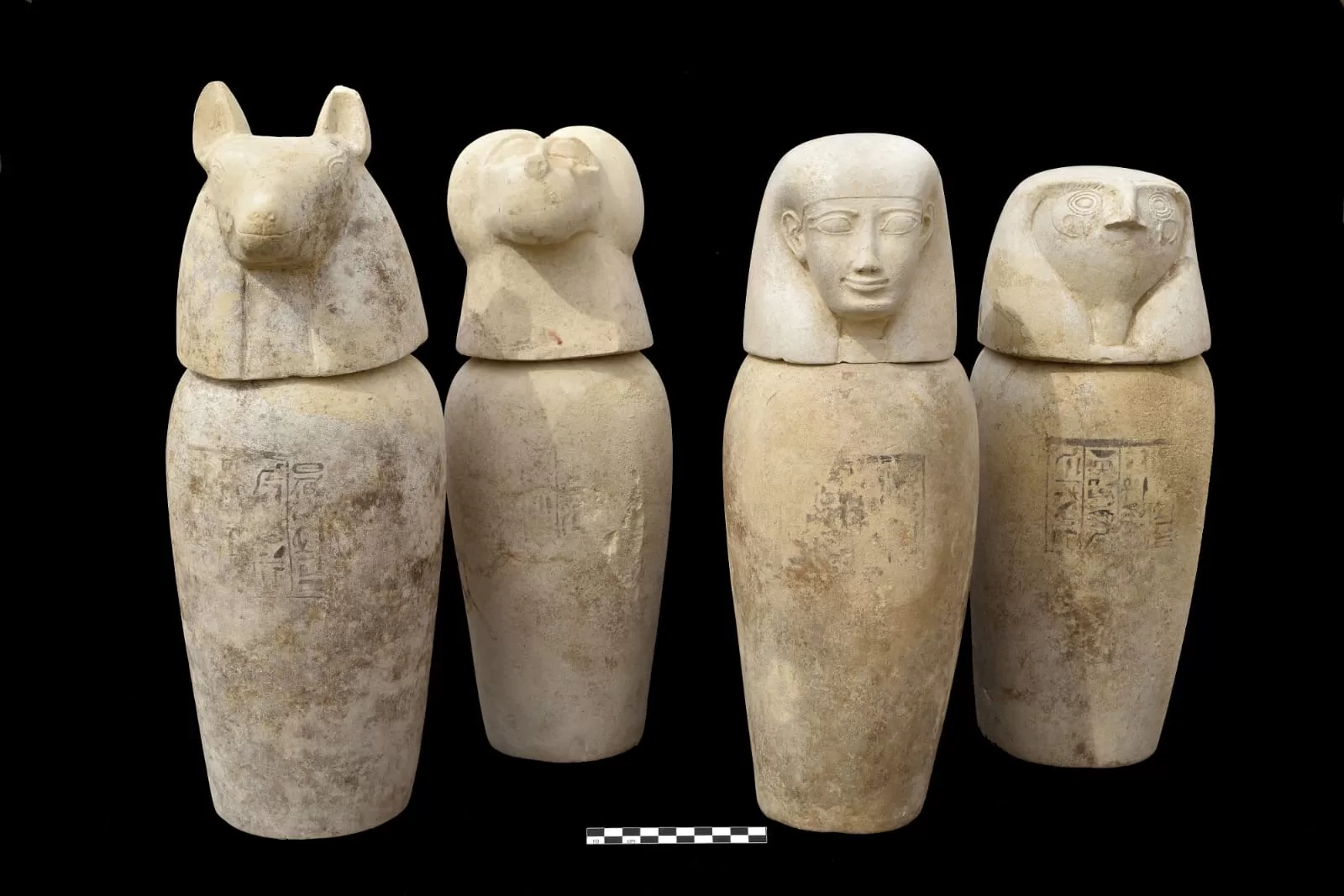
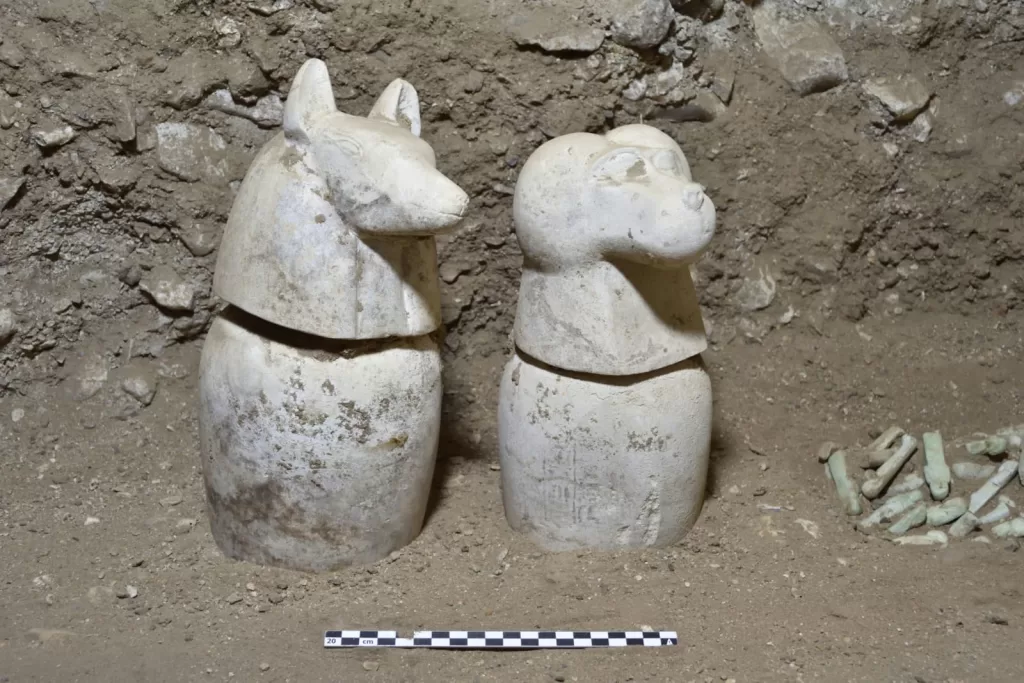
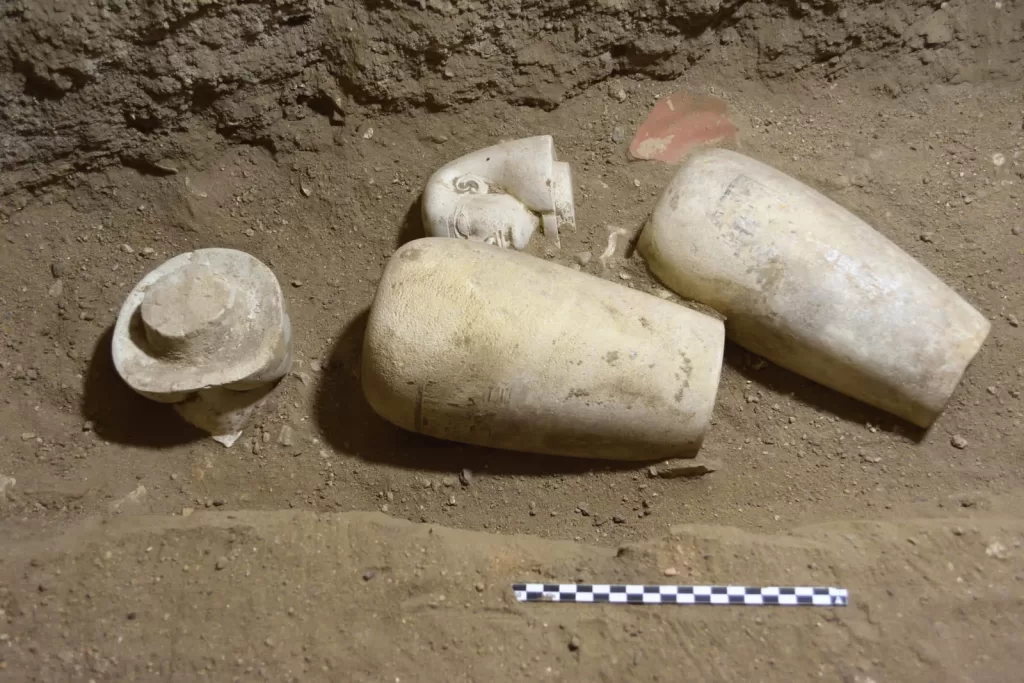
Archaeologists uncovered well-preserved tombs from the Third Intermediate Period in the temple’s northeastern area. The finds included burial chambers, canopic jars, funerary tools, nested coffins, 401 pottery ushabti figurines, and scattered human bones.
The Minister of Tourism and Antiquities, Sherif Fathi, praised the mission’s work in uncovering new dimensions of the Ramesseum’s history.
“These discoveries shed light on the temple’s immense religious and societal role in ancient Egypt,” the minister said.
“They enhance our understanding of the rich, complex history of this exceptional site and its significance during the New Kingdom, particularly the Ramesside period.”
The Ministry of Tourism and Antiquities emphasised in the statement the Ramesseum’s diverse role in ancient Egypt, serving not only as a place of worship but also as a center for administrative, economic, and redistributive activities.
It supported local communities, including craftsmen from Deir el-Medina. The site predates Pharaoh Ramesses II’s construction, was reused over time, and was later repurposed as a burial ground for priests and a quarry during the Ptolemaic and Roman periods.

