


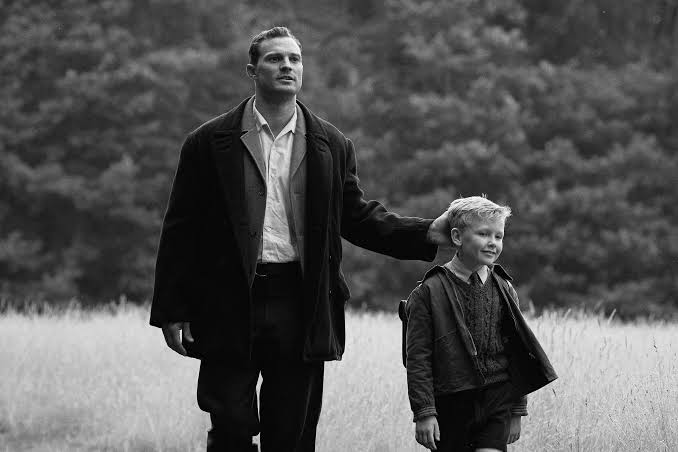
In Belfast, writer and director Kenneth Branagh is offering flashes from his own childhood and memories, and that’s what make it an intense and sentimental movie.
Branagh takes us back to his native city Belfast, especially in 1969 at the time when the civil clashes between Catholics and Protestants arose. He wants us see these moments through the eyes of a 9-year-old Buddy (Jude Hill).
Buddy lives in a neighbourhood where Catholics and Protestants clash from time to time. His parents are working class.
The film opens with Buddy playing in the street. Everything changes in few seconds when a mob of Protestants come into the neighbourhood and set fire to some Catholic homes. Because he is born of a Protestant family, Buddy’s home was not touched.
The once harmonious and quiet neighbourhood has changed and been destroyed and the army came to restore order.
The boy’s main problem is how to win the heart of his Catholic classmate.
Although he doesn’t understand what is really happening around him, he keeps in mind what his father (Jamie Dornan) told him: “Be good. And if you can’t be good, be careful.”
It’s hard to leave the place where they live, but father keeps persuading his wife (Caitriona Balfe) to go to any other city where there is no conflict. Finally, the family decides to move out of town searching for peace.
The film is in the Oscar race this year with seven nominations including best picture, best original screenplay, best actor and actress in a supporting role and best director.
Unlike Oliver Hirschbiegel’s Five Minutes of Heaven (2009) or Jim Sheridan’s In the Name of the Father (1993), which tackle the civil war between Catholics and Protestant, Branagh’s Belfast is emotional and shows a family facing problems and clashes.
The film is not about the three-decade conflict which lasted from the late 1960s to 1998, but, it’s about peace and that is well shown in a scene when Buddy told his father that he has a crush on a Catholic girl. The father said: “That wee girl can be a practicing Hindu or a Southern Baptist or a vegetarian antichrist, but if she’s kind and she’s fair, and you two respect each other, she and her people are welcome in our house any day of the week.”
The movie is filmed in black-and-white, which does not affect the beauty of the shooting, but it adds sentimentality. We only see colour when Buddy watches films at the cinema with his family, as if movies give them respite from the gloomy reality of Belfast.
The film as a whole is neither melancholic nor dark. It has lots of funny dialogues and scenes, especially those of Buddy and his grandfather (Ciarán Hinds) and it is an intense emotional artwork.


Discussion about this post