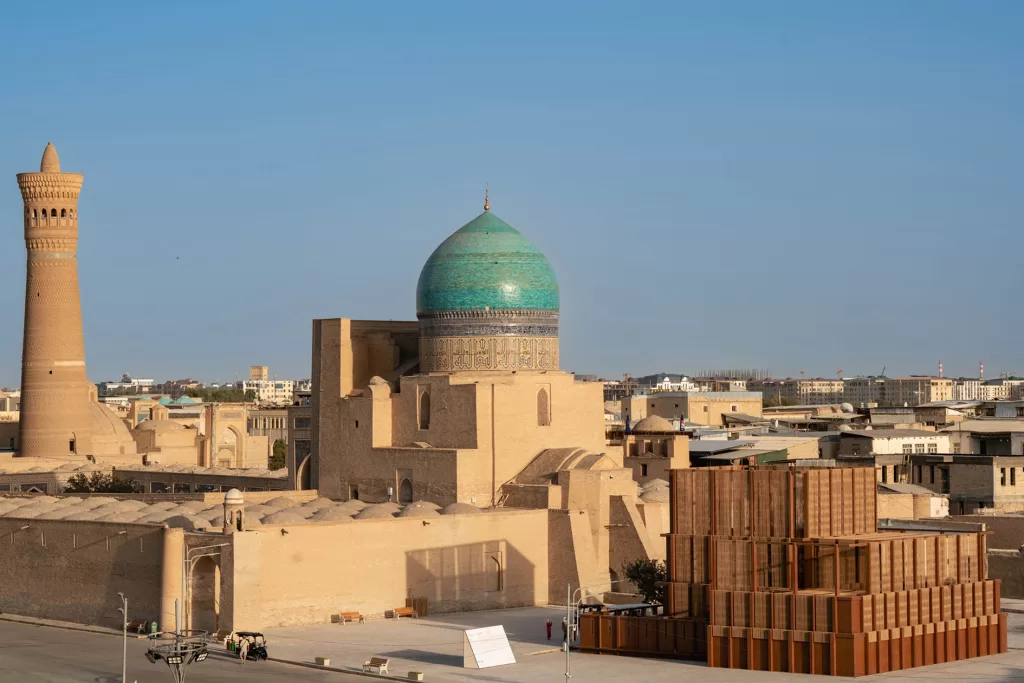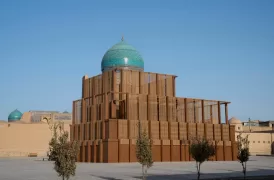








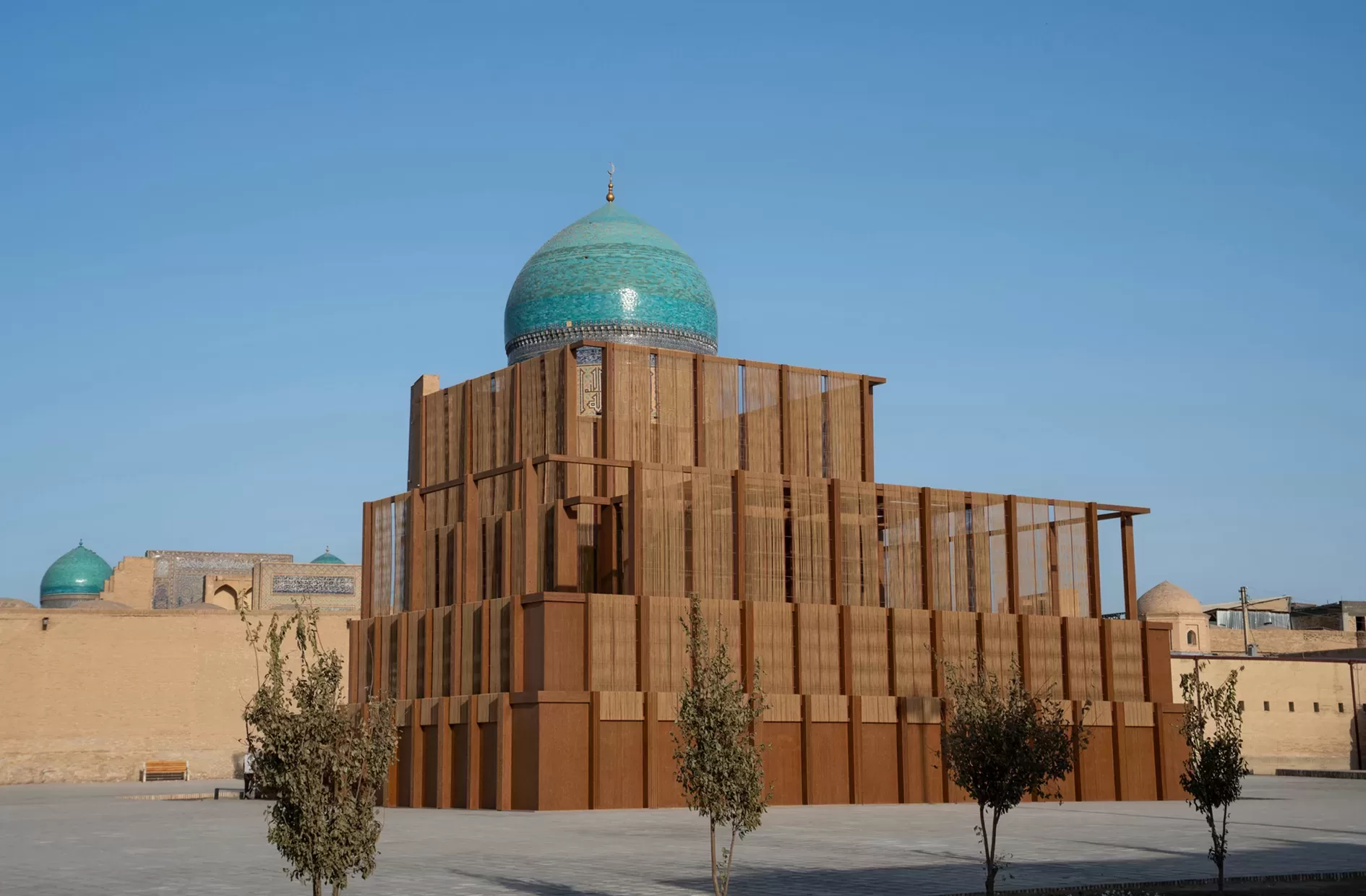
In a remarkable journey that traces the historic connections of the Silk Road, the Diriyah Biennale Foundation is bringing a contemporary vision of a musalla, a traditional Islamic space for prayer and gathering, to the Bukhara Biennial in Uzbekistan.
This award-winning architectural project, which first debuted at the Islamic Arts Biennale 2025 in Jeddah, is now on display in Bukhara until November 20, 2025.
The installation, made possible through support from Saudi Arabian companies ACWA Power and Vision Invest, is a powerful symbol of cultural exchange, bridging the past and present of Islamic societies.
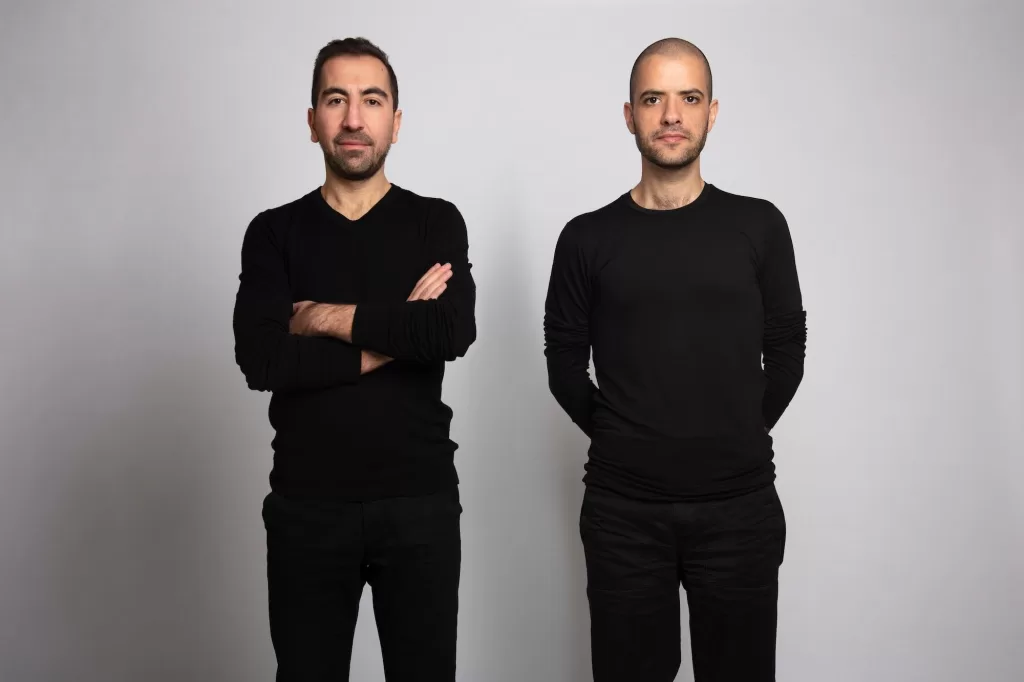
The project, which won the inaugural AlMusalla Prize, was designed by EAST Architecture in collaboration with engineering firm AKT II and artist Rayyane Tabet.
The structure is a testament to sustainable innovation, constructed almost entirely from palm tree waste transformed into a new building material. Its design reinterprets the traditional musalla for a modern global audience while still embodying the core Islamic principles of togetherness and community.
The open central courtyard and prayer spaces are arranged to resemble a loom, drawing a connection between the spiritual act of weaving and the communal act of prayer.
A shared history of openness
The journey of the musalla from Jeddah to Bukhara is deeply symbolic. Both cities have long been defined by their roles as historical hubs of cultural exchange and global connectivity.
Jeddah, a port city on the Red Sea, has welcomed pilgrims from around the world for centuries. Its culture is enriched by the countless Muslims who have passed through on their way to Makkah and Madinah.
Similarly, Bukhara was a leading centre of learning, commerce, and art along the Silk Road, serving as a melting pot of ideas for over a millennium.
This shared history of openness is central to the project’s meaning. By moving between two major international art exhibitions in these culturally significant cities, the musalla proposes a view of globalism rooted in West and Central Asia.
It presents a living architectural tradition that is adaptable, multifaceted, and shaped by diverse influences – much like the history of Islamic societies themselves.
Fostering a new cultural landscape
The presence of the musalla in Bukhara is part of a larger collaborative effort. The exhibition is a key component of the inaugural Bukhara Biennial, Recipes for Broken Hearts, curated by Artistic Director Diana Campbell and commissioned by the Uzbekistan Art and Culture Development Foundation.
The biennial’s concept explores the healing power of art and culture through communal participation, a theme that resonates deeply with the spirit of the musalla.
This collaboration highlights a shared commitment to fostering contemporary creation and preserving cultural heritage.

Prince Nawaf Bin Ayyaf, chair of the AlMusalla Prize, spoke about the project’s success in fulfilling its brief to create a versatile and welcoming space.
“Islamic cultures have always been shaped by movement and openness to different influences,” he said, adding that the musalla “embodies a new chapter in a living architectural tradition.”
Aya Al-Bakree, CEO of the Diriyah Biennale Foundation, echoed this sentiment, emphasising the connection forged between Saudi Arabia and Uzbekistan.
“The musalla’s presence in Bukhara establishes a new connection across cultures…that draws on centuries of history with remarkable points of contact and shared influence,” she said.
The project’s journey was also made possible through the generous support of Saudi Arabian companies ACWA Power and Vision Invest.
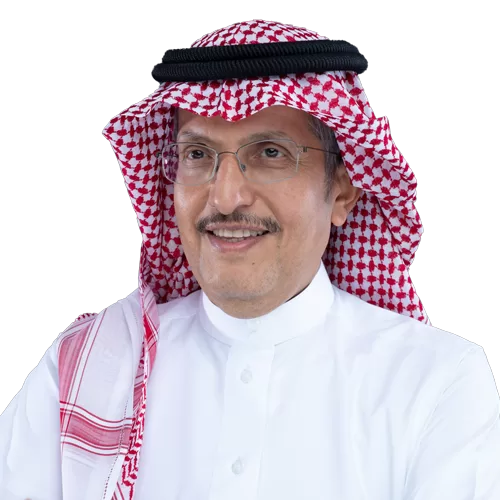
Mohammad Abunayyan, Founder and Chairman of ACWA Power, emphasized that the company views itself as more than just an energy provider, positioning its role as a partner in shaping a shared future built on creativity and innovation. He highlighted ACWA Power’s partnership with the Diriyah Biennale Foundation in supporting the Bukhara Biennial, describing it as one of Central Asia’s most significant artistic initiatives.
Abunayyan noted that the company’s support reflects a broader vision in which ACWA Power’s impact extends beyond the energy sector to include contributions to culture, heritage, and creativity. He also pointed to the company’s strong commitment to Uzbekistan’s development, citing the establishment of world-class training programs for local youth through Shirin College, which has grown into a vital part of the country’s social infrastructure.
With Uzbekistan now representing ACWA Power’s largest investment market outside Saudi Arabia, Abunayyan underlined the company’s pride in supporting the government’s ambition to position the nation as a global leader in the energy transition—an effort rooted in the deep and enduring ties between Saudi Arabia and Uzbekistan.
The inaugural Bukhara Biennial is part of a long-term revitalisation project for the city’s historic district, with the musalla being one of the first events to take place in the newly renewed area.
The exhibition not only showcases a unique piece of contemporary architecture, but also serves as a symbol of the enduring bonds between different Islamic cultures and a shared vision for a creative future.
A living architecture on the move
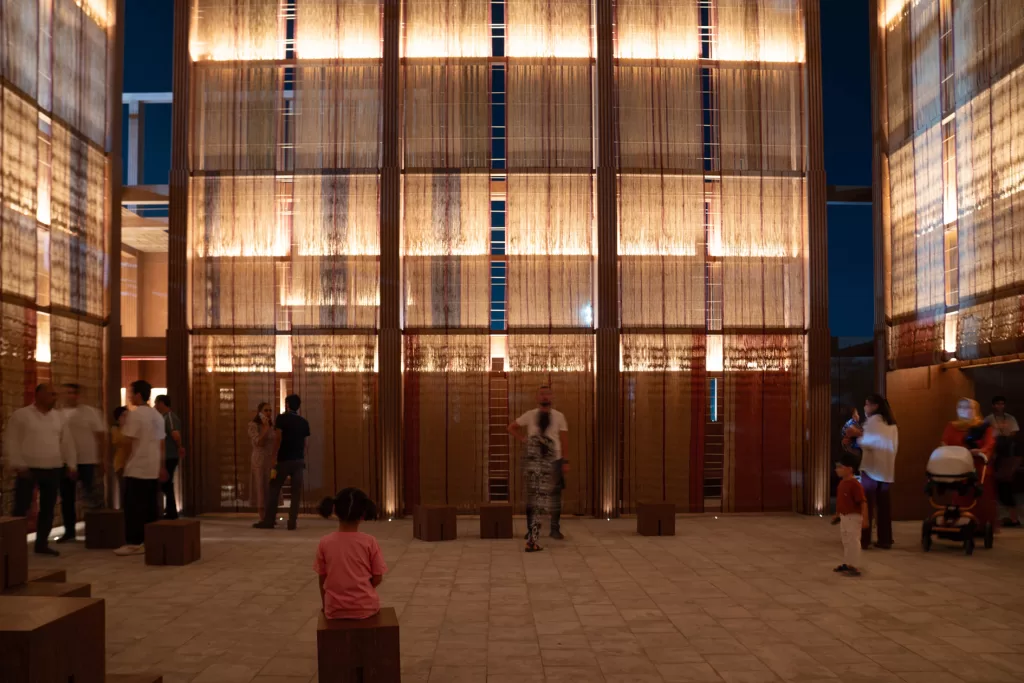
The musalla now standing in Bukhara is more than a temporary structure. It is a narrative in motion.
From Jeddah’s port city, where pilgrims have converged for centuries, to Bukhara’s storied Silk Road crossroads, the project retraces historic paths while proposing a future rooted in openness, adaptability, and sustainability.
As visitors walk through its open courtyard, gather in its shaded spaces, or simply observe its loom-like structure, they encounter not only a building but a proposition: that architecture can weave together past and present, faith and art, local specificity and global connection.
In this way, the musalla fulfils the ambition of the AlMusalla Prize itself to create a versatile space for prayer and gathering that embodies the resilience and creativity of Islamic cultures while speaking to the world at large.