



At the Greek Cultural Centre this week, the story of Egypt’s Greek community is being told through a fresh and intimate lens, not through official histories or formal speeches.
It is being told through the eyes of Egyptian documentary filmmakers who grew up with fragments of those stories in Alexandria’scafés, Port Said’s streets, family albums, and old photographs.
The two-day event, “Greeks in Egyptian Eyes”, held on May 12 and 13 in cooperation with the Hathor Association for Culture and Arts, screened six Egyptian documentaries exploring the lives, memories, and identities of Greeks who once formed one of Egypt’s largest foreign communities.
Rather than focusing purely on nostalgia for a lost era, the films examine what remains of that shared history today.
For decades, Greeks were deeply integrated into Egyptian daily life. From Alexandria and Cairo to Port Said, Ismailia, and smaller towns, Greek-owned shops, schools, clubs, and businesses formed part of the country’s social fabric.
At its height, the Greek population in Egypt reached around 140,000 before declining sharply in the 1950s.
However, cultural ties never fully faded. Greek Ambassador to Egypt Nikolaos Papageorgioudescribed the community as “an inseparable part of Egyptian society”, noting that Greeks in Egypt always felt a strong sense of belonging to the country.
He said the screenings were particularly meaningful because they present this history “through the eyes of Egyptian creators”.
Director Ahmed Rashwan, chairman of the Hathor Association for Culture and Arts, told The Egyptian Gazette that the event carries both cultural and humanitarian significance.
“It shows new generations the cosmopolitan fabric of Egypt throughout history,” Rashwansaid.
“It also highlights how Egypt and its people have always welcomed different nationalities and treated them as part of the community,” he added.
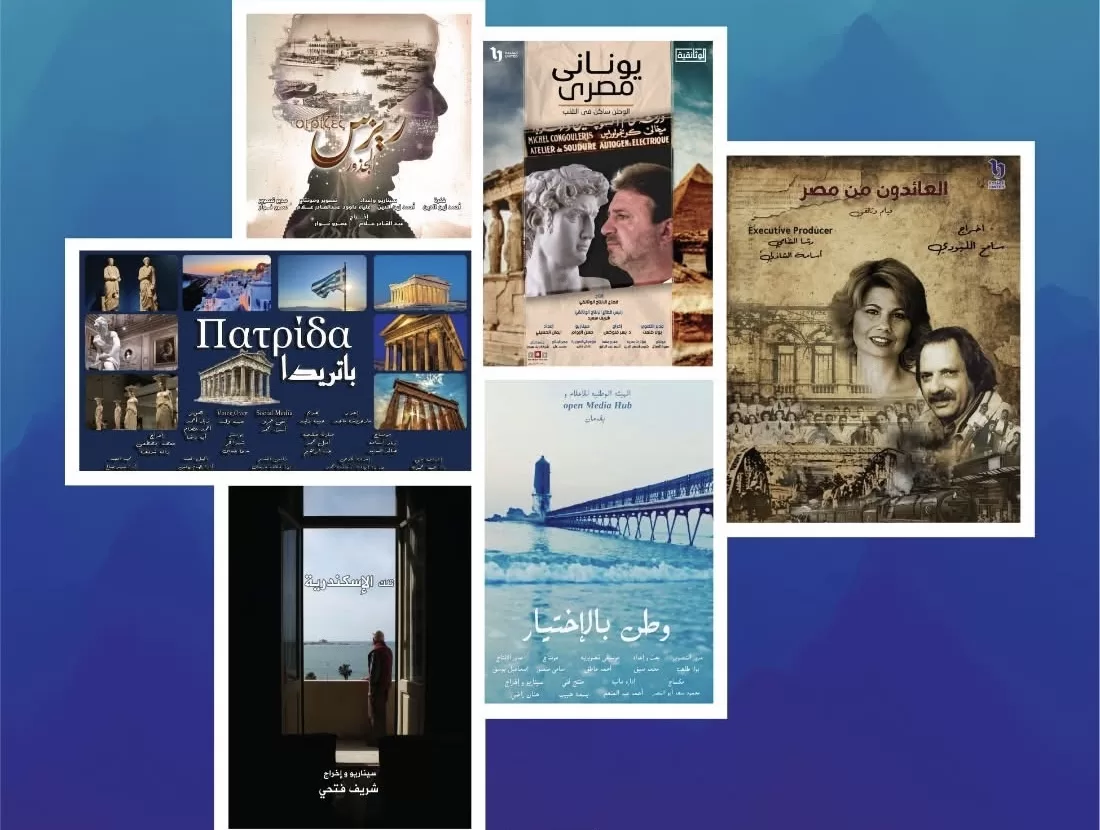
Among the films was Gozour (Rizes) (2023), directed by Abdel Qader Allam and AmrNawar.
This 11-minute documentary follows members of the Greek community in Port Said as they revisit streets, buildings, and cafés tied to their childhood memories and family histories.
Yonani Masri (Greek Egyptian) (2024), directed by Youssr Farouk Flux, blends historical narrative with personal stories.
Through interviews and the story of a character named Andrea, the film traces the deep overlap between Greek and Egyptian identities, from the era of Alexander the Great to the vibrant Greek presence in 20th-century Egypt, and how it helped shape the character of modern Egyptian cities.
Other films explore themes of belonging and displacement.
Patrida (2025), directed by Zeyad Osama, examines Greeks who chose Egypt as their second homeland, with many adopting Egyptian nationality and building multi-generational lives here.
Returnees from Egypt (2024), directed by Sameh El Laboudi, follows Greeks who returned to Greece, but recreated elements of their Egyptian lives there, struggling to let go of the identities they formed along the Nile.
Alexandria features prominently throughout the programme, almost as a character in its own right.
Watan Bel-Ekhtyar (A Homeland by Choice) (2020), directed by Hanan Radi, looks at the descendants of foreign communities who still live in the city today.
Another highlight was Sherif Fathy Salem’s 2013 documentary Tilk Al-Askandria (That Alexandria), which reconstructs the city’s cosmopolitan golden age in the first half of the 20th century through the memories of residents from diverse backgrounds, including Greek, Italian, Armenian, Levantine, and Egyptian.
The timing of the event reflects a broader revival of Greek-Egyptian cultural ties in Cairo this year, including the return of the Cavafy Festival and other joint initiatives.

