





Egypt and Italy are celebrating a 20-year milestone in preserving one of humanity’s oldest writing materials: ancient papyrus.
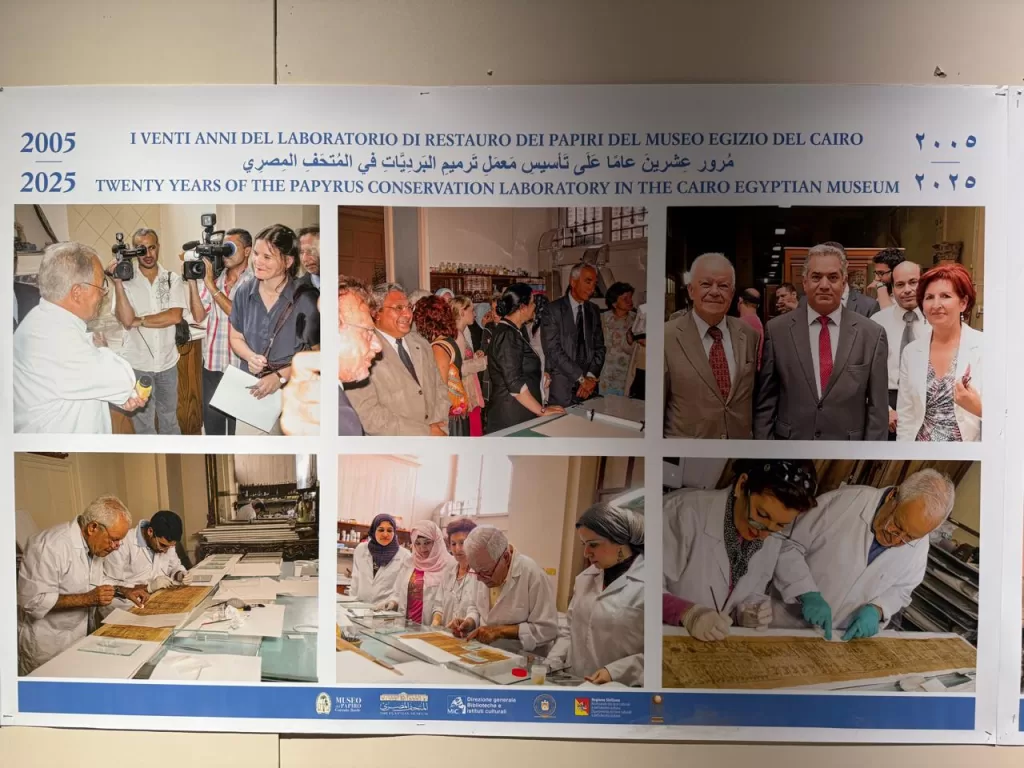
The Ministry of Tourism and Antiquities commemorated the 20th anniversary (2005-2025) of the Papyrus Restoration Laboratory at the historic Egyptian Museum in Tahrir Square, Cairo.
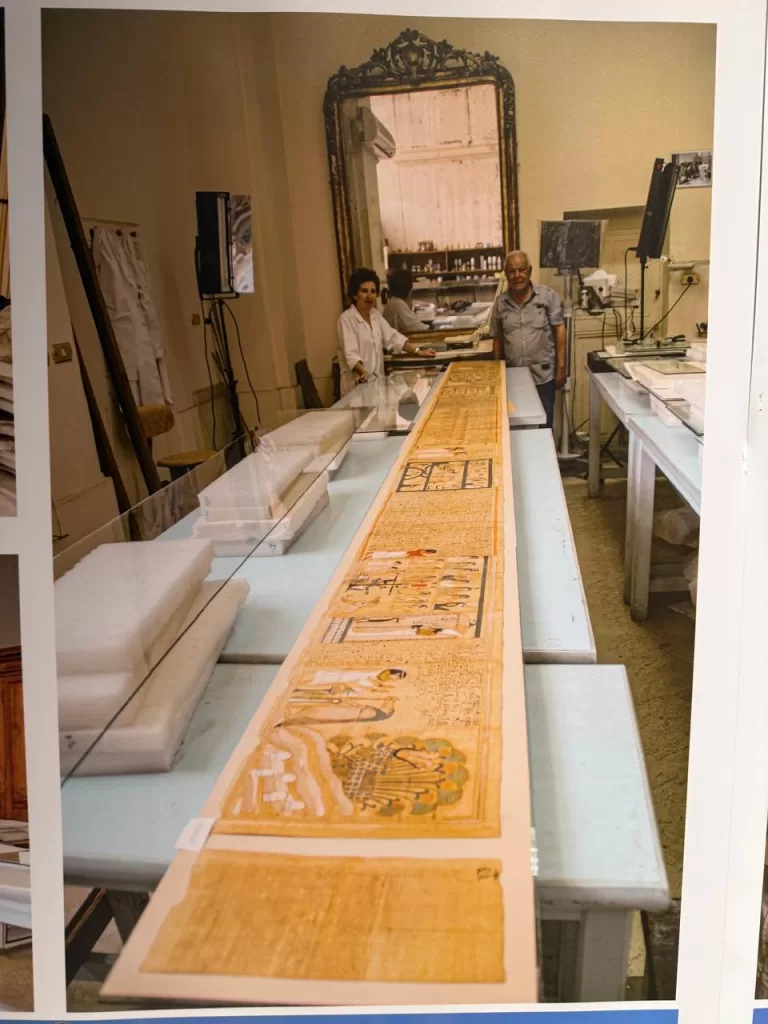
This specialised facility has been a cornerstone in safeguarding Egypt’s vast collection of fragile papyrus artifacts, texts, illustrations, and records that offer direct windows into pharaonic life.
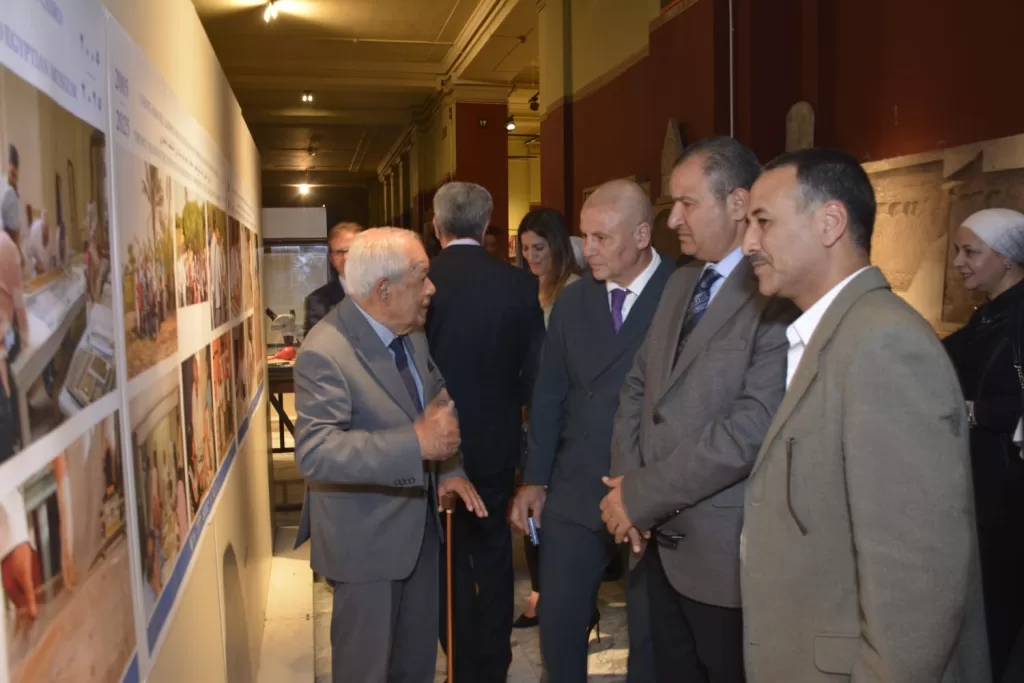
To mark the occasion, a photography exhibition titled “Twenty Years of the Papyrus Restoration Laboratory at the Egyptian Museum in Cairo (2005–2025)” was organised in partnership with the Italian Embassy in Cairo and the Italian Cultural Centre.
Displayed in Halls 7 and 8 on the museum’s ground floor, the show presents a compelling collection of rare documentary photographs that trace the lab’s origins, growth, and impactful achievements.
The story traces back to 1998, when the concept emerged through collaboration with Italy’s prestigious Museo del Papiro in Syracuse, Sicily. This world-renowned institution, housed in the historic Sant’Agostino Monastery on the island of Ortygia, was founded in 1987 by Professor Corrado Basile and Dr. Anna Di Natale.
Recognised globally for its dedication to papyrus heritage, the museum excels not only in exhibiting ancient manuscripts but also in restoration, scientific analysis, and revealing the intricacies of ancient papermaking and long-term preservation methods.
Backed by funding from the Region of Sicily and the Province of Syracuse, along with technical expertise from the Corrado Basile Museum, the Egyptian lab was formally inaugurated in 2005.
This enduring partnership represents one of the flagship outcomes of the “Project for Papyrus Conservation”, spearheaded by the Istituto Internazionale del Papiro-Museo del Papiro “Corrado Basile” in Syracuse. Directed by Corrado Basile in close collaboration with Anna Di Natale, and supported by head of the Museums and Antiquities Projects Sector Moamen Othman, the initiative has extended far beyond establishing the lab.
It has included hands-on conservation of papyri across various Egyptian museums and specialised training courses on papyrus history, production techniques, and conservation, attended by university lecturers and emerging experts.
Since 2001, the Papyrus Museum in Syracuse has operated a dedicated, year-round conservation laboratory to address the urgent needs of countless papyri requiring protection.
In Cairo, the fully operational lab now enables continuous, meticulous interventions on the Egyptian Museum’s extensive papyrus holdings, employing state-of-the-art, historically sensitive techniques, materials, and substances.
This ongoing cycle of acquiring new knowledge, refining restoration practices, and fostering education has transformed the facility into a true hub for conservation, teaching, and learning.
Director of the Egyptian Museum, Ali Abdel Halim, highlighted the exhibition’s focus on pivotal themes: dramatic archaeological rescue operations that prevented fragile scrolls from crumbling into dust, Egypt’s commitment to nurturing the next generation of skilled conservators, and the essential contributions of Egyptian specialists.
Through international workshops covering microscopic analysis, scientific examination, and digital documentation, the lab has evolved into a vibrant center for exchanging global expertise in preserving this irreplaceable heritage.
The event brought together prominent figures from both nations, including former Minister of Antiquities Mamdouh Eldamaty, Secretary-General of the Supreme Council of Antiquities Hesham El-Leithy, Italian Ambassador Agostino Palese, and Director of the Italian Cultural Institute in Cairo Giuseppe Cecere.