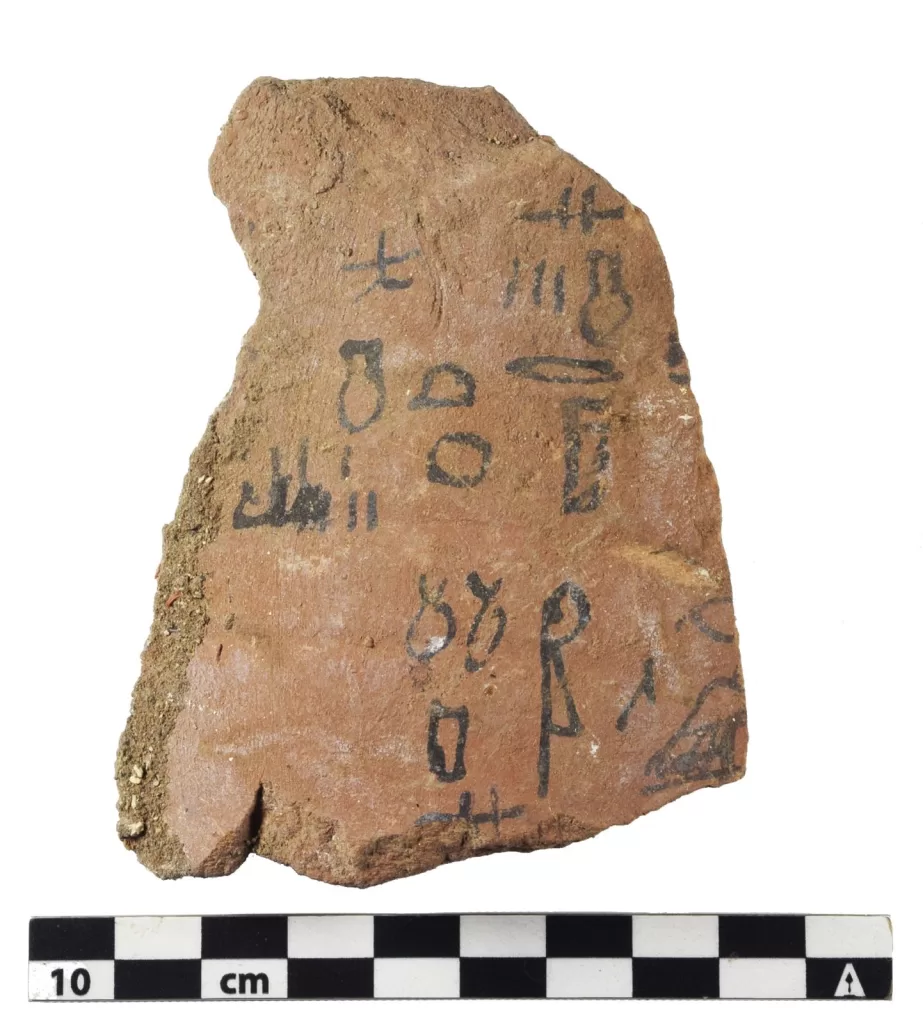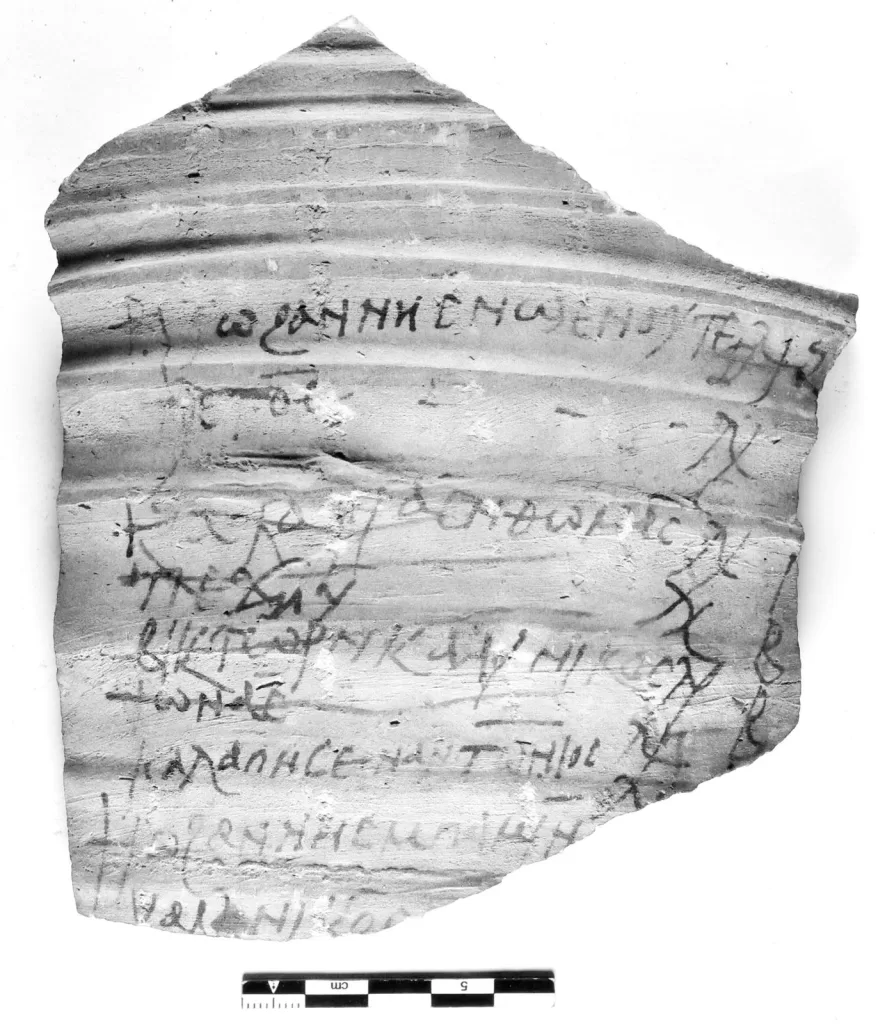






A joint Egyptian–German archaeological mission has uncovered 13,000 new ostraca at the ancient site of Athribis in Sohag governorate, the Ministry of Tourism and Antiquities said on Wednesday.
Secretary-general of the Supreme Council of Antiquities, Hisham El-Leithy, described the discovery as “highly significant,” noting that a total of about 143,000 ostraca have now been found at Athribis since the mission began work in 2005.
He said this figure represents a world record for the largest number of ostraca uncovered at a single archaeological site, surpassing well-known finds at Deir el-Medina in Luxor and other sites excavated over the past two centuries.
Athribis is Egypt’s richest site for ostraca related to zodiac and astronomical themes, with more than 130 examples written mainly in demotic and hieratic scripts.
The German co-director of the mission, Christian Leitz, said the newly uncovered ostraca feature texts in multiple languages and scripts spanning more than a thousand years. The oldest texts are demotic tax receipts from the 3rd century BC, while the most recent are Arabic vessel labels dating from the 9th to 11th centuries.
The Athribis site lies in Nag‘ al-Sheikh Hamad, about 7 km west of Sohag. In antiquity it formed part of the ninth Upper Egyptian nome, whose capital was Akhmim. The city was a cult centre dedicated to the goddess Repit, depicted as a lioness and regarded as the Eye of the Sun God, forming a local triad with Min of Akhmim and the child god Kolanthes.